 carjourney
From the CarJourney journal
What Is Preventive Maintenance for Your Car?
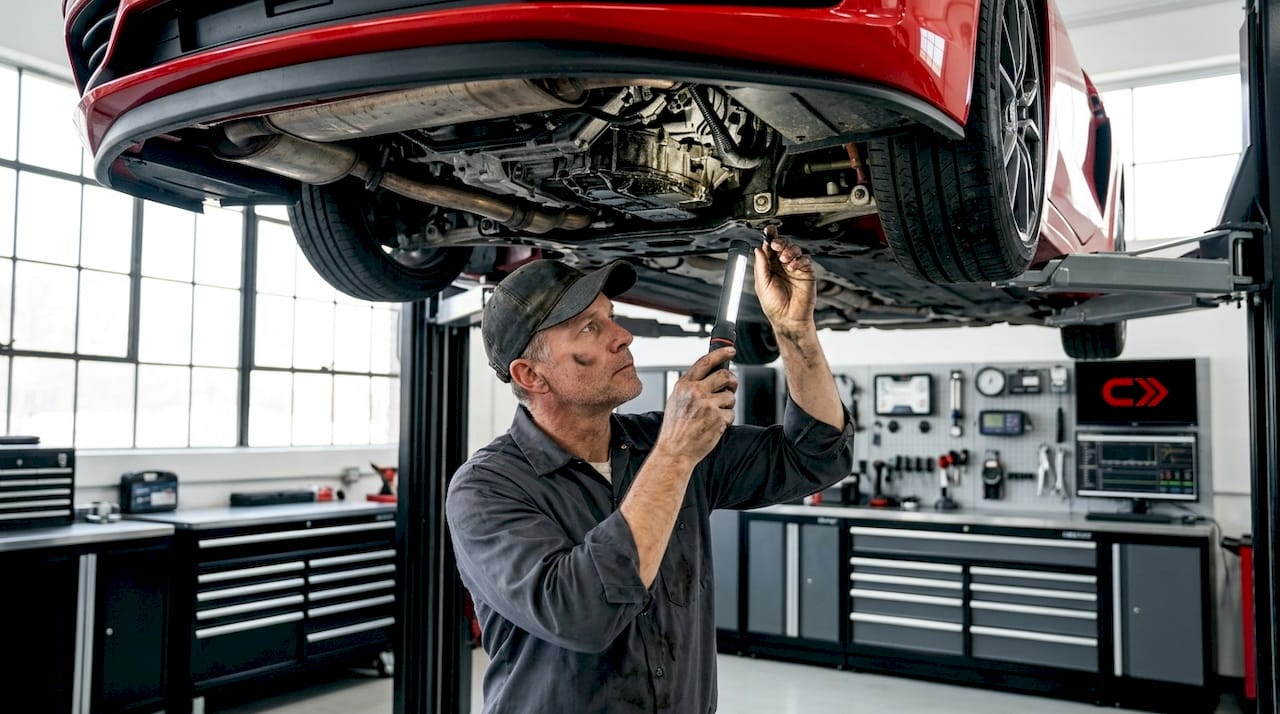
Preventive maintenance is defined as scheduled, proactive vehicle servicing performed at set intervals to prevent breakdowns, extend vehicle lifespan, and reduce costly repairs. Unlike waiting for something to fail, this approach puts you in control of your car’s health before problems develop. The practice covers everything from oil changes and tire rotations to brake inspections and fluid top-offs. Time-based and usage-based triggers like calendar intervals and mileage milestones determine when each task gets done, regardless of whether the vehicle currently feels or sounds fine.
What is preventive maintenance and how does it differ from other approaches?
Preventive maintenance is interval-based, planned vehicle care. Reactive maintenance occurs after a failure, meaning you fix what breaks when it breaks. Preventive maintenance flips that model entirely. You service the vehicle on a fixed schedule whether or not anything seems wrong.
Predictive maintenance takes a third path. It uses sensor data, diagnostics, and condition monitoring to forecast when a component is likely to fail, then schedules service just before that point. Predictive maintenance relies on analytics and condition data to forecast failures, while preventive maintenance runs on fixed intervals regardless of current component condition.
Here is how the three strategies compare side by side:
| Strategy | Trigger | Planning | Cost Profile |
|---|---|---|---|
| Reactive maintenance | Component failure | None | High emergency costs |
| Preventive maintenance | Time or mileage interval | Scheduled in advance | Predictable, moderate |
| Predictive maintenance | Sensor data or condition | Data-driven forecast | High upfront, low waste |
For most vehicle owners, preventive maintenance is the practical sweet spot. Predictive systems require expensive sensors and software. Reactive maintenance is simply gambling with your car. Preventive maintenance gives you a repeatable, affordable system that reduces unexpected breakdowns without requiring specialized technology.
Pro Tip: If your vehicle is under manufacturer warranty, following the prescribed preventive maintenance schedule is not optional. Skipping documented services can void warranty coverage on powertrain and drivetrain components.
What are the benefits of preventive maintenance for vehicle owners?
The benefits of preventive maintenance go well beyond avoiding a tow truck call. Here is what consistent scheduled care actually delivers:
- Lower repair costs. Catching a worn serpentine belt during a routine inspection costs a fraction of what you pay when it snaps and takes out the alternator with it. Proactive lubrication and inspections are consistently more cost-effective than reactive repairs.
- Improved safety. Brake pad wear, tire tread depth, and fluid levels directly affect how your car handles in an emergency. Regular maintenance prevents minor problems from escalating into critical failures that put you and other drivers at risk.
- Extended vehicle lifespan. Engines that receive consistent oil changes and cooling system flushes simply last longer. Scheduled care addresses gradual wear before it compounds into irreversible damage.
- Higher resale value. A documented service history is one of the strongest selling points a used vehicle can have. Buyers pay more for cars with verifiable maintenance records.
- Predictable budgeting. Preventive maintenance reduces urgent, unplanned repairs and lets you plan for parts and labor costs in advance. No more surprise $1,200 repair bills.
“Preventive maintenance is a foundational practice for vehicle reliability that balances cost and downtime effectively.” — Dovient
The reliability benefit compounds over time. A vehicle that receives consistent care at 30,000, 60,000, and 90,000 miles performs measurably better at 150,000 miles than one that only saw a mechanic when the check engine light came on. The importance of preventive maintenance is not theoretical. It shows up in repair frequency, fuel economy, and the confidence you feel on a long highway drive.
What are common preventive maintenance tasks and schedules?
Most preventive maintenance tasks cover lubrication, inspection, calibration, cleaning, and component replacement on fixed intervals. The specific timing comes from your manufacturer’s service manual, adjusted for your driving conditions and habits.
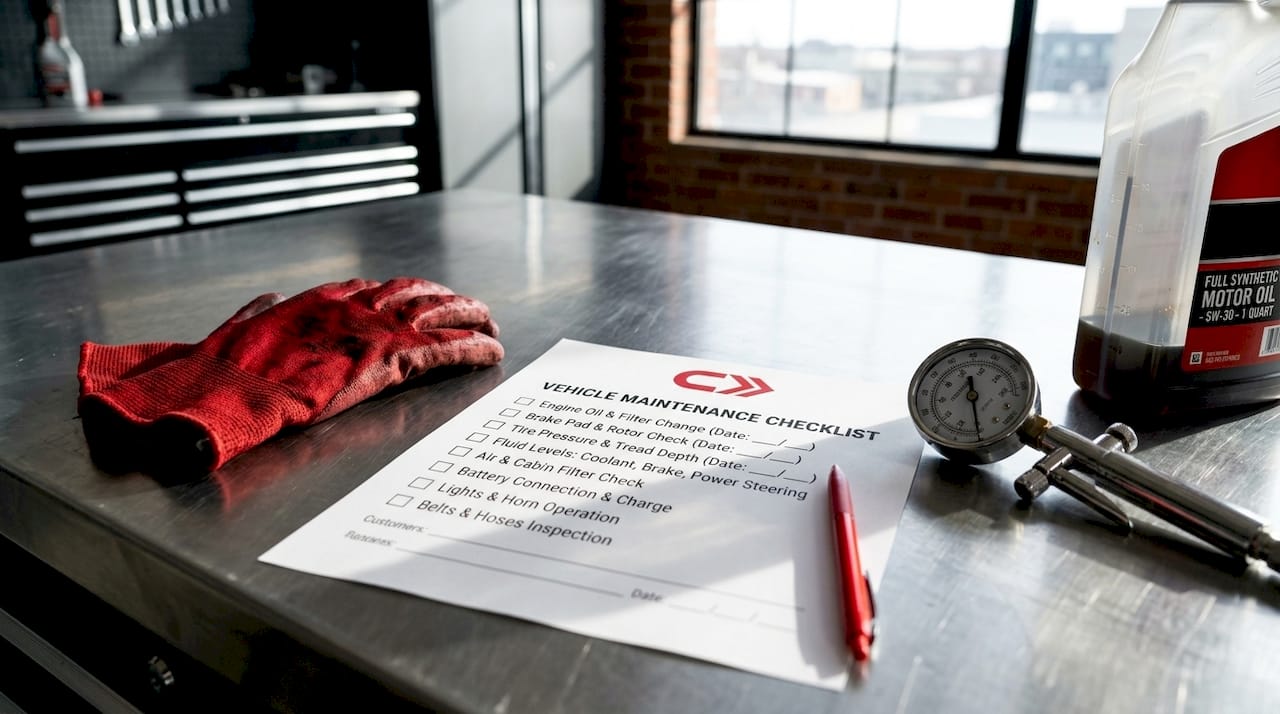
Here are the most common tasks and their typical service intervals:
| Task | Typical Interval | Trigger Type |
|---|---|---|
| Engine oil and filter change | Every 5,000 to 7,500 miles | Usage-based |
| Tire rotation | Every 5,000 to 7,500 miles | Usage-based |
| Air filter replacement | Every 15,000 to 30,000 miles | Usage-based |
| Brake inspection | Every 12 months or 12,000 miles | Time or usage |
| Coolant flush | Every 30,000 miles or 2 years | Time or usage |
| Transmission fluid change | Every 30,000 to 60,000 miles | Usage-based |
| Spark plug replacement | Every 30,000 to 100,000 miles | Usage-based |
| Battery check | Every 12 months | Time-based |
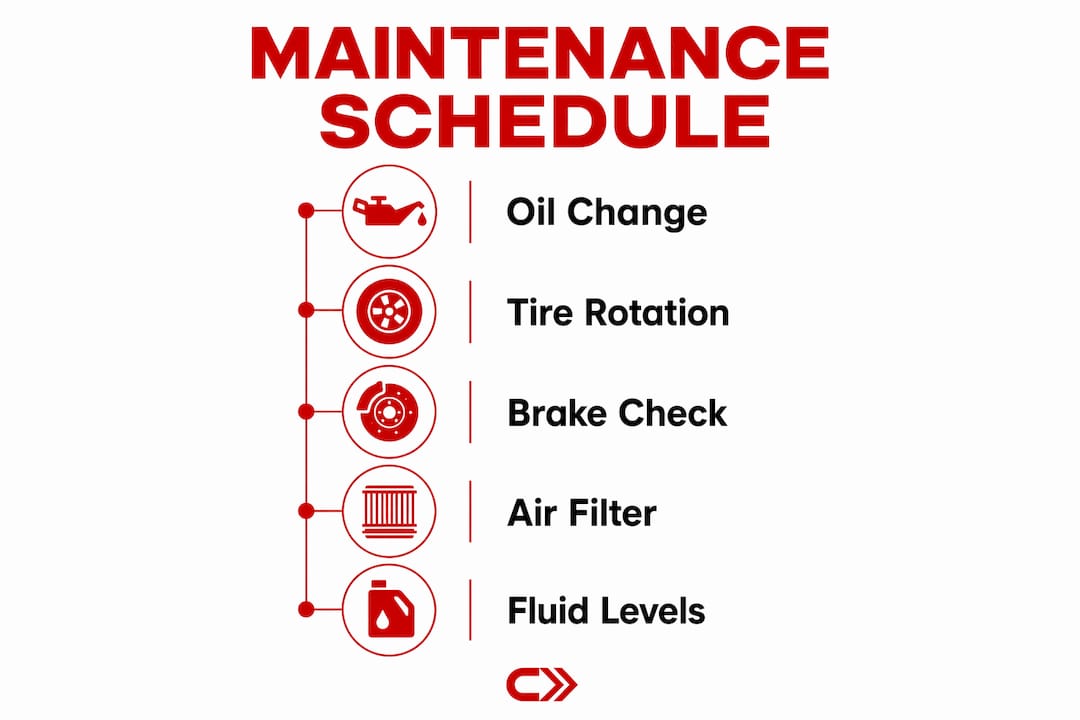
A few things to note about this table. The ranges are wide because manufacturer recommendations vary significantly by make, model, and engine type. A turbocharged engine running synthetic oil may go 10,000 miles between changes. A naturally aspirated engine in stop-and-go city traffic may need service closer to 5,000 miles. Always cross-reference your owner’s manual.
Here is a practical sequence for building your own preventive maintenance checklist:
- Pull your vehicle’s owner’s manual and note every scheduled service interval listed.
- Record your current mileage and calculate when each upcoming service is due.
- Group tasks that share similar intervals to reduce shop visits.
- Set calendar reminders or use a tracking app to alert you 500 miles before each service is due.
- Log every completed service with the date, mileage, and parts used.
Pro Tip: Severe driving conditions, including frequent short trips under 5 miles, towing, extreme heat, or dusty environments, shorten most service intervals by 25 to 50 percent. Check your owner’s manual for the “severe duty” schedule if any of these apply to you.
Fleet vehicle programs use documented schedules triggered by mileage, engine hours, or calendar time. Personal vehicle owners can apply the same discipline with far simpler tools, including a spreadsheet or a purpose-built app.
How can you implement an effective preventive maintenance program?
Knowing what preventive maintenance is and actually doing it consistently are two different things. The gap between them is usually a system problem, not a motivation problem. Here is how to close that gap.
Start with an inventory of your vehicle’s systems. Walk through the major categories: engine, transmission, brakes, suspension, tires, electrical, and cooling. For each one, identify the manufacturer-recommended service interval and the last time that service was performed. This single step reveals most of the deferred maintenance hiding in your car right now.
Follow the schedule, not your instincts. Most drivers wait until something feels wrong before scheduling service. Scheduled interventions prevent gradual wear and failures before any operational impact occurs. The whole point of preventive maintenance is that the car feels fine right up until it doesn’t. Trust the schedule.
Track every service in writing. Whether you use a physical logbook, a spreadsheet, or a maintenance tracking app, the record matters. It tells you what was done, when, and at what mileage. It also tells the next owner, your mechanic, and your warranty provider the same thing. Keeping maintenance records is one of the highest-return habits a vehicle owner can build.
Know when to DIY and when to call a professional. Oil changes, air filter swaps, wiper blade replacements, and tire pressure checks are reasonable DIY tasks for most owners. Brake system work, suspension components, and anything involving the fuel system or high-voltage electronics on hybrids and EVs belong with a certified technician.
Here are the most common pitfalls to avoid:
- Skipping services because the car “seems fine”
- Using the wrong oil viscosity or filter specification for your engine
- Ignoring manufacturer severe-duty schedules when your driving qualifies
- Losing track of service history after buying a used vehicle
- Treating all vehicles identically regardless of age, mileage, or build
Proper preventive maintenance programs improve parts readiness and reduce emergency repairs by design. The owners who get the most out of their vehicles are not the ones who spend the most money. They are the ones who spend it at the right time, on the right tasks, before failure forces their hand.
Key takeaways
Preventive maintenance is the single most cost-effective strategy vehicle owners have for extending lifespan, improving safety, and avoiding unplanned repair costs.
| Point | Details |
|---|---|
| Definition is interval-based | PM is scheduled by time or mileage, not triggered by failure or sensor data. |
| Safety improves directly | Regular brake, tire, and fluid checks prevent critical failures before they happen. |
| Records multiply the value | Documented service history raises resale value and simplifies future maintenance decisions. |
| Severe duty changes intervals | Towing, short trips, and extreme climates shorten most service intervals significantly. |
| Consistency beats perfection | A simple, followed schedule outperforms an elaborate plan that gets ignored. |
Why I think most car owners are one oil change away from a costly mistake
Most people understand preventive maintenance in theory. They just underestimate how fast the consequences of skipping it arrive. I have seen engines sludge up at 80,000 miles on vehicles that should have run past 200,000. The culprit is almost always deferred oil changes, not bad luck.
The counterintuitive truth is that modern cars are so reliable that they train owners to be complacent. Nothing goes wrong for months, so the service reminder gets dismissed. Then it gets dismissed again. Then a $40 oil change becomes a $4,000 engine repair.
What I tell every vehicle owner who asks: treat your maintenance schedule the way you treat your phone bill. Non-negotiable, automatic, and logged. The cars that age best are not the most expensive ones. They are the most consistently serviced ones. A car maintenance schedule by mileage is not a suggestion from the manufacturer. It is the engineering team telling you exactly how long each component was designed to last before it needs attention.
The other thing worth saying plainly: you do not need to be a gearhead to do this well. You need a list, a reminder, and the discipline to follow through. That is it.
— Chally
Keep your car on schedule with CarJourney
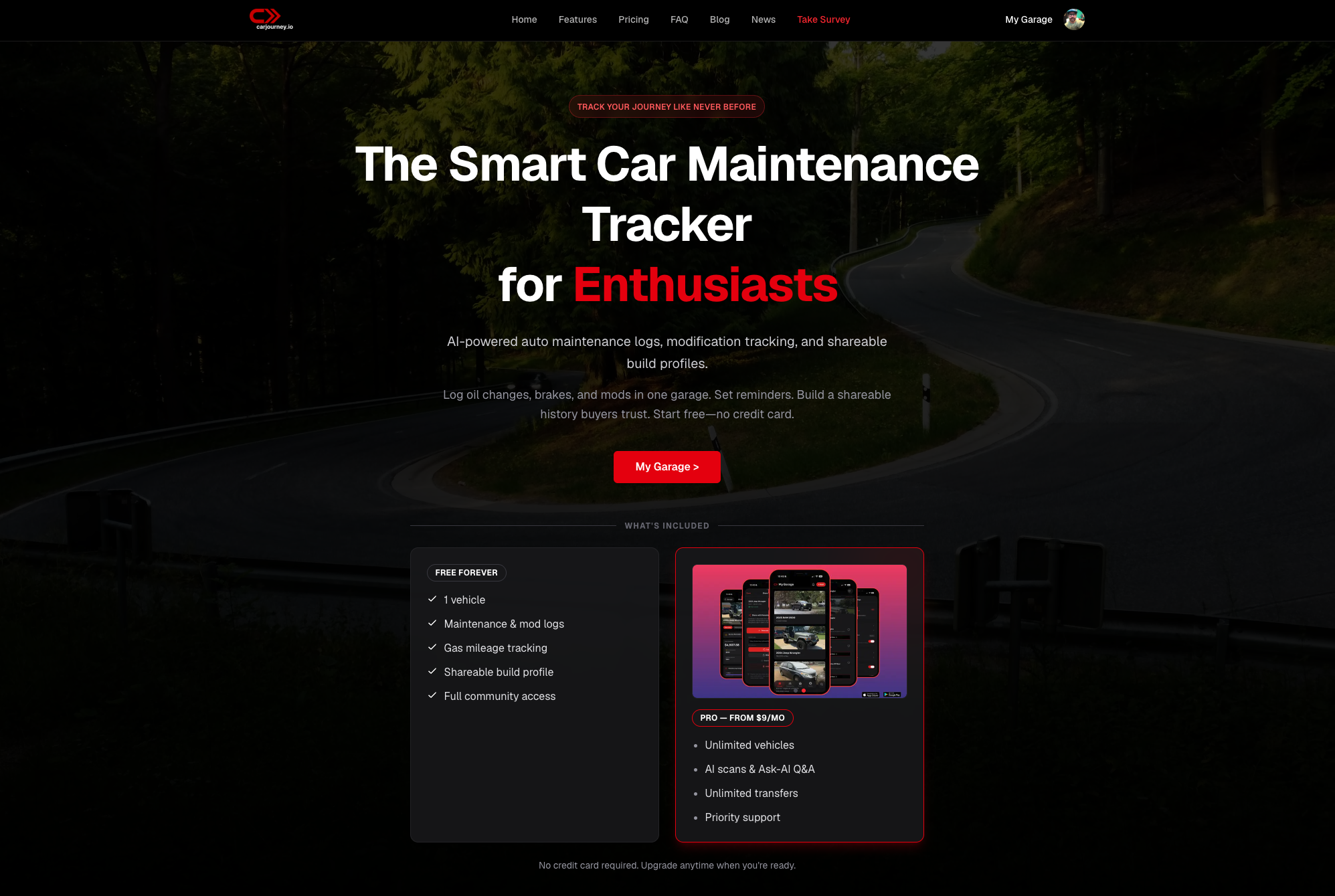
CarJourney is built for vehicle owners who want to stay ahead of maintenance without digging through glove boxes or guessing at service intervals. The platform uses AI to scan your service documents, track your vehicle’s history, and surface personalized maintenance recommendations based on your exact build, mileage, and driving conditions. No generic schedules. No missed reminders. CarJourney connects you with a community of enthusiasts who share real-world data on parts and service, so your decisions are backed by more than just the owner’s manual. Start tracking your vehicle and protect the investment you have already made.
FAQ
What is the preventive maintenance definition in simple terms?
Preventive maintenance is scheduled vehicle care performed at set time or mileage intervals to prevent breakdowns before they occur. It includes tasks like oil changes, tire rotations, and brake inspections done on a fixed schedule regardless of whether the vehicle currently shows any symptoms.
How does preventive maintenance differ from corrective maintenance?
Preventive maintenance is planned and performed before failure. Corrective maintenance, also called reactive maintenance, happens after a component has already failed and requires repair or replacement under unplanned, often urgent conditions.
What are the most common preventive maintenance examples for cars?
The most common examples include engine oil and filter changes, tire rotations, air filter replacements, brake inspections, coolant flushes, and spark plug replacements. Each task targets a specific wear pattern and is scheduled by mileage or calendar interval based on manufacturer recommendations.
How often should I follow a preventive maintenance checklist?
Most vehicles have service intervals ranging from every 5,000 miles for oil changes to every 30,000 miles or more for transmission fluid and coolant. Severe driving conditions shorten these intervals, so always check your owner’s manual for the schedule that matches your actual driving habits.
Does preventive maintenance actually save money?
Proactive inspections and part replacements consistently cost less than emergency repairs caused by component failure. Catching a worn timing belt before it breaks, for example, costs a fraction of the engine damage that follows if it snaps while driving.