 carjourney
From the CarJourney journal
How to Find Rare Parts for Vintage Car Restoration
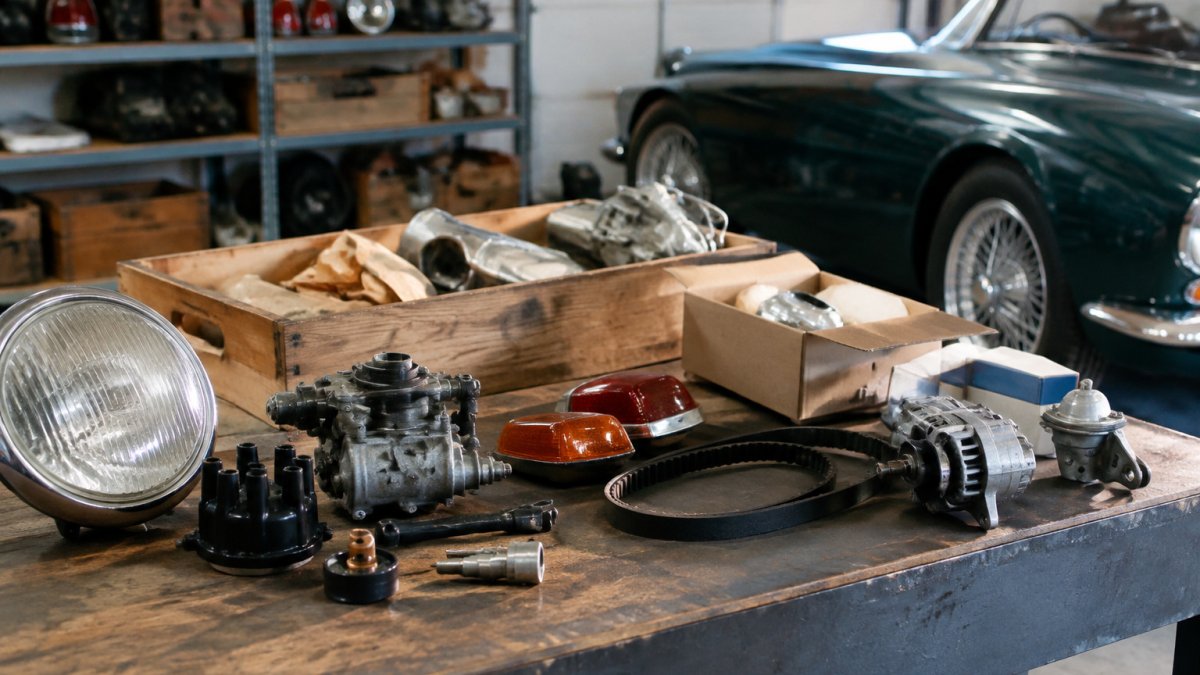
Last Updated: November 5, 2026
Quick Summary
Finding rare parts for a vintage car restoration starts with identifying the exact specification, including build date and part numbers. Then search systematically using saved searches, wanted listings, specialist suppliers, and owner networks. Confirm fitment against a vintage car parts catalog before you buy.
- Check the build date plate, since mid-year production changes often altered part dimensions.
- Search by part number first, then by every name the part has ever had.
- Set at least two saved alerts per part, one by part number and one by a common name.
- Post a wanted listing with the part name, part number, vehicle details, and a photo.
- Confirm fitment against a parts catalog and trust your own measurements over the seller's claims.
Table of Contents
- Identify the Exact Part Before You Start Searching
- Use a Classic Car Parts Finder Systematically
- Search Classic Car Parts Wanted Listings and Marketplaces
- Tap Specialist Suppliers, Salvage Yards, and Owner Networks
- Decide Between Original and Reproduction Components
- Use a Vintage Car Parts Catalog to Confirm Fitment
- Verify Sellers, Avoid Scams, and Plan Your Next Search
- Frequently Asked Questions
Identify the Exact Part Before You Start Searching
Finding rare parts for a vintage car restoration starts long before you open a search bar. Most restorers waste weeks hunting for a part that is subtly wrong. Pinning down the exact specification first matters, because a part that looks right can still fail to fit.
Think of the part as an answer to a question: which exact car, built when, with which options? Get that answer right and every search gets easier.
Gather make, model, year, and build date
Start with the basics. Write down the make, model, and model year, then add the build date. The build date matters more than most people expect. Mid-year production changes often switched suppliers, dimensions, or mounting points.
- Check the build date plate, usually on the door jamb or firewall
- Note the body style, engine, transmission, and trim level
- Record any factory option codes you can find
Many hunters skip the build date and buy a part from a neighboring year. Then they discover the bracket is an eighth of an inch off.
Read casting marks and part numbers
Original parts often carry casting marks, stamped numbers, or date codes. These marks tell you the manufacturer, the foundry, and sometimes the production week. Clean the part gently and photograph every mark at a low angle so the lettering shows up.
- Compare marks against a parts catalog or owner forum
- Look for superseded part numbers, since factories revised numbers over time
- Measure key dimensions with calipers and write them down
A clear photo with dimensions makes it far easier to ask other owners and suppliers for a match.
Use a Classic Car Parts Finder Systematically
Running a parts search the same way every time works best. Random searching produces random results. A repeatable routine gives you a clear list of options and makes it easier to spot gaps. The unique angle here is treating the search as a monitored process rather than a one-off query: most rare parts surface because someone kept a saved search running, not because they typed the perfect phrase once.
Here is a simple workflow many restorers use:
- Enter the exact make, model, year, and body style
- Search by part number first, then by part name
- Save every match, including ones that seem close
- Note the condition, price, and seller for each listing
- Compare fitment notes before you contact anyone
A common mistake is stopping at the first match. Keep searching, because the second or third result often turns out to be a better fit.
Search by number, then by every name the part has ever had
Part names drift by region, era, and trade. A component one seller calls a "front clip" another lists as a "nose assembly," and a "harmonic balancer" may appear as a "crank pulley" or "damper." Build a synonym list for each missing part before you search: the factory name, the common shop name, the colloquial owner name, and any abbreviation.
Part numbers deserve the same treatment. Factories superseded numbers over time, so an original casting number, a later service number, and a reproduction maker's own SKU can all point to the same physical part. Search the original number first, then each superseded number you find in a catalog or forum thread.
Set saved searches and alerts instead of checking manually
Most marketplaces and classified platforms let you save a search and receive an alert when a new listing matches. Set one saved search per part, using your best synonym and part-number variants, and let the platform do the monitoring.
Watch out: saved searches keyed to a single phrase will miss listings that use a different name, so set at least two alerts per part, one by part number and one by the most common colloquial name.
Track results so patterns become visible
Log every match in a spreadsheet with columns for source, listing date, part number shown, condition, asking price, shipping cost, and seller. After a few weeks you will see patterns: one supplier consistently lists original parts, another stocks reproductions, and a third rarely updates inventory. Those patterns tell you where to spend follow-up calls and where to stop looking. Tracking also gives you a record of market prices, which is useful leverage when you negotiate and useful evidence when a seller claims a part is rare and priced accordingly.
Search Classic Car Parts Wanted Listings and Marketplaces
Wanted listings flip the search. Instead of hunting for a seller, you post what you need and let sellers come to you.
Write a clear post. Include the exact part name, part number if you have it, the vehicle details, and a photo of the item you want. Vague posts get vague replies.
Online marketplaces and classified listings also reward regular checks. Set up saved searches or alerts where the platform allows them. Rare parts can appear and sell within a day.
Tap Specialist Suppliers, Salvage Yards, and Owner Networks
Some parts never show up on general marketplaces. For those, go to people who live in the hobby every day.
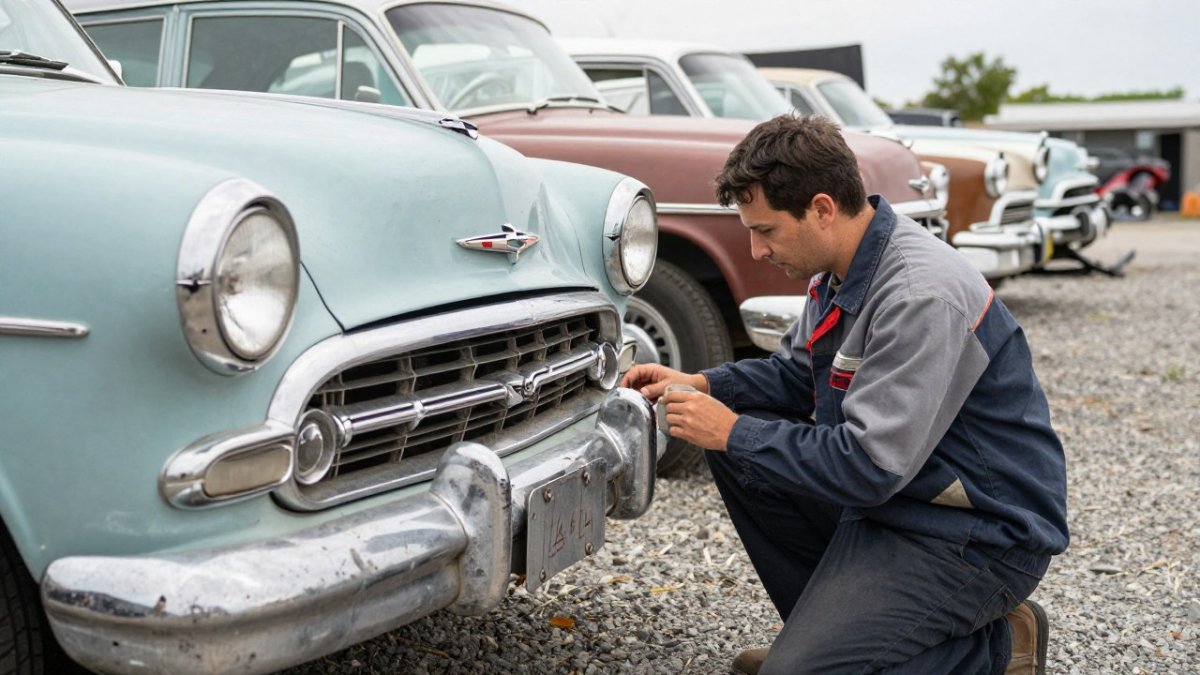
Specialist suppliers often stock reproduction parts, remanufactured components, and sometimes new old stock.
Salvage yards and scrapyards remain valuable, especially for trim, glass, and mechanical parts from donor vehicles. Visit in person when you can.
Car clubs, owner communities, and enthusiast forums are often the best source of all.
Networking with other restorers and collectors pays off over years.
Decide Between Original and Reproduction Components
Original parts carry the most authenticity, and collectors often pay a premium for them. Reproduction parts cost less and are easier to find, but quality varies widely between makers.
Use this simple guide to decide:
| Situation | Better Choice | Why |
|---|---|---|
| Show or judged restoration | Original | Judges look for authenticity |
| Driver-quality build | Reproduction | Lower cost, easier to source |
| Hard-to-find, no reproductions exist | Original or custom-made | Availability limits the choice |
| Mechanical wear parts | Reproduction or remanufactured | Modern materials often perform better |
Original vs. reproduction classic car parts is a trade-off between authenticity and availability. Be honest about your goal before you spend money.
Use a Vintage Car Parts Catalog to Confirm Fitment
A vintage car parts catalog is your fitment checkpoint. Checking superseded numbers against the exact build is a practical step toward avoiding poor fitment when an older part has been replaced.
Check the diagrams too. A build tracker review can help you decide which record-keeping features matter most for documenting fitment. They show how a part mounts and which components it works with.
If a catalog and a seller disagree, trust your measurements and the original part. Ask the seller for photos of the mounting points before you commit.
Verify Sellers, Avoid Scams, and Plan Your Next Search
Rare parts attract scammers because buyers are desperate. Protect yourself with a few habits, and go further than the usual checklist by verifying the seller, the part, and the total cost before money changes hands. This is the step most buyers rush, and it is where the largest losses happen.
Verify the seller before you verify the part
Ask for clear photos of the actual part, including casting marks and any stamped numbers, taken at an angle that shows depth. A seller who can only supply catalog images or photos lifted from another listing is a warning sign.
Watch out: a seller who refuses a phone call, insists on a payment method with no buyer protection, or pressures you to decide within hours is showing the classic pattern of a fraudulent listing, regardless of how good the photos look.
Check provenance and authenticity, not just condition
Original parts carry date codes, foundry marks, and casting numbers that reproduction parts usually lack or imitate poorly. Compare the marks on the offered part against known examples from owner forums or a parts catalog before you pay a premium for "original." Ask where the part came from, a donor car, a dealer's old stock, or a private collection, and whether the seller can document it. Provenance matters most for judged restorations, where a misrepresented reproduction can cost you points and resale value.
Use payment methods that give you recourse
Never send payment through methods that offer no buyer protection. Payment methods differ in buyer protection, so check what dispute options a payment method offers before you pay. For high-value shipments, request tracking and insurance, and keep every message and receipt. If a seller will not accept a protected payment method, treat that as a reason to walk away rather than a negotiating inconvenience.
Compare total landed cost, not sticker price
The asking price is only part of what a part costs. Build a total-cost comparison before you choose between a used original, a reproduction, a repaired original, and a fabricated one.
| Option | Typical added costs to include | When it wins |
|---|---|---|
| Used original | Shipping, refurbishment, return shipping if wrong | Authenticity matters and the part is rebuildable |
| Reproduction | Shipping, fitment adjustments, possible returns | Driver-quality build and the part is available new |
| Repaired original | Labor, replacement components, downtime | The original is structurally sound and scarce |
| Fabricated or custom-made | Machining or fabrication labor, measurements, test fitting | No reproduction exists and no usable original can be found |
International sourcing adds extra layers. Cross-border purchases can involve customs duties and brokerage fees, so confirm these costs before you buy. Ask overseas sellers upfront who handles customs paperwork and who bears the cost if the part is damaged in transit.
Plan your next search from what you learned
Document every purchase, including receipts, photos, part numbers, and the seller's contact information. Good records help future owners trust the work you put in. Finally, note which parts are still missing, which sources produced real leads, and which ones wasted your time. Each hunt gets faster when you build on what you learned and keep your saved searches running between projects.
Frequently Asked Questions
How do you find parts for a vintage car?
Start by identifying the exact part using the make, model, model year, build date, and any casting marks or part numbers on the component. Then search in layers: classic car parts finders and catalogs, wanted listings on enthusiast sites, online marketplaces, specialist suppliers, and salvage yards. Post a detailed wanted ad in owner clubs and forums, since many rare pieces change hands within the community rather than on public listings. Keep a written log of every search so you can track which sources you have already covered.
Where can I buy hard-to-find classic car parts?
The most reliable sources are specialist suppliers that focus on your make or era, owner clubs with parts swap programs, and salvage yards that hold donor vehicles. General online marketplaces and classified listings also carry rare parts, but they require more verification. Pricing varies widely with condition, originality, and availability, so compare several sellers before committing. Contact the seller of any listing with photos of the part's markings, and ask for details about where the piece came from.
How can I tell whether a vintage car part is original?
Check for factory casting numbers, date codes, manufacturer stamps, and finish details that match your model year. Compare these against a parts catalog or a knowledgeable owner club member who knows what the correct markings look like. Original parts often show age-consistent wear, while reproductions may have crisp castings, mismatched fasteners, or markings that do not match the era. When in doubt, ask for close-up photos of the markings under good light before you pay.
Are reproduction parts a good choice for a classic car restoration?
Reproduction parts can be a practical choice when an original is unavailable or when the car is a driver rather than a concours show vehicle. They are often less expensive and easier to source than originals. For a judged or highly documented restoration, original or New Old Stock components carry more value. Decide based on your goals for the car, and note in your records whether each component is original, reproduction, or remanufactured so future owners understand the build.
Start free Add carjourney.io as a preferred source on Google →