 carjourney
From the CarJourney journal
Transmission Fluid for High Performance Driving: A Full Guide
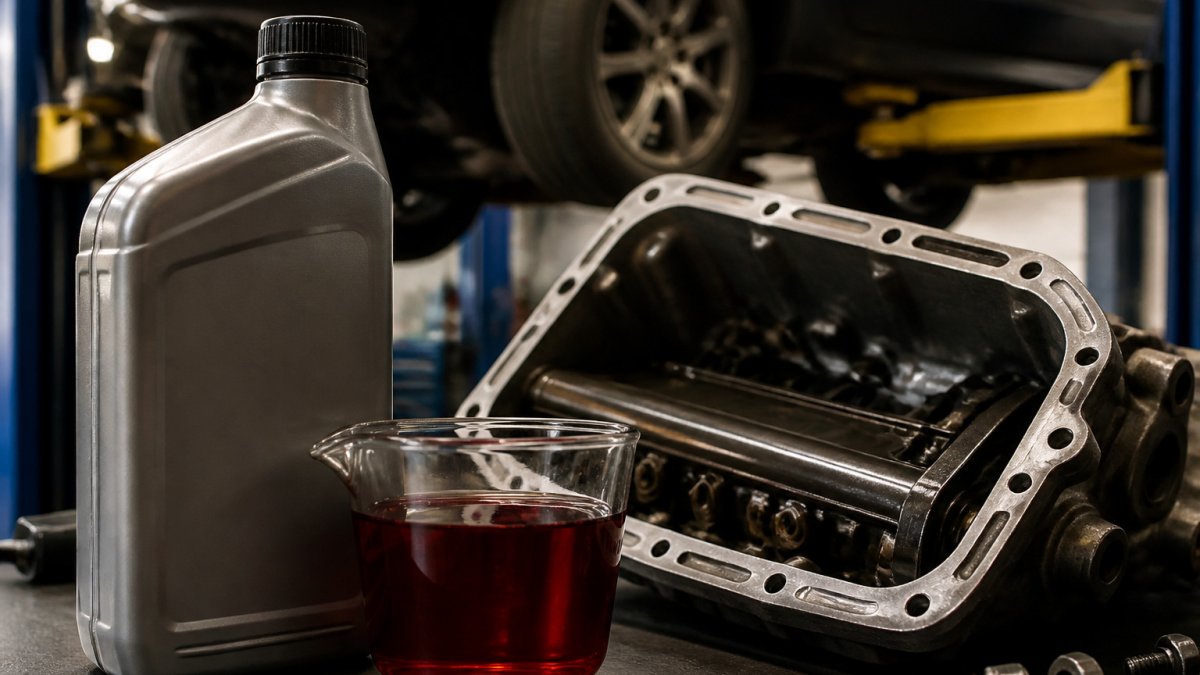
Last Updated: October 27, 2026
Quick Summary
Transmission fluid for high performance driving is the lubricant and hydraulic medium that cools gears and clutches under stress. For hard use, pick a fluid that exactly matches your transmission's required specification, ideally synthetic, and change it on a shortened, inspection-driven schedule.
- Automatic and manual gearboxes need different fluids; check your owner's manual before buying.
- Match the specification code on the bottle to your manual; "performance" is not a verified approval.
- Heat drives fluid aging, so track sessions can degrade fluid faster than months of commuting.
- Inspect for burnt smell, darkening, grit, or shift changes, and change regardless of mileage if these appear.
- Log each fluid change with product, specification, date, mileage, and driving conditions.
Table of Contents
- What Performance Transmission Fluid Actually Does
- Automatic Transmission Fluid Versus Manual Transmission Fluid
- Automatic Transmission Fluid Specifications and What the Labels Mean
- Best Transmission Fluid for Performance Cars by Build and Use
- Performance Transmission Fluid Change Interval for Hard Use
- Transmission Fluid Overheating Symptoms and Fluid Degradation
- Keeping Your Performance Transmission Service History in One Place
- Frequently Asked Questions
What Performance Transmission Fluid Actually Does
Transmission fluid for high performance driving is the lubricant and hydraulic medium that keeps a gearbox working under stress. It cools the internals, protects gears and bearings from wear, and in an automatic, it transmits pressure that engages clutches and bands.
A standard fluid is designed for ordinary commuting. Performance driving pushes temperatures higher, loads the clutches more often, and asks for crisper shifts. That is why the fluid matters so much in a modified or enthusiast car.
Automatic Transmission Fluid Versus Manual Transmission Fluid
Automatic and manual gearboxes use fundamentally different fluids, and mixing them up causes real damage. Automatic transmission fluid (ATF) is a hydraulic fluid that also lubricates and must carry friction modifiers for the clutch packs.
Always check the owner's manual or service label before buying. Some manual gearboxes specify an ATF-type fluid, and some automatics specify a dedicated fluid. Using the wrong type can change shift feel or harm the clutches.
Automatic Transmission Fluid Specifications and What the Labels Mean
Fluid labels carry specification codes, and those codes matter more than any marketing claim on the bottle. The label is a contract: it tells you which OEM approval the fluid actually holds, not which transmissions it might loosely work in. Reading it correctly is the single most important step in choosing transmission fluid for high performance driving.
The Three Tiers of a Fluid Label
Most labels communicate three different things, and they are not equal:
- OEM approvals and licenses. These are the strongest claims. A fluid that is officially licensed to a specification (for example, a Dexron license from General Motors or a Mercon license from Ford) has been tested against that specification's friction, viscosity, and oxidation requirements. The word "licensed" or "approved" matters; "suitable for" and "recommended for" do not carry the same weight.
- Industry standards. These are independent benchmarks rather than OEM approvals. The most relevant for automatic transmissions is the JASO standard for friction characteristics, and for gear oils the API GL ratings (GL-4 for synchronized manual gearboxes, GL-5 for hypoid differentials). An API GL-5 gear oil, for instance, can be too aggressive for soft synchronizer metals in some manual transmissions, which is why GL-4 is often specified instead.
- Marketing language. "Performance," "racing," "heavy-duty," and "synthetic blend" are not regulated terms. They describe the product's positioning, not a verified approval. A bottle can say "performance" and hold no OEM license at all.
How to Verify an Approval Before You Buy
A practical check takes about five minutes:
- Find the required specification in your owner's manual or on the transmission service label. It will look like a code, for example, a Dexron generation, a Mercon generation, a specific OEM part number, or a JASO classification. Write it down exactly.
- Match the code on the bottle to the code in the manual. A fluid labeled for an older generation of a specification is not automatically backward- or forward-compatible. Generations differ in friction modifier chemistry and viscosity, and using the wrong generation can change shift feel or clutch engagement.
- Confirm the approval is a license, not a claim. Reputable fluid makers publish approval lists, and OEM approval databases exist for several specifications. If a bottle claims an approval but the maker cannot show the license, treat the claim as unverified.
- Check the date and batch. Fluids have shelf lives, and a bottle that has sat for years may have separated additives. Buy from a seller with turnover.
Viscosity, Heat Resistance, and Shear Resistance
Three properties separate a good performance fluid from an ordinary one, and each maps to a number or behavior you can reason about.
Viscosity determines how the fluid flows at operating temperature, which affects shift timing, hydraulic response, and cooling.
Heat resistance, or thermal stability, describes how well the fluid holds its properties when hot.
Shear resistance is the fluid's ability to keep its viscosity when forced through tight passages and gear meshes under load.
Synthetic Versus Conventional Fluid Under Load
Synthetic fluids generally resist breakdown better at high temperatures and maintain their viscosity under sustained load, because their base stocks are more uniform and their additive packages are formulated for wider temperature ranges. Conventional fluids are adequate for mild use but tend to oxidize and shear faster when pushed hard. Synthetics cost more, so the question is whether your driving justifies the difference.
Best Transmission Fluid for Performance Cars by Build and Use
There is no single best fluid. The right choice depends on your transmission type, your build, and how you drive. Start with the manufacturer specification, then narrow by use: street performance, occasional track days, or sustained high-load work.
For a street-driven build with occasional spirited driving, a quality synthetic that meets your spec is a reasonable default. For regular track use, look for fluids with strong heat stability and documented shear resistance.
Wet-Clutch, Synchronizer, and Seal Compatibility Checks
Before installing any fluid, confirm it is compatible with the materials inside your gearbox. Wet-clutch packs, synchronizer rings, and rubber seals each react differently to fluid chemistry. A fluid that is too aggressive can swell seals or cause leaks, while one with the wrong friction characteristics can make clutches slip or engage harshly. Check the fluid's stated compatibility with your transmission and, where possible, your manufacturer's approval list.
Performance Transmission Fluid Change Interval for Hard Use
Standard service intervals assume ordinary driving, and they are written for the average commuter, not for a car that sees track sessions or repeated launches. Hard use shortens the safe interval, but "change it more often" is not guidance. What you need is a way to translate your actual duty cycle into a service decision.
Map Your Duty Cycle to a Service Category
Manufacturers typically publish two schedules: a normal schedule and a severe-service schedule. Severe service usually includes towing, sustained high-speed driving, repeated short trips in cold weather, and driving in dusty or mountainous conditions. Track use and drag racing are not always named explicitly, but they fall well beyond even the severe-service definition because of the heat and load they create. A practical way to categorize your use:
- Street performance (occasional spirited driving, no track). Follow the severe-service interval from your owner's manual as a floor, and inspect the fluid at each oil change.
- Occasional track days (a few per year). Treat each track event as a heat cycle that ages the fluid faster than months of commuting. Many practitioners change fluid at the start of the season and inspect after every event.
- Regular track or competition use. Fluid is a consumable. Inspect after every event and change on a fixed count of events rather than a mileage figure, because mileage understates the thermal load.
Inspection Triggers That Override the Calendar
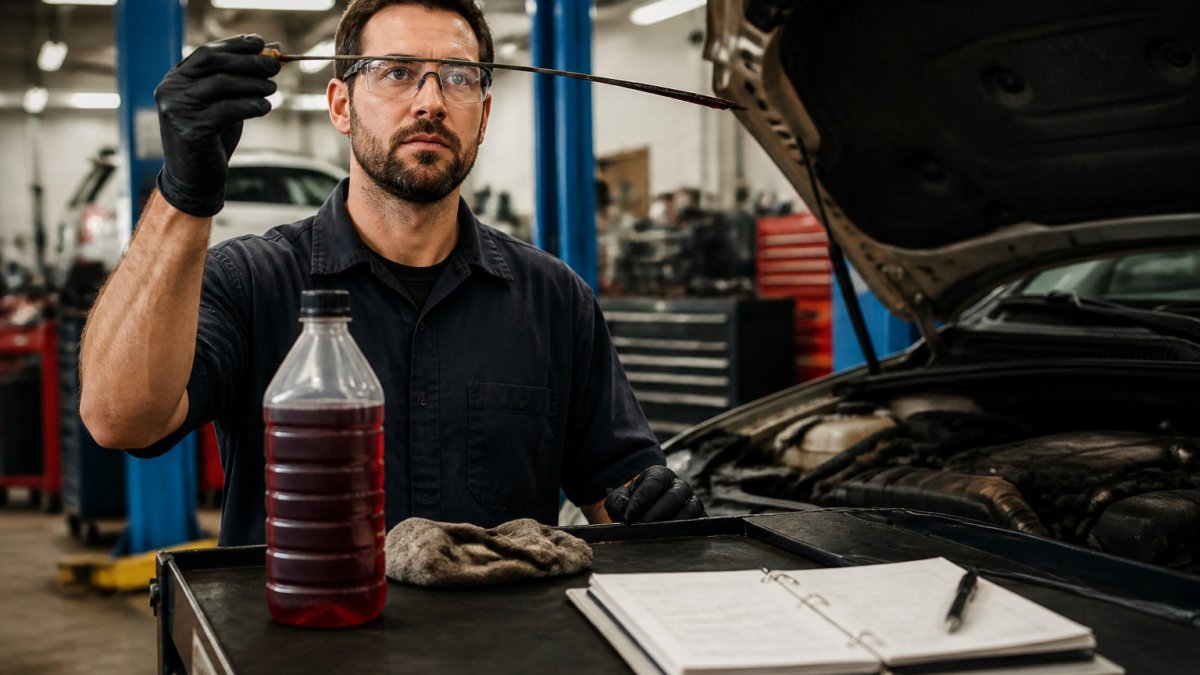
Mileage and time are proxies. The fluid itself is the better signal. Inspect, and change if any of these appear, when:
- The fluid smells burnt or acrid rather than faintly sweet or neutral.
- The color has moved from the specified red or amber toward dark brown or black. Color alone is not definitive, since some fluids darken normally, but a rapid change is a warning.
- You see suspended material or a gritty feel when you wipe the dipstick.
A fluid that passes inspection can stay in service; one that fails any of these should come out regardless of mileage.
Temperature Is the Real Interval Driver
Heat is what ages automatic transmission fluid, and the relationship is not linear. Oxidation roughly doubles in rate for every additional increment of sustained temperature above the fluid's comfort zone, which is why a single hot track session can age fluid more than thousands of commuting miles. If your car has a transmission temperature gauge or you can read transmission temperature through a scan tool, use it: sustained temperatures well above normal operating range are your cue to shorten the interval and to investigate cooling, an auxiliary cooler is often the highest-value modification for a tracked automatic.
A Qualified Interval Framework
No universal number fits every car, so treat these as starting points to be adjusted against your owner's manual and your inspection results:
- Street performance: severe-service manual interval, with inspection at every oil change.
- Occasional track: fresh fluid at the start of the season, inspection after each event, change when inspection fails or at a conservative event count.
- Regular competition: change on an event count, inspect after every event, and monitor temperature continuously.
Always defer to the manufacturer's published interval and fluid specification where they are more conservative than this framework. The framework exists to help you notice when hard use has moved you past the manual's assumptions, not to replace the manual.
Transmission Fluid Overheating Symptoms and Fluid Degradation
Watch for signs that the fluid is breaking down. Common symptoms include a burnt smell, dark or discolored fluid, harsher or slower shifts, slipping under load, and a transmission temperature warning.
Check the fluid regularly, especially after track sessions. If you notice any of these symptoms, have the fluid inspected and changed promptly, and check for an underlying cause such as a cooler problem or excessive heat from sustained driving.
The table below summarises the warning signs of fluid breakdown, their usual cause, and the response the article recommends.
| Symptom | Likely cause | Action |
|---|---|---|
| Burnt smell | Overheating and oxidation | Inspect and change fluid promptly |
| Dark or discolored fluid | Oxidation from sustained heat | Have fluid inspected and changed |
| Harsher or slower shifts | Degraded fluid properties | Check fluid and cooler |
| Slipping under load | Loss of protective properties | Have fluid inspected promptly |
| Transmission temperature warning | Excessive heat from sustained driving | Check for cooler problem or heat source |
Keeping Your Performance Transmission Service History in One Place
A documented service history helps you stay on schedule and proves care when you sell the car. Record every fluid change with the product, specification, date, mileage, and driving conditions. CarJourney lets you track maintenance and modifications in one digital garage, with reminders tied to both time and mileage. Consistent documentation provides the necessary foundation for professional transmission maintenance when you seek expert assistance in Parker.
Frequently Asked Questions
What transmission fluid is best for high-performance driving?
The right fluid is the one that meets the exact specification your transmission manufacturer requires, such as a Dexron or Mercon approval for many automatic transmissions, or a specific manual gear oil rating for manual units. For high-performance driving, look for fluids that state good heat resistance, shear stability, and friction characteristics that suit your clutch or torque converter. Prices and availability vary by brand, size, and retailer, so check current pricing at the store or from the manufacturer before buying.
Can I use synthetic transmission fluid in a high-performance vehicle?
In many cases yes, but only if the fluid meets the specification listed in your owner's manual or service documentation. Synthetic fluids generally resist heat breakdown and shear better than conventional fluids, which matters under sustained high loads. Confirm compatibility with your friction materials and seals before switching, especially on older transmissions or cars with wet clutches.
How often should transmission fluid be changed in a performance car?
Change intervals depend on how hard the car is driven. Daily driving may follow the manufacturer's schedule, while track days, drag launches, towing, and frequent high-temperature use call for shorter intervals. Many enthusiasts change fluid more often after heavy use and log each change with mileage and date so the schedule stays consistent over time.
What are the signs that transmission fluid is low or worn out?
Common signs include slipping or delayed engagement, harsh or inconsistent shifts, burnt smell, dark or discolored fluid, and a whining or shuddering sensation under load. Check the fluid level and condition according to your vehicle's procedure, and have a transmission specialist inspect the system if these symptoms appear after hard driving.
How does high heat affect transmission fluid?
Sustained high temperatures oxidize the fluid, break down its additives, and reduce its ability to protect friction surfaces and seals. Over time this can cause thicker or thinner fluid behavior, increased wear, and slipping. Monitoring temperatures and changing fluid sooner under severe conditions helps prevent this degradation.
Start free Add carjourney.io as a preferred source on Google →