 carjourney
From the CarJourney journal
Vehicle Maintenance Records Guide That Works
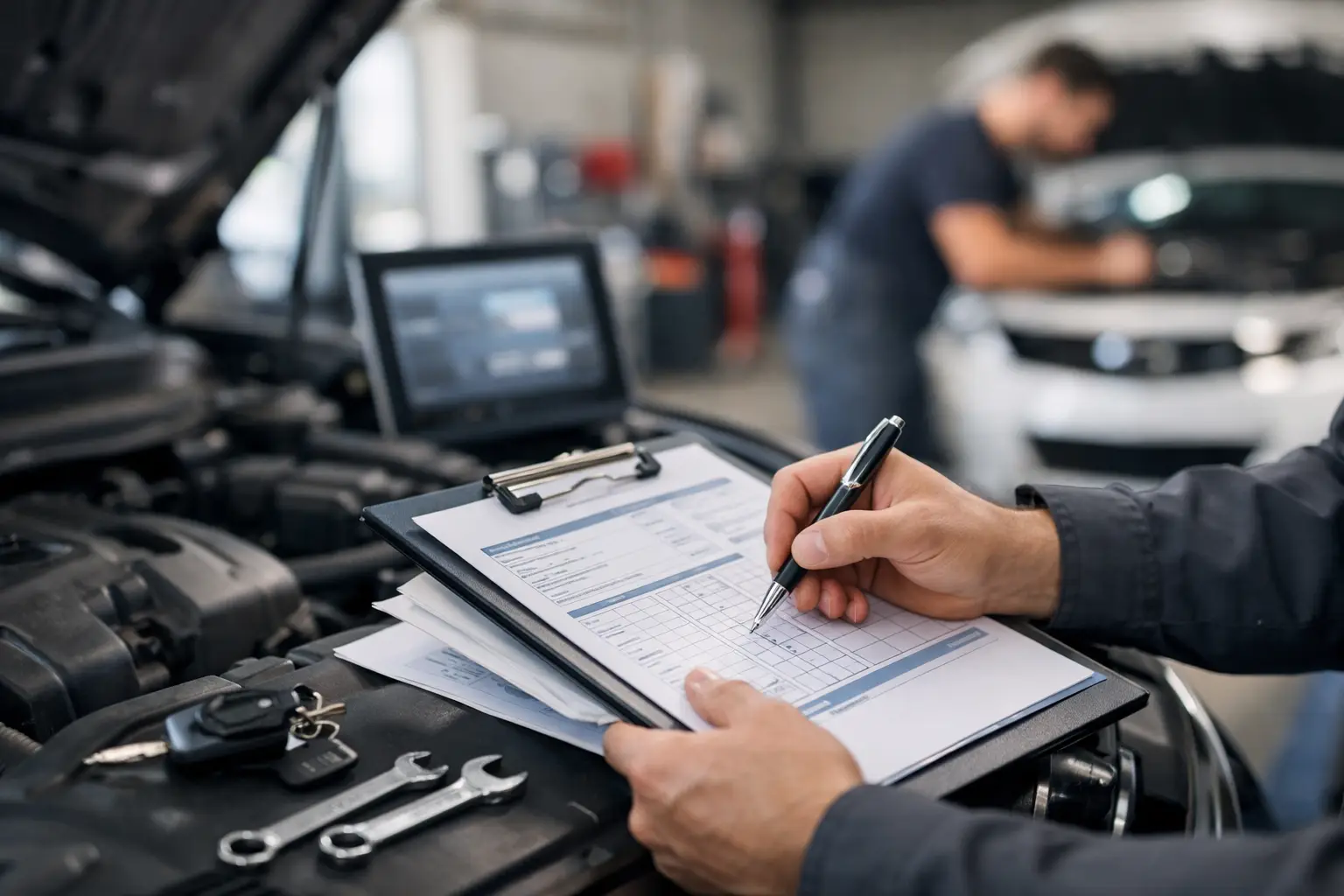
A missed oil change is annoying. A missing record of that oil change is expensive. When you sell a car, troubleshoot a recurring issue, or try to remember when the brakes were last done, a solid vehicle maintenance records guide stops guesswork from taking over.
For enthusiasts, this matters even more. A car is rarely just transportation. It is time, money, planning, parts research, and pride. If your maintenance history lives across glovebox receipts, text messages, old invoices, and a notes app, you do not really have a history. You have fragments. The goal is to turn those fragments into a usable record that protects reliability and proves ownership quality.
What a vehicle maintenance records guide should actually help you do
A good recordkeeping system is not just a place to dump receipts. It should help you answer practical questions fast. What was done, when was it done, who did it, what parts were used, how much did it cost, and what needs attention next?
That sounds basic, but the details are where most owners fall off. They remember major jobs like tires or a clutch replacement, then forget the smaller items that shape the ownership story - fluid flushes, battery replacement, alignment checks, spark plugs, filters, warranty work, and inspection notes. Buyers notice those gaps. So do mechanics when they are trying to diagnose a problem.
The best records also show patterns. If a wheel bearing has been replaced twice, or a check engine light keeps returning after similar repairs, your log becomes more than proof. It becomes a troubleshooting tool.
The records every owner should keep
Start with service entries. Every maintenance or repair event should include the date, mileage, service performed, shop name or DIY note, total cost, and any part numbers if you have them. If you changed your own oil, that still counts. In some cases, DIY records matter even more because there is no shop invoice backing them up.
You should also keep copies of receipts, warranty details, and inspection results. Photos can help here, especially for enthusiasts tracking build progress or documenting condition before and after major work. A receipt says you bought coilovers. A photo shows they were installed and supports the story of the build.
Modifications deserve their own category. This is one place a lot of owners get messy. They mix upgrades into general maintenance notes, then later cannot separate reliability work from personalization. Keep mods organized by date, mileage, brand, part, cost, and whether tuning or supporting work was required. That makes your record cleaner for your own planning and for anyone evaluating the car later.
Paper records are better than nothing, but they have limits
The glovebox folder used to be the gold standard. It still has value, especially for original receipts and signed invoices. But paper breaks down fast once you own a vehicle for years or maintain more than one car.
Receipts fade. Folders get lost. You cannot search them easily. And if you are trying to check when a coolant flush was done while standing in an auto parts store, a stack of paper in your garage is not helping much.
Spreadsheets solve part of that problem. They are searchable, flexible, and cheap. For some owners, especially people with a simple daily driver, a spreadsheet may be enough. The trade-off is consistency. If you are busy, you stop updating it. If you track multiple vehicles, modifications, reminders, and document uploads, a spreadsheet gets clunky in a hurry.
That is why more owners are moving to dedicated digital systems. The real advantage is not just storage. It is structure. A proper platform keeps service history, receipts, mod logs, schedules, and reminders in one place, across devices, without forcing you to build your own process from scratch.
How to build a record system you will actually maintain
The hardest part is not starting. It is sticking with it. So the right system needs to be fast enough that you use it after every oil change, tire rotation, and parts install.
Start by entering the basics for each vehicle: year, make, model, VIN if you want it stored, current mileage, and any major known service history. If you bought the car used and only have partial records, that is fine. Start where certainty begins. Do not invent history to make the file look complete.
Next, log your most recent key maintenance items. Oil service, brakes, tires, battery, air filters, spark plugs, coolant, transmission service, and any open issues are a smart baseline. Once those are in place, add receipts and photos if you have them. This gives you a working history even if older records are incomplete.
Then set reminders based on both mileage and time. This matters because not every car gets used the same way. A weekend car may age out fluids long before it racks up miles. A commuter might hit service intervals quickly. Good reminders should reflect real ownership patterns, not just a generic number copied from a forum.
If your vehicle is modified, build a separate habit for that side of ownership. Log installs, tuning changes, supporting parts, and costs as they happen. Otherwise, six months later, you will remember that you changed the suspension setup but not which spring rate, which alignment spec, or how much you spent getting there.
Why clean records save money
There is the obvious angle: fewer missed services, fewer avoidable failures. But there is another layer. Good records prevent duplicate work and bad decisions.
Say a car develops a vibration. Without records, you may replace parts based on memory and assumptions. With records, you can see the tires were road force balanced recently, the lower control arms were replaced last year, and the alignment has not been checked since a suspension install. That narrows your next step.
Records also help with warranty claims and parts support. If a component fails early, your invoice date and mileage matter. If you cannot prove when the part was installed, the claim gets weaker. The same goes for service packages, maintenance plans, and manufacturer recommendations. Clean documentation gives you leverage.
For multi-car households, the savings multiply. Once you are tracking several vehicles, missing one service interval is easy. Missing several gets expensive fast.
A vehicle maintenance records guide for resale trust
Buyers do not just buy the car. They buy the story around it. A clean service history says the owner paid attention. A messy story says there may be more they are not seeing.
This is especially true for enthusiast cars. Modified vehicles can raise eyebrows because buyers worry about abuse, corner-cutting, or poorly documented work. If your records clearly show what was installed, when it was installed, who did the work, and how the vehicle was maintained afterward, you remove a lot of that uncertainty.
It will not erase every concern. Some buyers still prefer stock cars, and some lenders or dealers may value mods at zero. That is the trade-off. But even when modifications do not boost sale price directly, documented history can make the car easier to trust and easier to sell.
A strong record file also helps you present total ownership investment honestly. Not to demand full payback on every dollar spent - that is rarely realistic - but to show the vehicle was maintained with intent, not neglected and patched together.
What to avoid when tracking maintenance history
The biggest mistake is inconsistency. Logging only major jobs creates blind spots. Small, repeatable services matter because they show habits over time.
The second mistake is relying on memory. Most owners think they will remember when something was done. They usually remember the month. Sometimes the year. Almost never the mileage.
The third mistake is mixing maintenance, repairs, and modifications into vague notes like "front end work" or "engine service." That wording is useless later. Be specific. Record what changed, what brand was used, and what problem you were solving.
Finally, do not ignore documents after uploading or filing them. A stored receipt with no matching service entry is only half useful. The record and the proof should live together.
The best system is the one that gives you control
Some owners want a minimal log for basic service. Others want a full ownership archive with receipts, mods, reminders, costs, and photos. Neither approach is wrong. It depends on the car, your goals, and how long you plan to keep it.
But if you care about reliability, value, and being able to explain your vehicle with confidence, a scattered approach eventually catches up with you. A centralized digital setup makes that easier, especially if you own multiple vehicles or like to document builds in detail. Platforms like CarJourney are built for that reality - not just reminding you about an oil change, but helping you create a usable history people can trust.
A well-kept record does something simple and valuable: it gives your car a memory. And when ownership gets complicated, that memory is what keeps you in control.