
Aftermarket Parts Documentation Guide for Builds
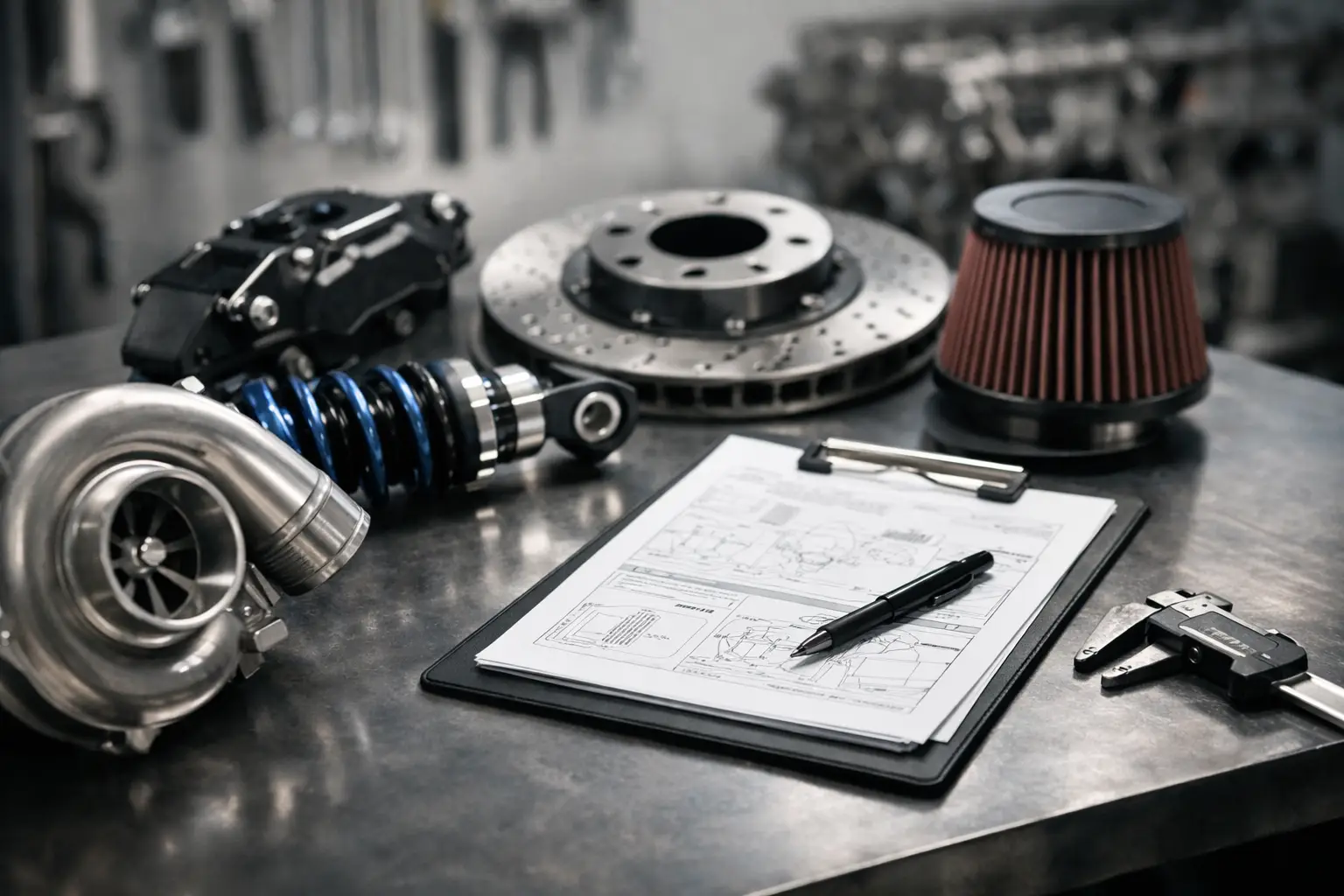
A new set of coilovers, a turbo kit, or even a quality brake upgrade can add real capability to your vehicle. But if the only proof lives in a deleted email, a shoebox receipt, or a caption from an old social post, that investment gets harder to maintain, troubleshoot, insure, or explain to a future buyer. This aftermarket parts documentation guide gives you a practical system for keeping every upgrade tied to the vehicle it belongs on.
Good records are not just for concours cars or six-figure builds. They help you buy the right replacement parts, remember what a shop installed, honor a warranty claim, and show that your car was built with intention instead of guesswork.
Why aftermarket documentation pays off
A modification changes more than the look or performance of a vehicle. It can change service intervals, fluid requirements, alignment settings, tire fitment, tuning needs, and the parts you need to order later. Without documentation, simple maintenance can turn into a research project.
Picture replacing worn brake pads two years after a big brake kit install. If you have the manufacturer, kit part number, rotor size, pad compound, and install date recorded, the job starts with a confident parts order. If you do not, you may be measuring rotors in the driveway or pulling a wheel just to identify what is on the car.
Records also protect resale value. Most buyers understand that modifications do not automatically return their full cost. Still, a documented build inspires more trust than a list that says “lots of upgrades.” Receipts, installation photos, tuning details, and service history show a buyer where the money went and how the vehicle was cared for.
There is a safety angle, too. Suspension, braking, fuel system, electrical, and powertrain modifications deserve clear records because they affect how the car should be serviced. If another shop works on the vehicle, organized documentation reduces assumptions.
What to document for every aftermarket part
Your records should answer a few basic questions quickly: What is the part? Why was it installed? When did it go on? Who installed it? What will you need when it is time to service or replace it?
Start each entry with the part manufacturer, product name, and exact part number. Avoid vague labels like “aftermarket exhaust” or “lowering springs.” Record the finish, size, model-specific variant, and revision number when applicable. A wheel entry, for example, should include diameter, width, offset, bolt pattern, center bore, tire size, and any spacer details.
Add the purchase date, purchase price, seller, and receipt. The total cost should reflect the real investment, not only the advertised part price. Include taxes, shipping, fabrication, tuning, installation labor, alignment, and supporting components when they are directly tied to the upgrade.
For fitment-sensitive parts, note the vehicle details used to select them: year, trim, engine, transmission, drivetrain, and relevant existing modifications. This is especially useful for intakes, exhausts, suspension parts, tuning hardware, and engine components. A part that fits a 2020 model may not fit a 2021 refresh, even when the cars look nearly identical.
Photos matter more than many owners expect. Take a photo of the part before installation, its label or serial number, and the completed install. For hidden components, photograph the work while panels, bumpers, or undertrays are removed. Those photos can save time during future repairs and give a buyer confidence that the work was done properly.
Keep installation details with the part record
The part itself is only half the story. The installation record explains the condition of the vehicle after the upgrade.
Record the installation date and odometer reading. If a shop completed the work, store the shop name and invoice. If you installed it yourself, note the major steps, torque specs that matter later, fluids used, and any hardware or modifications required to make the part fit. You do not need to write a full service manual, but you should capture details future-you will not remember.
For example, an entry for adjustable coilovers should include the installed ride height, damper settings, spring rates if separate, corner-balance results if available, and the alignment specifications set afterward. For forced induction, document the tuner, tune version, fuel type, boost target, injectors, fuel pump, spark plug type and gap, and any dyno results.
This level of detail is not overkill when a problem appears months later. It creates a useful timeline. If a vibration started after wheel spacers were installed, or a check-engine light appeared after a tune revision, you have a clear place to start.
Do not lose the supporting parts
Many upgrades depend on smaller components that are easy to forget. A turbo kit may require a specific oil line, heat shielding, downpipe, intercooler piping, boost controller, and tune. A brake kit may use different lines, banjo bolts, brake fluid, and pad hardware.
Document those supporting parts under the main project or as connected entries. This prevents a common ownership problem: knowing the major component but not knowing the exact items that make it work.
Store documents that prove the history
Receipts are the foundation, but they are not the only documents worth saving. Keep digital copies of warranties, installation instructions, manufacturer setup sheets, tuning invoices, alignment printouts, dyno charts, inspection reports, and certificates of authenticity for rare or high-value parts.
Scan paper documents as soon as possible. Thermal receipts fade, and a paper warranty card does no good if it disappears before you need it. Name files so they are searchable: “2024-05-18_Bilstein-B16_Receipt” is more useful than “IMG_4839.”
Warranty documentation deserves extra attention. Note the warranty length, coverage limitations, purchase source, and required registration steps. Some manufacturers require proof of purchase from an authorized seller. Others exclude failures caused by racing, improper installation, or use with non-approved components. A warranty is valuable only if you can prove eligibility and understand the terms.
Keep original-equipment parts in the record as well. If you retain the factory wheels, intake, suspension, or exhaust, photograph them and note their condition and storage location. Returning a car closer to stock can sometimes make sense at sale time, depending on the vehicle and buyer. Documentation gives you options.
Build a system you will actually use
The best documentation system is the one you update after every purchase, install, and service. A spreadsheet can work for a simple build, but it often becomes fragmented when photos, receipts, reminders, and multiple vehicles enter the picture.
Create a dedicated record for each vehicle and organize entries by category such as suspension, wheels and tires, engine, brakes, exterior, interior, audio, and maintenance. Attach photos and documents directly to the relevant entry rather than keeping them in an unorganized phone album.
Then connect modifications to future maintenance. Track mileage or time-based reminders for items like performance oil changes, air-filter cleaning, coilover inspections, brake fluid flushes, tire rotations, and tune checkups. The right interval depends on the part, how the vehicle is used, and whether it sees track days, towing, winter weather, or daily commuting.
CarJourney gives owners one place to log modifications, upload receipts and photos, track costs, and keep service reminders alongside their build history. The bigger advantage is consistency: your vehicle record stays available whether you are at a parts counter, in the garage, or talking with a potential buyer.
Use your records when you sell, service, or troubleshoot
A clean record changes the conversation at resale. Instead of listing parts from memory, you can present a chronological history with brands, dates, mileage, costs, photos, and maintenance completed after each upgrade. You do not need to lead with every dollar spent, but having it documented gives you control over what you disclose and supports your asking price.
For service, give a shop the information relevant to the work. A technician replacing a clutch should know about power levels and transmission modifications. An alignment shop should know the suspension is adjustable. Clear records help good shops make better decisions, while still leaving them room to inspect the car rather than relying on your notes alone.
Troubleshooting benefits from restraint. Do not assume the newest part is always the problem, but use your timeline to identify what changed before the issue appeared. Review installation dates, tune revisions, maintenance history, and any changes in fuel, tires, or driving conditions.
Your build deserves more than a collection of purchases. Document it while the details are fresh, keep the record current, and you will have a vehicle history that works as hard as the parts you chose.