 carjourney
From the CarJourney journal
Vehicle Document Storage Guide for Car Owners
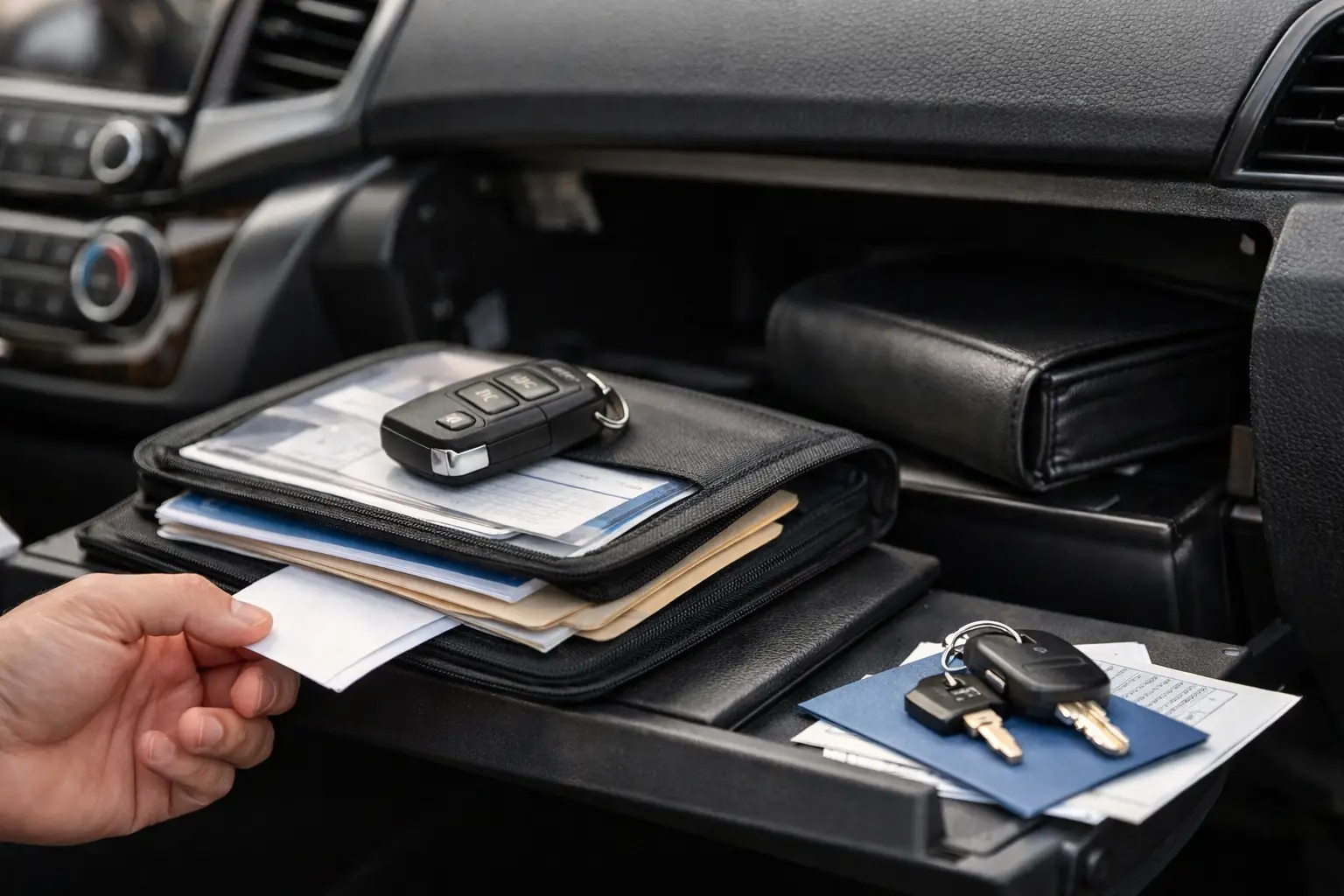
The paperwork usually goes missing right when you need it most - at the DMV counter, during a warranty claim, or when a buyer asks for proof that the timing service actually got done. A solid vehicle document storage guide fixes that problem before it costs you time, money, or credibility.
If you care about your car beyond basic transportation, your records are part of the build. Service invoices, alignment sheets, dyno results, parts receipts, warranty terms, and title paperwork all tell the story of how the vehicle has been owned. When that story is complete, ownership feels more controlled, maintenance gets easier to manage, and resale conversations get a lot simpler.
What a good vehicle document storage guide should solve
Most owners do not lose records because they are careless. They lose them because the system never really existed. A few papers stay in the glove box, some PDFs live in email, photos of receipts sit in the camera roll, and old invoices get stuffed into a drawer in the garage. That works until you need one specific document fast.
A better system should do three things well. It should help you find the right document quickly, protect it from loss or damage, and keep it tied to the correct vehicle, mileage, and service history. For enthusiasts and multi-car households, that last part matters more than people think. Once receipts and records start mixing across vehicles, trust in the whole log starts to break down.
Start with the right document categories
A practical vehicle document storage guide begins with separation. Not every document belongs in the same folder, and not every record matters for the same reason.
Ownership and legal records should stay together because they are the documents you may need immediately. That includes title copies, registration, insurance cards, loan paperwork, emissions results, and state inspection records. Some of these also need a physical copy, depending on your state and how often you drive the vehicle.
Service records form the core of your maintenance history. Think oil changes, brake jobs, tire purchases, fluid flushes, battery replacement, diagnostics, dealer visits, and major engine or transmission work. These records are what protect you from repeating services too early, missing intervals, or forgetting what parts were actually used.
Modification records deserve their own category, especially if you have aftermarket wheels, suspension, tuning, intake parts, exhaust work, forced induction, lighting, or audio equipment. A mod list without receipts is just a memory. A documented mod history with install dates, brands, part numbers, and costs gives your build real history.
Warranty and product documentation also matter more than they seem to at first. A lot of aftermarket brands have specific coverage terms, proof-of-purchase rules, and transfer limits. If you cannot find the original invoice, that warranty may not help you.
Physical storage still matters
Digital records are easier to search and harder to lose, but physical storage still has a job. Keep the essentials in the vehicle and the archive at home.
Inside the car, carry only what you may realistically need on the road. Registration and insurance are the obvious ones. Depending on your setup, roadside assistance details and a current inspection or emissions document may belong there too. Do not use your glove box as long-term storage for every receipt the car has ever generated. Heat, moisture, spills, and theft make that a bad archive.
At home, use a simple file box or binder for original documents that matter legally or financially. Titles, lien releases, bill of sale paperwork, signed appraisal documents, and original warranty paperwork should be protected from water and easy to access. If you own multiple vehicles, give each one its own clearly labeled section. The point is not to create a museum. It is to make retrieval easy when the stakes are high.
Digital storage is where the real control comes from
The best version of any vehicle document storage guide is digital first. Paper is fine for backup, but digital records are what give you speed, searchability, and cross-device access.
Start by scanning every important document you already have. Use clear file names that tell you what the document is without opening it. A good format is year-make-model_document_mileage_date. For example, 2018_Mustang_GT_brake_service_45210_2025-03-12. It is not glamorous, but it works.
Photos can work for quick capture, but scans are usually better for invoices, service notes, and warranty terms because they are cleaner and easier to read later. If a shop gives you a multi-page invoice, keep all pages together. The page with the price is not always the page with the parts list or technician notes, and both matter.
Folders should mirror how you actually think about the car. Separate legal records, maintenance, modifications, warranties, and photos. If you have a project car, it also helps to keep a folder for planning documents like estimates, parts quotes, and pending orders. That gives you a record of what was considered, not just what was installed.
Tie every document to mileage, date, and context
This is where most recordkeeping systems fall apart. The receipt gets saved, but nothing around it gets documented. Six months later, you know you bought something, but not when it went on, why it was needed, or what the odometer said at the time.
Each saved document should have a few pieces of context attached to it: the date, mileage, vendor or shop, cost, and a short note about the work performed. If the service solved a specific issue, write that down. If a mod required additional parts or tuning, note that too. Context turns a pile of files into real vehicle history.
This matters even more for diagnosis. If you can see exactly when coils, injectors, tires, or suspension parts were replaced, you make better decisions when something feels off again. You also avoid paying a shop to rediscover information you already had.
The best storage system is the one you will actually maintain
Perfection is not the goal. Consistency is. A complicated system with twelve nested folders and naming rules you never follow is worse than a simple one you use every time.
For some owners, a basic cloud folder and a naming convention are enough. For enthusiasts with multiple cars, long ownership timelines, and lots of service and parts history, a dedicated platform usually makes more sense because documents can live beside maintenance logs, reminders, and modification records instead of being scattered across apps.
That is the real advantage of using a system built for car ownership. When receipts, service intervals, warranties, and build history all live in one place, the records stop feeling like admin work and start becoming part of how you manage the car. CarJourney fits naturally into that approach because it connects document storage with maintenance tracking, modification logging, and shareable vehicle history.
Common mistakes that make records less useful
Saving only the biggest invoices is a common one. Small records count too. The receipt for a sensor, battery, alignment, or tire patch can still matter later, especially if it helps explain a pattern or supports a warranty claim.
Another mistake is relying only on email. Shops change systems, inboxes get cluttered, and searching for an invoice from two years ago is harder than it should be. Download the file, name it clearly, and store it with the vehicle record.
Some owners also forget to document DIY work because there is no formal invoice. That creates gaps in the history. If you do your own maintenance, save parts receipts, log the mileage, and add notes or photos. Buyers and future-you both benefit from that proof.
Finally, do not wait for a sale to organize everything. Records built slowly over time feel authentic because they are. Trying to rebuild years of ownership history in one weekend usually leads to missing details and weaker documentation.
Why better records pay off
Clean documentation saves money in small ways and big ones. It helps prevent duplicate services, supports warranty claims, makes tax or reimbursement paperwork easier if relevant, and reduces guesswork when troubleshooting. It also protects resale value because buyers trust cars with organized history more than cars with verbal promises.
For modified vehicles, this becomes even more important. Enthusiast buyers want proof, not just a parts list in a marketplace post. They want to know what was installed, when it was installed, who did the work, and whether the supporting maintenance kept up. Good records answer those questions before they have to ask.
A well-documented car also feels different to own. You know what has been done, what is due next, and what the build has actually cost over time. That kind of control is useful whether you are daily driving a newer truck, preserving a collector car, or slowly refining a weekend project.
The best time to organize your records was when you bought the car. The second-best time is before the next invoice disappears into your glove box, camera roll, or email archive.