 carjourney
From the CarJourney journal
Benefits of Car Tracking: 9 Advantages for 2026

Car tracking is defined as the use of GPS and telematics technology to monitor a vehicle’s location, behavior, and mechanical condition in real time. The benefits of car tracking extend well beyond simple location monitoring. Fleet managers and vehicle owners who adopt telematics systems gain measurable advantages in security, fuel costs, driver safety, and maintenance. This article draws on 2026 industry data and Carjourney’s experience to break down exactly what you get when you put a tracker on your vehicle.
1. Benefits of car tracking for theft prevention and recovery
Vehicle theft is a direct financial and operational threat. A GPS tracker gives you real-time location data the moment a vehicle moves without authorization. That speed matters enormously when law enforcement needs to act.

Geofencing takes this further. You define a geographic boundary, and the system sends an alert the instant a vehicle crosses it. That means you know about unauthorized movement before the vehicle is even a mile away. GPS-enabled geofencing and unauthorized use alerts save the average fleet $2,000–$5,000 per vehicle annually. That figure covers recovered vehicles, reduced liability exposure, and lower fuel waste from unauthorized trips.
Insurance is another direct win. Tracking systems recognized by insurers, such as those meeting Thatcham approval standards, can lower commercial auto premiums by up to 20%. That reduction compounds across a fleet of any size.
- Real-time location alerts on unauthorized movement
- Geofence boundary notifications for after-hours use
- Faster police recovery with live coordinates
- Insurance premium reductions through approved hardware
Pro Tip: Choose a hardwired tracker over an OBD-II plug-in for high-value vehicles. Hardwired units are far harder to remove quickly, which is exactly what a thief wants to do first.
2. Reducing fuel costs and operating expenses
Fuel is one of the largest controllable costs for any fleet or individual owner. GPS tracking attacks that cost from two directions: route optimization and idle time reduction.
Optimizing routes and monitoring idling with GPS tracking reduces fuel costs by 20–30%. Overall operating costs can drop 15–40% through better dispatching and overtime reduction. Those are not marginal gains. For a fleet running 20 vehicles, a 20% fuel reduction can represent tens of thousands of dollars per year.
Idle time is a specific area where tracking pays off fast. Fleet tracking with idle time alerts reduces engine idling by 15–30% within the first 90 days. Engines left running burn fuel, accumulate unnecessary wear, and add to emissions. Cutting idle time addresses all three problems simultaneously.
- Set idle time alerts at 3–5 minutes to prompt driver action
- Use route replay data to identify recurring detours or inefficiencies
- Monitor overtime hours against GPS timestamps to verify accuracy
- Dispatch the nearest available vehicle using live location data
Pro Tip: Start with idle and speeding alerts only. Adding too many alert types at once creates noise that drivers and managers both ignore. Expand your alert set after the first 90 days.
Route optimization also reduces wear on tires, brakes, and suspension by keeping vehicles on better roads and shorter paths. The fuel savings are the headline number, but the reduced mechanical wear adds a quieter layer of long-term savings that most owners underestimate.
3. Improving driver safety through behavior monitoring
Driver behavior is the single biggest variable in accident risk. Tracking systems measure hard braking, rapid acceleration, sharp cornering, speeding, and phone use patterns. That data turns vague concerns about driving habits into specific, coachable events.
Driver behavior monitoring via GPS reduces minor accidents in urban areas by 22%. That reduction comes from a combination of real-time alerts and post-trip coaching. Drivers who know their behavior is logged tend to self-correct, even before a manager reviews the data.
The most effective approach uses a safety score system:
- Assign each driver a weekly score based on tracked events
- Review the lowest-scoring drivers first, not the entire fleet
- Deliver coaching within 48 hours of the event while it is still fresh
- Recognize top scorers publicly to create positive peer pressure
- Revisit scores monthly to track improvement over time
Gamification works. Drivers respond to leaderboards and recognition far better than they respond to warnings alone. The key is framing the program around safety, not surveillance. Managers who communicate that tracking exists to protect drivers, not monitor them, see significantly better adoption and fewer complaints.
4. Predictive maintenance and vehicle health monitoring
Reactive maintenance is expensive. You wait for something to break, then pay for the repair, the tow, and the downtime. Predictive maintenance flips that model by using telematics data to flag problems before they become failures.
Predictive maintenance using telematics data reduces unplanned downtime and maintenance costs by 20–30% while extending vehicle lifespan. That is a meaningful shift for any owner running a vehicle beyond 100,000 miles, and a critical one for fleets where a single breakdown can cascade into missed deliveries and customer penalties.
Modern tracking systems monitor engine fault codes, battery voltage, coolant temperature, and mileage-based service intervals. When a fault code appears, the system flags it immediately rather than waiting for a dashboard warning light. Early detection means a $200 fix instead of a $2,000 repair.
- Mileage-triggered alerts for oil changes, tire rotations, and brake inspections
- Fault code monitoring with severity classification
- Battery health tracking to prevent no-start events
- Service history logging for accurate resale documentation
Integrating maintenance management helps avoid over 35% of vehicle damage through early issue detection. Carjourney’s auto maintenance tracker pairs directly with this approach, using AI to scan service documents and recommend schedules specific to your exact vehicle build.
Pro Tip: Log every service event in your tracking platform, not just alerts. A complete digital service history increases resale value and gives mechanics accurate context when diagnosing problems.
5. Streamlined dispatching and real-time fleet visibility
Knowing where every vehicle is at any moment changes how you run operations. Dispatchers stop guessing and start assigning. The nearest available driver gets the next job. Response times drop. Customer satisfaction improves.
Real-time visibility also eliminates the manual check-in calls that waste time on both ends. A dispatcher can see vehicle status, location, and estimated arrival without picking up the phone. That efficiency compounds across dozens of daily decisions.
For individual owners, real-time visibility serves a different purpose. Parents tracking teen drivers, business owners monitoring a single delivery vehicle, or owners of high-value cars all benefit from knowing exactly where their vehicle is at any moment. The technology scales from one vehicle to one thousand.
6. Reducing liability and supporting compliance
Tracking data creates an objective record of where a vehicle was, how fast it was traveling, and how the driver behaved. That record is valuable in two situations: insurance disputes and regulatory compliance.
When an accident occurs, GPS data can confirm or refute fault claims. That evidence protects both drivers and fleet operators from fraudulent claims. Without it, disputes often come down to word against word.
For fleets operating under Department of Transportation regulations, electronic logging devices built on GPS tracking automatically record hours of service. That removes the risk of manual log errors and the penalties that follow. Compliance becomes a byproduct of the tracking system rather than a separate administrative burden.
7. Choosing the right hardware for your use case
Not all tracking hardware fits every situation. The two primary options are OBD-II plug-and-play devices and hardwired units. Each has a clear use case.
OBD-II plug-and-play devices suit leased or temporary vehicles where installation must be reversible. They take minutes to install and require no wiring. The tradeoff is that they are easy to remove, which limits their value for theft deterrence.
Hardwired units integrate directly into vehicle wiring and include anti-tampering features. They support advanced capabilities like engine immobilization, which can prevent a stolen vehicle from being driven away. These are the right choice for permanent fleets and high-risk vehicles.
| Feature | OBD-II plug-and-play | Hardwired unit |
|---|---|---|
| Installation time | Under 5 minutes | 1–2 hours |
| Tamper resistance | Low | High |
| Engine immobilization | No | Yes |
| Best for | Leased or temporary vehicles | Permanent fleets |
| Removal by driver | Easy | Requires tools |
Pro Tip: For enterprise fleets, require privacy controls and role-based access in your tracking platform. Not every manager needs access to every driver’s data. Limiting access reduces misuse and keeps you compliant with privacy regulations.
8. Managing driver acceptance and reducing resistance
40% of fleet managers report initial driver resistance to tracking programs. That resistance drops by 60% when managers introduce a clear written policy that frames tracking as a safety tool rather than a surveillance system. The policy itself is not enough. The conversation around it matters just as much.
Framing tracking as a safety lifeline works because it is accurate. SOS alerts, accident detection, and roadside assistance features genuinely protect drivers. When drivers understand that the system can call for help if they are in a crash and unable to respond, their perception of tracking shifts from threat to asset.
Starting with a limited set of alerts such as idling, speeding, and unauthorized use prevents alert fatigue from the start. Alert fatigue happens when the system generates so many notifications that managers stop reading them and drivers stop caring. A focused alert set keeps the signal meaningful.
9. Data governance and system reliability at scale
A tracking system is only as useful as the data it produces. If the GPS signal drops, the data pipeline fails, or the platform goes offline, every decision built on that data becomes unreliable. Effective vehicle tracking requires system reliability, proactive data pipeline monitoring, and compliance with privacy regulations to maintain trustworthy operation.
Enterprise fleets need platforms that support dynamic data masking and role-based access control. Those features protect driver privacy, satisfy legal requirements, and prevent internal misuse of location data. Smaller fleets and individual owners need at minimum a platform with a clear uptime record and transparent data retention policies.
Carjourney’s approach to vehicle maintenance tracking addresses this by combining AI-verified maintenance data with a structured service history. The result is a reliable record that owners and managers can trust when making decisions about service, resale, or insurance.
Key Takeaways
The most effective car tracking programs combine GPS security, predictive maintenance, and driver behavior coaching into one coordinated system rather than treating each benefit in isolation.
| Point | Details |
|---|---|
| Security and theft deterrence | Geofencing and real-time alerts can save fleets $2,000–$5,000 per vehicle annually. |
| Fuel and operating cost reduction | GPS route optimization and idle monitoring cut fuel costs by 20–30% and operating costs by up to 40%. |
| Driver safety improvement | Behavior monitoring reduces minor accidents by 22% through coaching and safety scoring. |
| Predictive maintenance savings | Telematics-based maintenance alerts reduce unplanned downtime and costs by 20–30%. |
| Driver acceptance | A written safety-focused policy reduces initial resistance by 60% and supports long-term adoption. |
What I’ve learned from watching fleets get tracking wrong
Most fleet managers I’ve seen treat car tracking as a surveillance tool first and a safety tool second. That framing is the root cause of most failed rollouts. Drivers push back, managers get defensive, and the system ends up generating reports nobody reads.
The fleets that get real value from tracking do the opposite. They introduce the system by showing drivers the SOS alert feature before they show them the speeding report. They celebrate the driver with the best safety score before they address the one with the worst. That sequence builds trust instead of resentment.
The maintenance side of tracking is where I consistently see the biggest overlooked return. Most owners focus on location and behavior data, then ignore the fault code alerts until something breaks. Predictive maintenance is not a nice-to-have feature. It is the difference between a $150 sensor replacement and a $3,000 engine repair. Carjourney’s maintenance tracking approach is built around exactly this principle: catch the problem in the data before it shows up under the hood.
The technology works. The implementation is what separates the fleets saving 30% on fuel from the ones still arguing about whether tracking is fair.
— Chally
Carjourney makes maintenance tracking work alongside your GPS data
Vehicle tracking generates a lot of data. The challenge is turning that data into decisions. Carjourney connects the dots between your vehicle’s service history, telematics alerts, and maintenance schedule so nothing falls through the cracks.
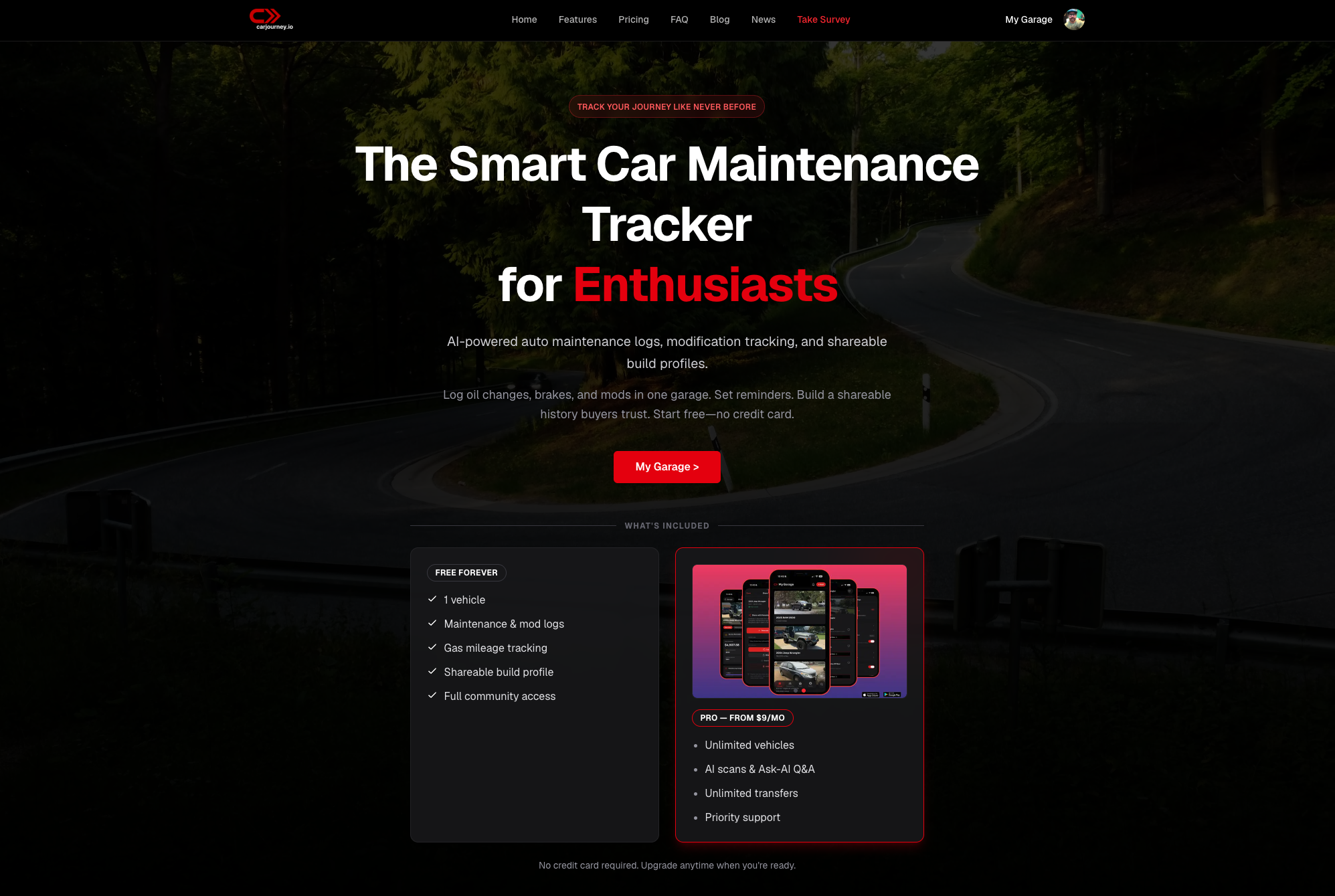
Carjourney uses AI to scan your service documents, flag upcoming maintenance based on your exact vehicle build, and answer detailed questions about your specific car or truck. Whether you manage one vehicle or a full fleet, Carjourney gives you a complete maintenance tracker that works alongside your GPS system. The platform is built by gearheads and engineers in Virginia who believe vehicle management should be straightforward, not scattered across receipts and forum threads.
FAQ
What are the main benefits of car tracking?
Car tracking improves vehicle security, reduces fuel and operating costs, monitors driver behavior, and enables predictive maintenance. GPS and telematics data together give owners and fleet managers a complete picture of vehicle health and usage.
How much can GPS tracking reduce fuel costs?
Route optimization and idle monitoring reduce fuel costs by 20–30% and can lower overall operating costs by 15–40%. Results typically appear within the first 90 days of implementation.
Does car tracking lower insurance premiums?
Tracking systems that meet recognized insurer standards, such as Thatcham-approved devices, can reduce commercial auto insurance premiums by up to 20%. The discount reflects the lower theft and accident risk associated with monitored vehicles.
How do I reduce driver resistance to tracking?
Introduce tracking with a written policy that frames the system as a safety tool, not a monitoring tool. Research shows this approach reduces initial resistance by 60% compared to programs that lead with performance monitoring.
What is the difference between OBD-II and hardwired trackers?
OBD-II devices plug into the vehicle’s diagnostic port and suit temporary or leased vehicles. Hardwired units integrate into vehicle wiring, resist tampering, and support advanced features like engine immobilization, making them the better choice for permanent fleets.