 carjourney
Table of Contents
- Why Track Vehicle Modifications in a Digital Garage
- Quick Comparison Table
- How to Document Project Car Builds
- CarJourney: AI-Powered Build Logging and Service Tracking
- FIXD: Real-Time Diagnostics for Modified Vehicles
- Dragy: Performance Metrics and Modification Impact
- Tracking Car Modifications for Insurance and Resale
- Choosing the Right Modification Tracker for Your Needs
- Frequently Asked Questions
Last Updated: September 17, 2026
Why Track Vehicle Modifications in a Digital Garage
A digital garage consolidates modification records, receipts, photos, service logs, upgrade timelines, in one searchable place instead of scattered across email attachments, filing cabinets, and phone photos. This matters for resale value, insurance claims, and knowing what you've invested in your car.
The real value emerges when you need to prove your vehicle's history: buyers want evidence modifications were done correctly, insurers need documentation of aftermarket parts, and you need to remember when you made changes and what they cost. Without organized records, you're working from memory.
Apps designed to track vehicle modifications handle the friction that keeps most enthusiasts from documenting their work. Photograph a part and receipt, and the app organizes it by date, category, and modification type.
Quick Comparison Table
| App | Best For | Key Strength | Free Tier |
|---|---|---|---|
| CarJourney | Comprehensive build documentation and resale proof | AI-powered logs + shareable build profiles | Yes |
| FIXD | Real-time diagnostics on modified vehicles | OBD-II integration for performance tracking | Yes (hardware required) |
| Dragy | Performance modification verification | GPS-based 0-60 and quarter-mile metrics | No |
| Openbay | Professional shop-based modifications | Service scheduling and price comparison | Yes |
How to Document Project Car Builds
Documenting a project car build requires capturing what you did, when you did it, and what it cost. Build documentation into your workflow rather than treating it as a separate task to avoid abandoning the effort.
Start with essentials: photograph the part before installation, capture the receipt, and note the date. Add performance data, technical notes, and links to products. For safety or legality-sensitive modifications, document compliance: Is it street-legal? Does it require inspection? What jurisdictions restrict it?
Compliance documentation is critical. A lowering kit legal in one state may violate ground clearance rules in another; a turbo kit may fail California emissions testing. Note the specific regulations your modifications affect and whether you've verified compliance, this matters when selling or relocating.
Timeline views show your build progression month by month, demonstrating intentionality to buyers rather than random purchases. They also track when modifications might affect compliance: if you lowered your vehicle in 2023 and moved to a stricter state in 2024, your timeline shows the sequence and what adjustments may be needed.
Documenting modifications forces clarity on what actually worked. You log a suspension upgrade with before/after notes, and later you remember why you chose it. For performance modifications, objective data (0-60 time, quarter-mile, dyno numbers) grounds subjective impressions.
For compliance tracking, create a checklist including: part name and manufacturer, installation date, jurisdiction, relevant regulations, compliance verification status, and inspection requirements. Some modifications like emissions equipment require installer documentation; cosmetic changes may not. Document upfront to avoid surprises when selling or relocating.
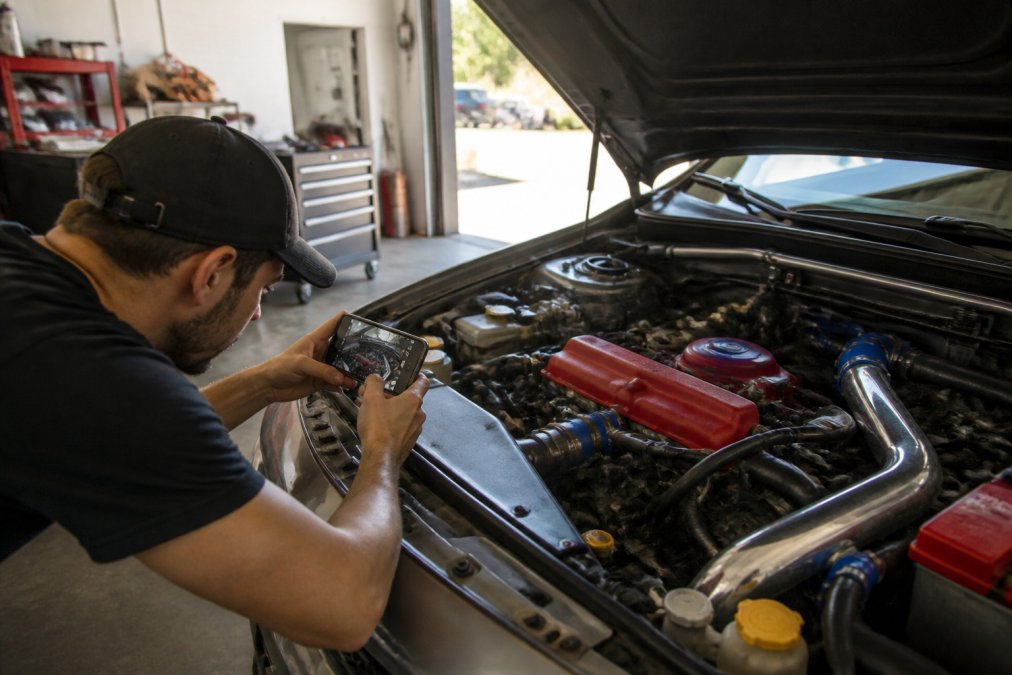
Pro Tip Photograph modifications from multiple angles before installation, with parts clearly visible. A single wide-angle shot of an installed part tells you almost nothing; you need close-ups that show fitment, quality, and any custom work involved. For compliance-sensitive modifications like suspension or brake work, photograph the installation process itself to document that it was done correctly. Watch Out If you're unsure whether a modification is street-legal in your jurisdiction, research it before installation. Some modifications like engine tuning or emissions system removal can result in failed inspections, registration denial, or fines. Document your compliance research in your build log so you have evidence you made an informed decision.Look for apps that tag modifications by category (performance, cosmetic, safety, compliance-sensitive) and add custom fields for regulatory information. This generates compliance reports for insurers or buyers. Photo organization, timeline views, and custom tagging matter more than simple checklists.
CarJourney: AI-Powered Build Logging and Service Tracking
CarJourney combines AI-powered logging with VIN-based setup, eliminating manual data entry friction while keeping build records organized and shareable.
The standout feature is shareable build profiles that prove vehicle care to buyers. Instead of emailing scattered photos and receipts, create a single profile showing complete modification history, service intervals, parts, and performance metrics. Documenting these upgrades provides a clear narrative of your rig's evolution, especially when integrating specialized off-road vehicle accessories that define the character of your build.
The Ask-AI Q&A feature lets you query logged data, "What was my total spending on suspension upgrades?" or "When did I last service the transmission?", transforming your build log into an active tool.
Best For DIY enthusiasts building a project car over months or years, and anyone preparing to sell a modified vehicle who needs to prove every upgrade and service.CarJourney's unlimited modification tracking means no premium tier constraints. The reminder system ties to both time and mileage, a turbo build might need oil changes every 3,000 miles instead of 5,000, and CarJourney adapts to that reality.
The free plan gives you access to core documentation features. CarJourney offers various pricing tiers, which can be found on their website, but the free tier is genuinely functional for build tracking.
FIXD: Real-Time Diagnostics for Modified Vehicles
Watch Out FIXD's trouble code monitoring is most valuable if your modifications include engine tuning or forced induction. For bolt-on aesthetic upgrades, you won't see much benefit from the diagnostic features.The free tier includes basic diagnostics and maintenance reminders. Premium features unlock advanced reporting and integration with professional shops, but the free version is sufficient for personal tracking.
Dragy: Performance Metrics and Modification Impact
The hardware requires a one-time investment, and there's no free tier. The app itself is free once you own the device, but the upfront cost means this is for serious performance enthusiasts, not casual documenter.
Key Takeaway Use Dragy specifically to verify that expensive performance modifications (turbo kits, engine builds, suspension upgrades) actually delivered the gains you expected. Pair it with a broader tracking app like CarJourney for complete documentation.Tracking Car Modifications for Insurance and Resale
Your insurance company needs to know about modifications because they affect risk assessment, coverage limits, and premiums. Turbo upgrades change performance characteristics; lowering kits affect suspension geometry; custom wheels change speedometer accuracy. Failing to disclose modifications can void coverage, leaving you personally liable.
Most auto policies require notification of modifications affecting safety, performance, or value: engine modifications, suspension work, brake upgrades, and significant cosmetic changes. Forced induction, engine tuning, and structural modifications require disclosure; bolt-on aesthetics often don't.
Documentation matters because insurers evaluate risk based on evidence. A turbo kit installed by a professional shop with documented work and maintenance records presents lower risk than DIY installation. Professional photos, invoices, and maintenance logs showing you've kept up with increased service demands strengthen your position in claims.
Quality upgrades add resale value: upgraded cooling on turbocharged vehicles, larger brakes on performance builds, suspension improvements that reduce body roll. Questionable modifications reduce value: extreme lowering, aggressive camber, engine tuning that voids warranty, or abuse indicators like roll cages on street cars.
Emphasize intentionality and quality in your build profile. Document the specific kit, professional installation with fitment photos, tuning by a reputable tuner, and maintenance schedule. Buyers pay premiums for well-documented vehicles because they can assess reliability; mystery cars sell for less.
When preparing to sell, create a buyer-facing timeline showing major upgrades, professional invoices, performance data, and maintenance logs. Apps like CarJourney generate shareable build profiles that reduce buyer uncertainty and justify higher asking prices.
Photograph modifications from multiple angles before installation.
Watch Out Do not assume your insurer will accept modifications without asking. Contact them before making major changes, not after. Some insurers have specific requirements for turbo kits, engine builds, or suspension work. Disclosing modifications upfront prevents coverage denial later.Choosing the Right Modification Tracker for Your Needs
Pro Tip Most serious enthusiasts use multiple tools in combination. CarJourney for comprehensive documentation, FIXD for diagnostics on modified vehicles, and Dragy for performance verification. The tools complement each other rather than compete.Research from the Specialty Equipment Market Association shows that properly documented modifications increase resale value by an average of 8-12% compared to undocumented upgrades. This alone justifies investing time in a solid tracking system.
Frequently Asked Questions
What's the best app to track vehicle modifications?
The best app depends on your goals. CarJourney excels at comprehensive modification and maintenance logging with shareable build profiles, making it ideal for documenting complete project cars. FIXD works best if you want real-time diagnostics tied to your mods. Dragy is the choice for performance enthusiasts who need exact data on how modifications affect acceleration and speed. Consider what matters most: general build documentation, diagnostic health monitoring, or performance metrics.
How do I keep a digital log of my car build?
Start by uploading photos of each modification stage and recording installation dates and costs. Use your app's maintenance schedule feature to log service milestones tied to mileage or calendar dates. Store receipts and technical notes for each part, most apps let you attach files or photos. Many platforms allow you to tag modifications by category (engine, suspension, aesthetic), making it easy to review your build timeline and share your progress with the community or potential buyers.
Why should I track my vehicle modifications for insurance purposes?
Insurance companies need accurate records of aftermarket parts and upgrades to calculate proper coverage and premiums. A documented modification history proves what work was done, when it was completed, and by whom, critical if you file a claim. Many insurers offer discounts for safety or performance upgrades when you provide proof. A digital build profile also protects your investment by establishing the vehicle's condition and value if you sell, and it helps you remember exactly what was modified if you need to troubleshoot issues.
Can I use a mobile app to manage both project car maintenance and upgrades?
Yes. Apps like CarJourney handle both simultaneously, they track routine maintenance (oil changes, tire rotations) alongside custom modifications and upgrades. You can log service history, set reminders based on mileage or time intervals, and organize everything by modification type or service date. This unified approach means your complete vehicle story lives in one place, making it easier to spot patterns, plan future work, and prove your car's care history to buyers or insurers.
Tracking vehicle modifications transforms from a tedious chore into a practical investment when you use the right tool. CarJourney combines the comprehensive documentation you need with the shareable build profiles that prove your vehicle's value to future buyers. Start with the free plan, document your modifications consistently, and you'll have a complete digital record of every upgrade, service, and dollar spent on your vehicle.
Start free