 carjourney
From the CarJourney journal
How Do You Prevent Rust on a Daily-Driven Car?
Last Updated: October 31, 2026
Quick Summary
To prevent rust on a daily driver, wash the car every one to two weeks and rinse the undercarriage after winter driving or salted roads. Dry seams and wheel wells, touch up chips quickly, and consider a yearly rustproofing treatment before winter.
- Wash a daily driver every one to two weeks to help prevent rust.
- Rinse the undercarriage within a few days of driving on salted roads.
- Clean inner wheel wells first, since mud packs there and stays wet for days.
- Dry seams, drain points, and door jambs so water does not sit against the metal.
- Consider a yearly rustproofing treatment for cars in cold, salted regions.
Table of Contents
- Why Daily-Driven Cars Rust Faster Than Garage Queens
- How Often to Wash a Daily-Driven Car to Prevent Rust
- How to Remove Road Salt From a Car Safely
- Washing and Drying the Underbody and Wheel Wells
- Is Car Rustproofing Spray Worth It for a Daily Driver?
- How to Fix Small Rust Spots on a Car Before They Spread
- Building a Daily-Driver Rust Prevention Schedule
- Frequently Asked Questions
Why Daily-Driven Cars Rust Faster Than Garage Queens
Daily drivers rust faster than cars that sit in a garage for a simple reason: they get wet, dirty, and salted again and again. The cars with the most rust trouble are almost always the ones driven through every season.
Rust needs three things: moisture, oxygen, and a damaged surface. A daily driver supplies all three almost every week. Rain splashes the underbody. Mud packs into the wheel wells. Small chips from gravel expose bare metal.
Garage queens avoid most of that exposure. Their paint stays dry, and dirt has little chance to sit on the metal and hold moisture against it.
- Daily drivers face rain, snow, and road spray on every trip
- Mud and grit trap water against body panels and the frame
- Stone chips from highway driving expose bare metal
- Cold climates add road salt to the mix
Watch out: Parking outside under trees feels harmless, but sap, bird droppings, and wet leaves hold moisture on the paint for days.
How Often to Wash a Daily-Driven Car to Prevent Rust
Most daily drivers need a wash every one to two weeks to help prevent rust. Cars driven through winter storms or on salted roads need one more often. The goal is to remove the dirt and residue that hold moisture against the metal.
Many owners wash only the paint and skip the rest. That leaves the places rust starts unwashed.
A simple routine that works for most people:
- Rinse the car at least every two weeks as part of a complete upkeep routine that keeps the whole car protected.
- Wash within a few days after heavy rain or snow
- Rinse the undercarriage every time after winter driving
- Dry the car with a microfiber towel so water does not sit in seams
Washing in freezing weather can trap water in door jambs and locks, so dry those areas carefully.
How to Remove Road Salt From a Car Safely
Road salt is one of the fastest ways a daily driver starts to rust.
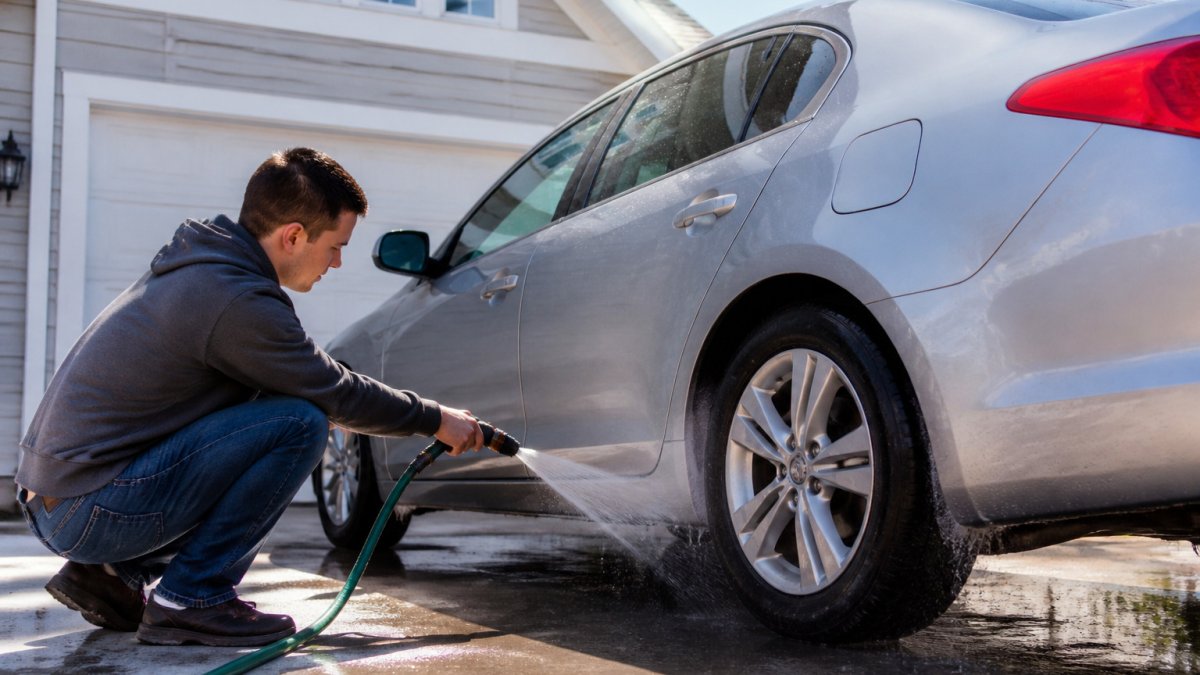
The timing matters as much as the method. Rinse the undercarriage and lower body within a few days of driving on salted roads, and sooner if temperatures are above freezing and the salt is still wet.
A safe at-home sequence:
- Park on a flat surface in the open air, away from direct sun, so the panels are cool to the touch.
- Rinse the lower body panels, rocker panels, and wheel wells with a garden hose, working from the top of each panel down.
- Spray the undercarriage with a pressure washer on a low-to-medium setting, keeping the nozzle moving and holding it at least 12 inches from delicate parts.
- Wash the car with a pH-neutral car shampoo and a soft mitt, then rinse thoroughly.
- Dry all seams, door jambs, and the lower edges of doors with a microfiber towel or forced air.
Where salt hides:
- The inner lips of wheel wells, where mud and salt pack together
- Rocker panels and the lower edges of doors
- Frame rails, subframe mounts, and suspension components
- Drain points and seams around the trunk, hood, and doors
- Behind mud flaps and under trim pieces
Avoid blasting paint chips, loose trim, or damaged seals directly with high pressure. Careful attention to these vulnerable areas prevents moisture from accumulating in crevices where it might otherwise compromise structural integrity or complicate the process of maintaining performance parts.
Regional differences change the routine:
- Snowy, salted regions: Rinse the undercarriage every week or two through winter and again after the last salt application of the season. Many drive-through car washes offer an underbody spray, which is a useful option when you cannot rinse at home after a snowstorm.
- Coastal regions: Salt spray from the ocean behaves much like road salt. Rinse the lower body and undercarriage after coastal driving, especially after storms.
- Humid or rainy regions: Salt is less of an issue, but mud and organic debris still hold moisture. Focus on rinsing wheel wells and drain points and on drying seams after rain.
A common pattern among owners who avoid early rust is a simple rule: if the roads were treated, the undercarriage gets rinsed before the next week is out.
The steps below sum up the safe at-home sequence for removing road salt, along with how often to rinse by region.
| Step | What to do | Time or frequency |
|---|---|---|
| Park | Flat surface in open air, away from direct sun | Before every rinse |
| Rinse lower body | Garden hose, top of each panel down | Within a few days of salted roads |
| Spray undercarriage | Low-to-medium pressure, nozzle at least 12 inches away | Within a few days of salted roads |
| Wash | pH-neutral shampoo and soft mitt, rinse thoroughly | Same session as rinse |
| Dry seams | Microfiber towel or forced air | Immediately after washing |
| Snowy regions | Rinse undercarriage | Every week or two through winter |
| Coastal regions | Rinse lower body and undercarriage | After coastal driving and storms |
Washing and Drying the Underbody and Wheel Wells
The underbody and wheel wells hold the most salt and grime, yet they get the least attention. Cleaning them well takes a few extra minutes but pays off in fewer rust spots later. The wheel wells, rocker panels, and frame rails are commonly where daily-driver rust starts first.
11 RUST PREVENTION HABITS CAR OWNERS USE (Try These!)
Mechanic Hacks
A method that cleans without damaging components:
- Rinse the inner wheel wells first. Mud packs there and stays wet for days. Work from the top of the arch down so debris does not collect at the bottom lip.
- Spray the frame rails, suspension parts, and the lower edges of the doors at an angle, keeping the nozzle moving. Hold the wand at least 12 inches from brake lines, wiring, and rubber boots.
- Clean drain points and seams around the trunk, hood, and doors with a soft brush and a low-pressure rinse. These are the spots where water sits after a wash.
- Rinse the rocker panels and the lower edges of the doors last, since dirty water runs down onto them.
What to avoid:
- Do not spray directly into damaged seals, boots, or connectors. Water pushed behind trim or into the cabin causes more rust than it removes.
- Do not use high pressure on paint chips, loose trim, or undercoating that is already peeling.
- Do not skip the wheel wells because they are hard to reach; a wand attachment or a dedicated undercarriage spray at a car wash covers them.
Drying matters as much as washing. Water left in seams and under trim keeps the metal damp. Use a leaf blower or compressed air to push water out of hard-to-reach spots, then let the car air-dry in a sheltered area. Pay particular attention to the lower edges of doors, the trunk gutter, and the area behind the wheel-well liners.
Pro Tip A quick post-wash check: run a finger along the lower door edge and the trunk gutter. If it comes away wet, the car needs more drying time before it is parked. Watch Out Pressure washing directly into a damaged seal can push water into the cabin or behind trim, so spray at an angle and check the car's door seals afterward.If you park outside, avoid covering a wet car with a breathable cover. A damp vehicle under a cover, or in a humid garage with poor ventilation, can stay wet far longer than it would in the open air.
Is Car Rustproofing Spray Worth It for a Daily Driver?
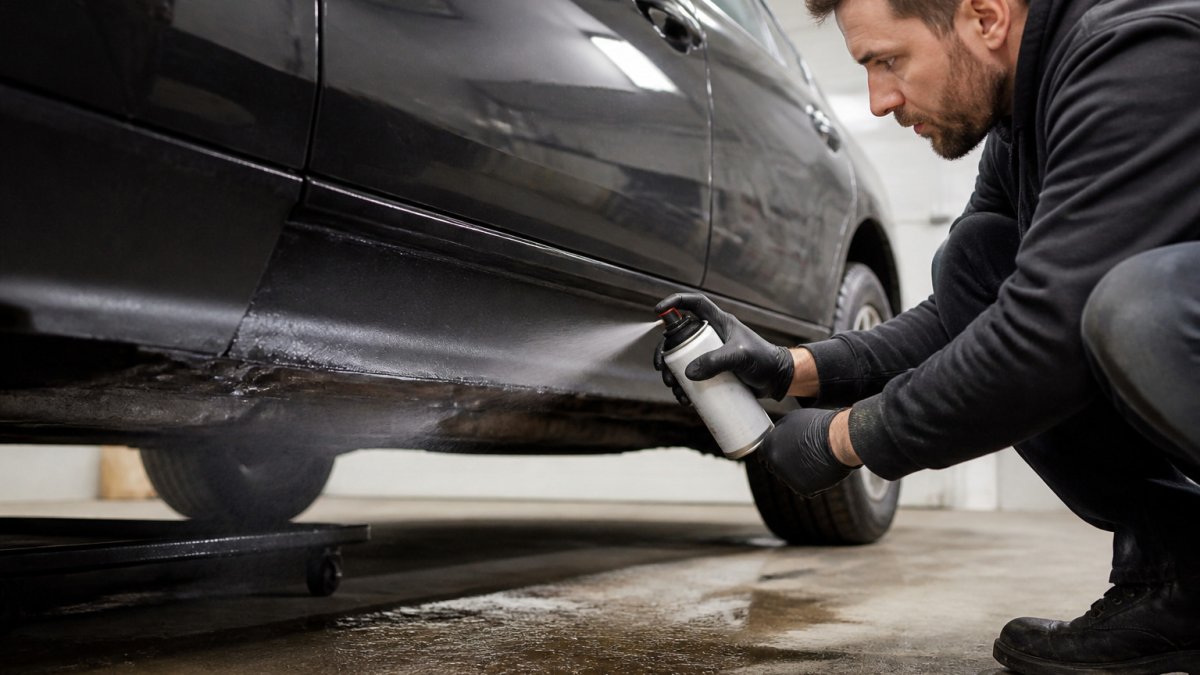
Car rustproofing sprays can help, especially for cars with a long life ahead of them. They form a coating over the metal that blocks moisture and salt. For a daily driver in a cold, salted region, a yearly application is often a reasonable choice.
Rustproofing works best when applied to clean, dry metal. Applying it over existing rust or dirt does little good. Results depend on the product and the application method, so read the label and follow the directions closely.
A few things to weigh:
- A spray helps most on the underbody and inner panels
- It does not replace regular washing
- Reapplication is usually needed each year
- Professional undercoating costs more but often lasts longer
How to Fix Small Rust Spots on a Car Before They Spread
Catching rust early makes a big difference. Surface rust is usually easy to remove, while deep rust eats through metal and gets expensive quickly.
Begin by inspecting the paintwork for chips, scratches, and bubbling. Press gently on any bubbled area, since soft spots mean rust underneath.
For a small surface spot:
- Sand the rust down to bare metal with fine sandpaper.
- Clean the area and wipe it with a degreaser.
- Apply a rust inhibitor primer.
- Touch up with matching paint and clear coat.
If the rust has gone through the panel or covers a large area, a body shop should look at it. Repairing it early keeps the cost lower and stops the damage from spreading.
Building a Daily-Driver Rust Prevention Schedule
A simple schedule makes rust prevention easy to stick to. Track your tasks the same way you track oil changes and tire rotations.
Here is a sample routine:
- Every 1-2 weeks: Wash the car and rinse the undercarriage
- After rain or snow: Rinse the lower body and wheel wells
- Monthly in winter: Check for salt buildup and clean the underbody
- Every spring: Inspect paint for chips and touch up any spots
- Once a year: Consider a rustproofing treatment before winter
Setting reminders in a maintenance tracker helps you keep these tasks on time, and logged records can show buyers that the car was cared for. The standard service intervals explain how to line these tasks up with your regular maintenance. Start with the weekly wash habit, then add the rest as your routine settles in.
Frequently Asked Questions
How often should I wash a daily-driven car to prevent rust?
Wash a daily-driven car every one to two weeks during winter, especially after roads have been treated with salt, and at least every two to four weeks the rest of the year. Frequent washing removes the road grime and salt that hold moisture against metal. Pay extra attention to the underbody and wheel wells, where salt tends to collect. Dry the car afterward, since water left sitting in seams and crevices can speed up corrosion.
Does washing the undercarriage help prevent rust?
Yes. The undercarriage takes the heaviest exposure to water, salt and mud, and salt residue left there can corrode frame rails, brake lines and floor pans over time. Use a pressure washer or a car wash with an undercarriage spray, and rinse thoroughly with plain water. Washing the underbody regularly and letting it dry is one of the most effective rust prevention habits for a daily driver.
Can WD-40 prevent rust on a car?
WD-40 can displace moisture and provide light, temporary protection, but it is not a long-term rustproofing product. It evaporates and washes off, so it needs frequent reapplication. For lasting protection on a daily driver, a dedicated rust inhibitor or rustproofing treatment designed for vehicles is a better choice. Use WD-40 for loosening stuck parts or wiping moisture from exposed hardware, not as your main prevention plan.
What should I do if I find a small rust spot on my car?
Clean the spot, remove loose rust with a wire brush or fine sandpaper, and feather the edges of the paint. Apply a rust converter or inhibitor to bare metal, then primer and touch-up paint to seal it. Acting early keeps the repair small and inexpensive. If the rust has pierced the panel or is spreading under the paint, a body shop assessment is worth the cost to avoid a larger repair.
Keeping a daily driver rust-free is mostly about consistency. Wash often, clean the underbody after winter, and fix small chips before they grow. Log each task so you can see your progress over time, and start with the habits that fit your schedule best.
Start free Add carjourney.io as a preferred source on Google →