 carjourney
From the CarJourney journal
How to Choose a Reliable Auto Mechanic in 7 Steps
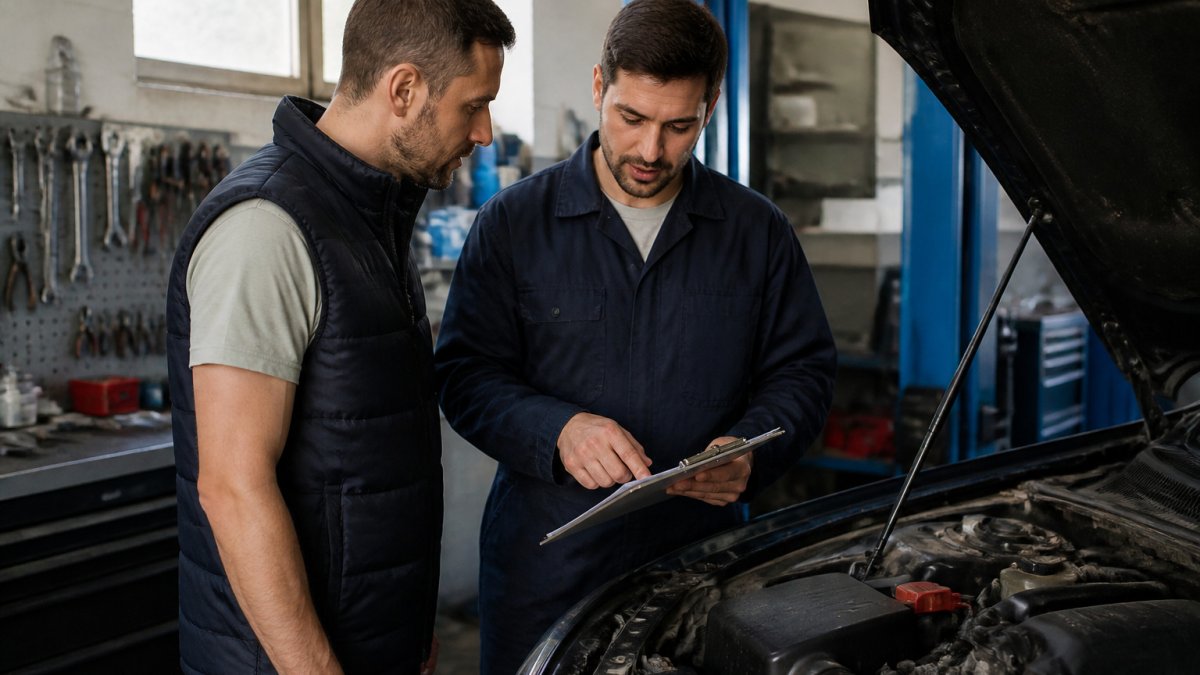
Last Updated: October 29, 2026
Quick Summary
A reliable auto mechanic is found by starting with referrals from people you trust, then confirming the shop works on your make and model. Check each technician's ASE certification, ask for a written estimate, and start with a small job to test the shop's honesty.
- Ask friends, family, and coworkers for referrals, and note shops mentioned more than once.
- Confirm the technician assigned to your repair holds a current ASE certification in the relevant area.
- Ask for a written estimate with parts, labor hours, diagnostic fee, and warranty terms itemized.
- Sort recommended repairs into safety-critical, needed soon, and optional before approving any work.
- Start with a small job like an oil change to test communication and honesty before major repairs.
Table of Contents
- Start With Recommendations and Shops That Match Your Vehicle
- Check Certifications and Specialization With a Verification Checklist
- Signs of a Good Auto Repair Shop Before You Hand Over the Keys
- Auto Repair Shop Reviews: How to Read Them and What They Miss
- Questions to Ask an Auto Mechanic Before Approving Work
- How to Compare Auto Repair Estimates and Spot Upselling
- Booking Your First Visit to a Mechanic You Can Trust
- Frequently Asked Questions
Start With Recommendations and Shops That Match Your Vehicle
Picking a good auto mechanic is one of the most important car decisions you will make, and finding a reliable auto mechanic starts with knowing what to look for.
Start with people you already know. Friends, family, and coworkers often have the best leads. Ask who they use, how long they have gone there, and whether the bill matched the estimate.
Ask people you trust for referrals
When you ask for a recommendation, get specific. Ask about the type of work they had done, the price range, and how the shop handled problems. Write down the names that come up more than once.
- Ask friends, family, and coworkers who work on cars they trust
- Ask in local neighborhood groups or community forums
- Note which shops are mentioned repeatedly
Match the shop to your make, model, and EV or hybrid systems
Not every mechanic works on every car. A shop that handles domestic trucks may not know the electronics in a hybrid or electric vehicle. Check whether the shop has experience with your vehicle make and model before you book.
EVs, hybrids, and cars with advanced driver-assistance systems need special tools and training. Ask whether the technicians have diagnostic skills for those systems.
Check Certifications and Specialization With a Verification Checklist
Certifications are only useful if you can verify them. Most guides tell you to "look for ASE certification" and stop there. The real skill is knowing which credential matters for your repair, how to confirm it is current, and how to tell a genuinely specialized shop from one that simply owns a scan tool.
Decode what the ASE credential actually means
The National Institute for Automotive Service Excellence (ASE) administers independent, timed exams for technicians (Register Now - Registration Dates and Fees). Some owners also track their vehicle's service history independently of the shop with CarJourney Pro Yearly.
Ask a direct question: "Which ASE certifications does the technician who will work on my car hold, and are they current?" A credential earned long ago that has not been renewed is not the same as an active one.
Verify credentials instead of taking the sign's word
You do not have to accept a window sticker as proof. ASE maintains a technician lookup that lets you search by name and see certification areas and status. Ask for the technician's name, then check it.
State licensing and insurance are separate from ASE and vary by state. Ask the shop for its business license number and its insurance carrier, and confirm the policy is active.
Assess specialization with evidence, not adjectives
"We work on everything" is not specialization. Specialization shows up in concrete ways:
- Volume and repetition. Ask what share of the shop's work is your type of repair, transmissions, diesel, hybrids, European makes. A shop that does ten of those jobs a week will diagnose faster than one that sees one a month.
- Tooling. Ask to see the equipment or ask how they handle ADAS recalibration.
- Factory-level information access. Ask whether the shop has current access to your manufacturer's repair procedures and software updates, especially for software-heavy late-model vehicles.
Use a verification checklist you can actually complete
- Get the name of the technician assigned to your repair and confirm their ASE certification area and current status through ASE's lookup
- Confirm the shop's state business license and active insurance, and note the policy carrier
- Ask what percentage of the shop's work matches your repair type, and how many similar jobs it completed last month
A shop that answers these questions clearly is doing more than reciting a credential. It is showing you the machinery behind the claim.
Signs of a Good Auto Repair Shop Before You Hand Over the Keys
You can learn a lot about a shop before you approve any work. Pay attention to how the staff talks to you and how the shop looks.
How to pick a good mechanic (and become a favorite customer)
Dorman Products
A good shop usually shows these traits:
- Clean waiting area and organized service bays
- Technicians who explain the problem in plain language
- A written estimate before any work starts
Red flags deserve attention. Watch for pressure tactics, such as urgent warnings that the car is unsafe to drive when it is not. Be wary of shops that refuse to put estimates in writing or push you to approve work the same day.
Auto Repair Shop Reviews: How to Read Them and What They Miss
Online reviews can help you spot patterns. Contextualizing these individual experiences becomes much easier when using repair reviews to identify the most dependable shops in Largo.
Do not rely only on the highest ratings. Read the lowest-rated reviews too.
Reviews also miss things. A glowing review may come from a customer with a simple oil change, not a complex engine job.
Questions to Ask an Auto Mechanic Before Approving Work
Good questions protect you from surprises. Ask them before you approve any repair.
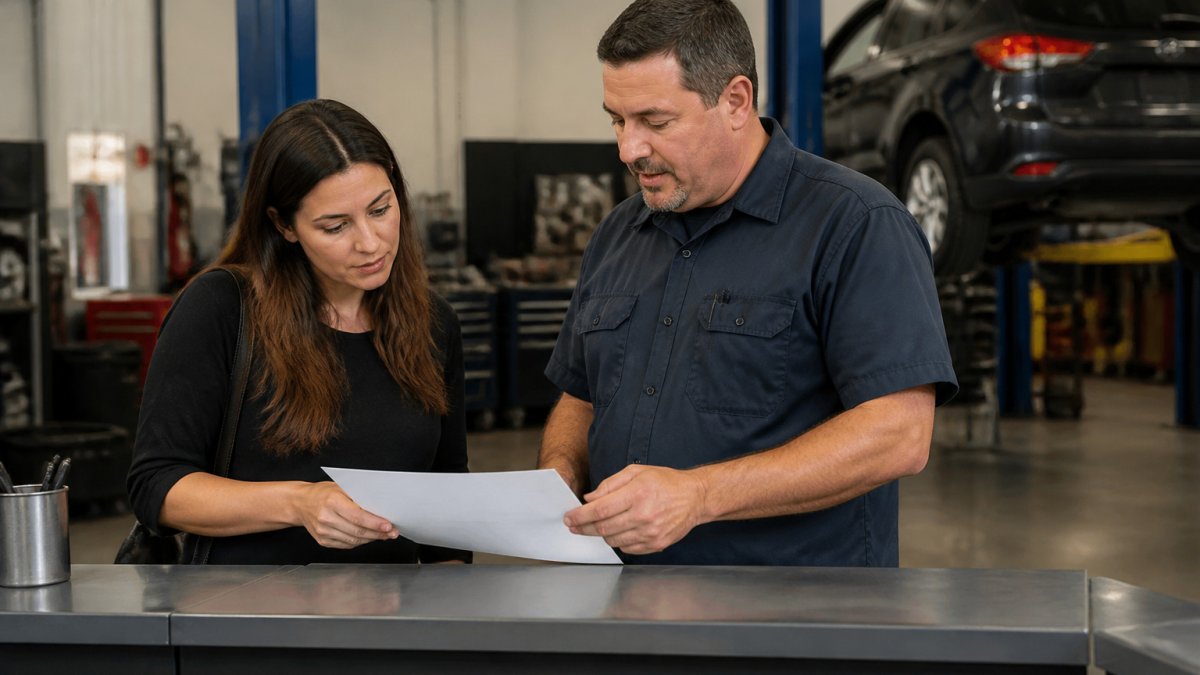
- What is the diagnostic fee, and does it apply toward the repair?
- Can you explain the problem and show me the damaged part?
- What is the labor rate, and how many hours do you expect the job to take?
Listen to how the mechanic answers. Clear, patient answers usually mean a trustworthy shop. Vague answers or defensiveness suggest you should keep looking.
How to Compare Auto Repair Estimates and Spot Upselling
Two estimates for the same repair can differ by hundreds of dollars and still both be legitimate, or one can be padded. The difference is in the line items. Learning to read an estimate line by line is the single most useful skill for protecting your wallet, and it is the step most guides skip.
Know what a complete written estimate contains
A trustworthy written estimate is more than a total. It should show, for each recommended repair:
- The complaint or diagnostic finding in plain language, tied to a specific symptom or code
- Parts, listed by description and part number, with new, remanufactured, or used clearly identified
- Labor, shown as hours at a stated labor rate (for example, 2.5 hours at the shop's posted rate), not a lump sum
If an estimate shows only a total, ask for the breakdown before you compare anything.
Compare estimates on the same basis
A lower total is meaningless if the estimates cover different work. Normalize before you judge:
- Match the scope. Confirm both estimates address the same diagnosis and the same components. One shop may quote a full assembly replacement while another quotes a repair kit.
- Compare parts quality. A cheaper estimate may use economy-grade or used parts. Ask each shop to quote the same tier, original equipment manufacturer (OEM), premium aftermarket, or economy, so the comparison is apples to apples.
- Compare labor hours, not just rates. A much lower hour count can mean skipped steps; a much higher one deserves a question.
- Check the warranty. Warranty terms vary, so compare the duration and mileage limits each shop offers.
- Account for the diagnostic fee. If one shop charges a diagnostic fee that is not credited and another credits it toward the repair, the effective difference is smaller than the totals suggest.
Spot upselling with a priority framework
Upselling is not always dishonest; vehicles do need maintenance. The problem is pressure to approve work that is not urgent. Ask the shop to sort every recommended item into three buckets:
- Safety-critical: brakes below specification, steering or suspension components with play, tires at the wear bars, fuel or brake lines leaking. These should be addressed now.
- Needed soon: items trending toward failure, a battery testing near its limit, tires at 4/32 inch, a minor fluid seep. Schedule within a defined window.
- Optional or deferrable: services the manufacturer does not require at your mileage, cosmetic items, or "while we're in there" add-ons.
Common upsell patterns to question: fluid flushes not called for in your owner's manual maintenance schedule, "recommended" services with no measurement or test result attached, and same-day pressure to approve additional work discovered mid-job. A legitimate shop will show you the measurement, brake pad thickness in millimeters, tire tread depth in 32nds of an inch, a battery test printout, rather than assert a need.
Handle a diagnosis that seems wrong
If a recommendation does not match your symptoms or your records, you have options short of arguing:
- Ask for the evidence. Request the test results, measurements, or diagnostic codes behind the recommendation.
- Get a second opinion. Pay for an independent diagnostic at another shop and compare findings. Keep both written reports.
- Check your records. Review prior service history so you do not pay twice for work already done. A maintenance log makes this fast.
- Escalate if needed. If you believe you were misled, contact your state attorney general's consumer protection office or the consumer affairs division that oversees auto repair. Keep your estimates, invoices, and communications.
A shop that welcomes questions and documents its findings is the one you want. A shop that resists scrutiny is telling you what the next repair will feel like.
The table below sums up how to sort recommended repairs by urgency, so you can tell what needs approval now from what can wait.
| Priority | What it covers | Timing |
|---|---|---|
| Safety-critical | Brakes below spec, steering or suspension play, tires at wear bars, fuel or brake line leaks | Address now |
| Needed soon | Battery near its test limit, tires at 4/32 inch, minor fluid seep | Schedule within a defined window |
| Optional or deferrable | Services not required at your mileage, cosmetic items, add-ons | Defer or decline |
Booking Your First Visit to a Mechanic You Can Trust
Start with a small job, like an oil change or tire rotation. A simple visit lets you test the shop's communication, timeliness, and honesty before you need major work.
Bring your maintenance records and tell the shop your concerns clearly. To keep a digital maintenance binder of each visit, you can store receipts and track service history in one place.
After the visit, record the work in your maintenance log.
Frequently Asked Questions
How do you know if an auto repair shop is good?
Look for current ASE certification on staff, a clean and organized shop, clear written estimates, and a warranty on parts and labor. Read recent reviews on several platforms and pay attention to how the shop responds to complaints. Ask whether the technicians have experience with your make and model. A good shop explains the diagnosis in plain language, shows you the failed part when practical, and does not pressure you into same-day decisions on non-urgent work. Compare what you observe against the signs listed earlier in this guide before you commit to a repair.
Should you get a second opinion on a car repair estimate?
Yes, especially for major repairs such as transmission, engine, or electrical work, or when the estimate is much higher than you expected. Ask the first shop to write down the diagnosis and the failed parts, then take that information to another certified shop and ask for their own written estimate. Diagnostic fees are often charged for the second visit, so ask about that cost before you go. A second opinion also helps you catch unnecessary repairs and gives you a fair baseline for labor rates and parts cost.
How can you tell if a mechanic is being honest?
Honest mechanics explain what failed, show you the worn part if they can, and separate urgent safety repairs from items that can wait. Red flags include vague descriptions of the problem, pressure to decide immediately, recommended repairs that are not written down, and refusal to return replaced parts. Ask for a written estimate that lists parts, labor hours, and the labor rate before any work begins. If the explanation keeps changing or the shop becomes defensive when you ask questions, consider getting a second opinion.
What should a written auto repair estimate include?
A complete written estimate lists each part with its price, the labor hours and labor rate, any diagnostic fee, shop supplies, and taxes. It should describe the problem and the proposed repair in plain language and state the repair warranty or service guarantee. Ask the shop to separate required repairs from recommended repairs so you can prioritize. Keep the estimate with your maintenance records so you have a clear service history for future reference and for resale.
Start free Add carjourney.io as a preferred source on Google →