 carjourney
From the CarJourney journal
Car Records for Families That Stay Organized
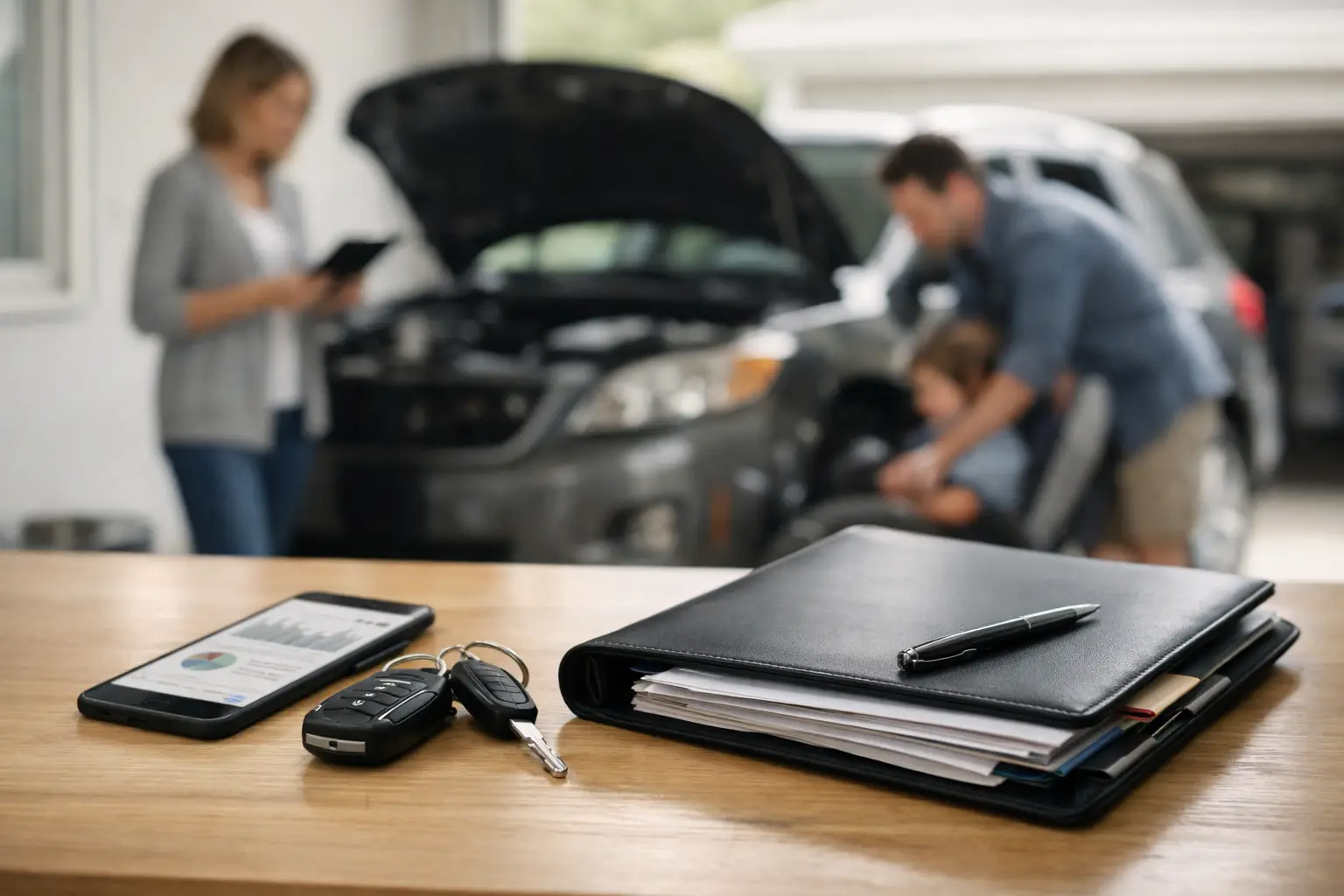
The family garage can get complicated fast. One vehicle needs tires before winter, another has a warranty repair pending, and the project car has a box of receipts nobody can find. Car records for families turn that pile of reminders, invoices, and half-remembered conversations into a history you can actually use.
For households with more than one driver or vehicle, good records are not just about being organized. They help prevent missed maintenance, make shared ownership less confusing, protect money spent on upgrades, and give future buyers a reason to trust the vehicle. The right system also means the person who usually handles car tasks is not the only one who knows what is due next.
Why family vehicle records get messy
Most families do not set out to lose track of vehicle history. Records simply spread out over time. A repair invoice stays in a glove box. An oil-change sticker becomes the maintenance plan. A parent saves a warranty PDF in email, while a teenager keeps modification notes in their phone. A spouse knows the truck had brakes done last spring but cannot remember which shop did the work.
That approach works until it does not. You may pay for a service twice because no one can confirm when it was completed. You may miss a time-based fluid service on a low-mileage weekend vehicle. When it is time to sell, a stack of faded paper receipts does little to tell the story of how well the vehicle was cared for.
A shared digital record gives every vehicle its own home. It creates a clear answer to basic questions: What was done? When was it done? At what mileage? What did it cost? Who performed the work? Those details matter whether the vehicle is a daily-driver crossover, a college commuter, a tow rig, or a long-term build.
What car records for families should include
Start with information that helps you make decisions, not every random detail that has ever touched the car. The goal is a useful ownership history that a driver, parent, partner, or buyer can understand quickly.
Maintenance and repair history
Log routine services such as oil changes, tire rotations, brake inspections, battery replacement, alignments, and fluid changes. Include the service date, odometer reading, shop or DIY notes, total cost, and the parts or fluids used when you know them.
For repairs, add the symptom and the fix. “Replaced front-left wheel bearing after highway-speed noise” is much more useful later than “shop visit.” If a problem returns, that note helps you see patterns and gives the next technician better context.
Mileage alone should not run the whole schedule. A car that sees short trips, hot summers, cold winters, towing, or long periods of storage may need attention based on time and use as well. Track both the last service and the next recommended interval.
Documents, warranties, and insurance details
Store documents that would be frustrating to hunt down during a breakdown, claim, or sale. This can include purchase paperwork, registration details, insurance information, extended-warranty terms, recall repair receipts, inspection reports, and major repair invoices.
For modified vehicles, keep documents for expensive components. A receipt and warranty record for coilovers, wheels, a supercharger, or an audio system can save real money if a part fails. It also proves that the upgrade was not just listed in an ad with no evidence behind it.
Be selective about sensitive personal information. A shared vehicle record should be accessible to the right people, but it does not need to become a dumping ground for every private document. Store what supports ownership and service decisions, and use appropriate account security for anything confidential.
Modifications and build details
A modification is part of the vehicle's history, not an afterthought. Record the brand, part number, installation date, cost, installer, tuning requirements, and photos. If a part was removed or replaced, note that too.
This is especially valuable in a family where one person is building a car and another may eventually help maintain, insure, or sell it. A clean mod log answers questions that otherwise turn into guesswork: Which springs are installed? Is the exhaust stock? When was the tune loaded? Are the original parts still available?
Not every upgrade raises resale value dollar for dollar. Some buyers will pay more for a documented, thoughtfully built vehicle; others prefer stock. Records do not eliminate that trade-off, but they make the build easier to explain and help the right buyer see its value.
Costs that show the real ownership picture
Maintenance history is useful. Cost history is honest. Track labor, parts, tires, accessories, and major modifications so your household can see what each vehicle actually requires.
This is not about making every car justify itself on a spreadsheet. A project car can be worth the investment because it is your hobby, not because it produces a financial return. Still, knowing the numbers helps you plan for repairs, compare vehicles, and avoid underestimating what has gone into a car when setting an asking price.
Set up ownership roles without creating friction
A family record system works best when responsibility is clear. One person may be the primary owner of each vehicle, but other drivers should be able to see the information they need. A new driver, for example, should know the tire-pressure specification, where roadside coverage information lives, and what warning lights require an immediate call home.
For vehicles shared by partners, agree on who logs service after an appointment and who approves larger repairs. The answer can be simple, but it should not be assumed. A five-minute update after work is far easier than rebuilding a year of history when a car needs to be traded in.
Keep notes practical and neutral. If the minivan was returned with a low tire-pressure warning, record the inspection and repair rather than turning the service log into a household message board. The record should reduce friction, not create it.
Build a routine that people will actually follow
The best tracking system is the one your household uses after a busy Tuesday, not the one that looks impressive for two weeks. Make logging easy enough to happen from a phone before the receipt disappears. Photograph invoices at the shop counter or immediately after completing a DIY job.
Use reminders for predictable work, including oil changes, inspections, registration deadlines, tire rotations, and seasonal checks. For a vehicle driven by a student or a family member who is less involved in maintenance, reminders create a useful safety net without requiring them to become a service expert overnight.
A centralized garage app such as CarJourney can keep service logs, modifications, photos, documents, costs, and mileage- or time-based reminders in one place across devices. That matters when the family member at the repair shop is not the same person who holds the old paper records at home.
Do a quick review at the beginning of each season or every three months. Check upcoming services, tire condition, expiring documents, open repair concerns, and whether recent work was logged. This is also a good time to confirm that the mileage is current on vehicles that are not driven every day.
Make records work when it is time to sell or transfer a vehicle
A clean vehicle history reduces uncertainty. Buyers do not expect every old car to be perfect, but they want evidence that it was cared for. A documented record of routine maintenance, repairs, and known modifications is more convincing than a seller saying, “It has always been maintained.”
Before a sale or family transfer, review the history for gaps. Add missing invoices if you have them, organize major work in chronological order, and be honest about unresolved issues. If you have aftermarket parts, list what is installed and whether stock components come with the car.
The same records help when a vehicle stays in the family. Handing a first car down to a child or transferring a truck to another household member should not mean losing years of service knowledge. A documented history gives the next owner a better starting point and helps them care for the vehicle with confidence.
The goal is not perfect paperwork. It is a family garage where every vehicle has a story that is easy to find, easy to trust, and ready for the next mile.