 carjourney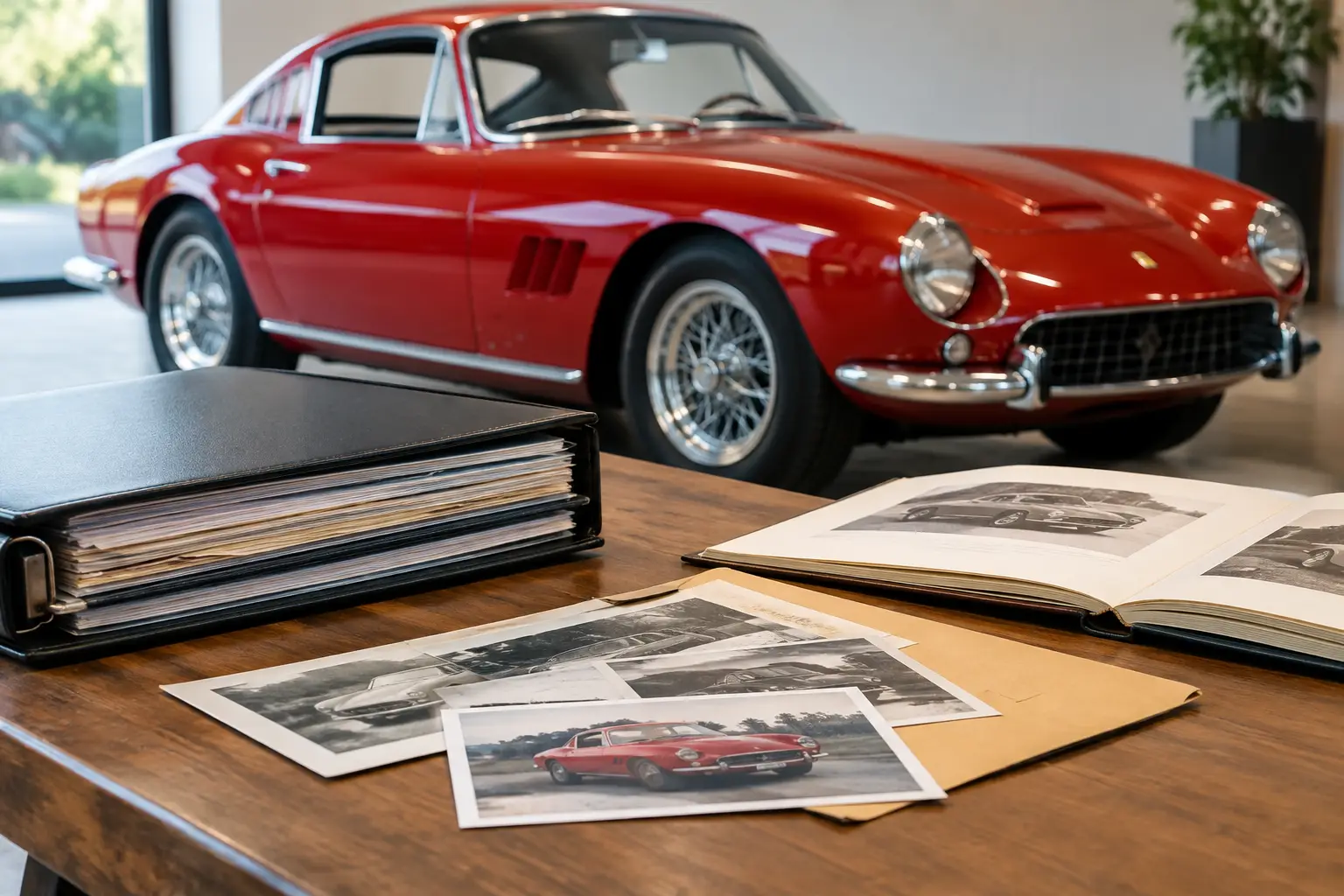
A buyer walks past a freshly detailed engine bay, checks the panel gaps, then asks a question that can matter more than the paint: “What’s the history?” That is where collector car provenance earns its place. For a desirable classic, modern collectible, or carefully built project, the story behind the vehicle can directly affect buyer confidence, authenticity, and value.
Provenance is not just a stack of old receipts. It is the documented chain of evidence that explains what a car is, where it has been, how it has been cared for, and why its current condition should be believed. A great car with thin records can still sell. But a great car with a clear, organized history gives the next owner fewer reasons to hesitate.
What Collector Car Provenance Actually Means
In the collector market, provenance combines several kinds of proof. Ownership history helps establish who cared for the car. Service records show whether maintenance was taken seriously. Original documents can support claims about equipment, delivery, mileage, restoration, and rarity. Photos, appraisals, period correspondence, and event history can add useful context.
The strongest provenance tells a consistent story. The VIN matches the title, registrations, invoices, and factory documentation. Mileage readings progress logically through inspection records and service visits. Restoration photos line up with the work described on invoices. If the car has a known owner, competition history, magazine feature, or award record, those details are supported rather than repeated as folklore.
That last point matters. Collector cars attract stories, and stories tend to grow over time. “One of 50” can become “one of five.” A supposedly numbers-matching engine may turn out to be a correct-date replacement. Good provenance does not make every claim more exciting. It makes the accurate claims easier to defend.
Why Provenance Changes a Car’s Value
A documented history reduces uncertainty. Buyers are not simply paying for a vehicle’s current appearance. They are pricing the risk behind it: hidden accident damage, questionable mileage, incomplete restoration work, missing original parts, title issues, or modifications with no supporting information.
A well-kept file does not erase those risks, but it gives a buyer a better way to evaluate them. An older repaint is less concerning when there are dated photos and invoices showing why it was done. A rebuilt engine becomes a positive when the machine shop work, parts list, and break-in service are documented. Even a car with imperfections can inspire confidence when the owner has been straightforward about its history.
The value impact depends on the vehicle. Provenance is especially powerful for rare production models, limited editions, low-mileage survivors, historically significant cars, and vehicles associated with notable owners or events. On a common driver-grade classic, records may not transform the market value overnight, but they can still make the car easier to sell and help it stand apart from similar listings.
Originality also changes the equation. A preserved car with factory paint, interior, drivetrain, manuals, and dealer paperwork can command a premium because those details are difficult to recreate. A fully restored car may be more visually impressive, but restoration quality and documentation matter more than a claim of originality that cannot be supported.
The Records That Matter Most
Not every document carries equal weight. Start with the records that establish identity and ownership, then build outward into maintenance, originality, and restoration history.
A useful provenance file typically includes:
- Title, registration history, and VIN-specific ownership documents
- Original sales paperwork, window sticker, build sheet, manuals, and warranty booklets when available
- Dated service invoices that show mileage, work performed, and the shop or technician involved
- Restoration invoices, parts lists, and before-and-after photos
- Appraisals, auction records, awards, event documentation, and correspondence tied to the specific car
Original factory documents are valuable, but they are not the only proof that matters. A car without its window sticker can still have excellent provenance through decades of service invoices, archived photographs, and documented ownership. Conversely, a car with a build sheet but no evidence of how it was treated for 40 years still has major gaps.
For higher-value cars, third-party verification can strengthen the file. A marque expert, recognized registry, factory archive, or qualified appraiser may be able to confirm production details and identify inconsistencies. The key is to keep those opinions separate from hard documentation. An expert assessment is useful evidence, but it should not replace VIN records, invoices, and physical inspection.
Service History Is Provenance in Motion
Many owners think of maintenance records as something practical, separate from collector value. In reality, consistent service history is one of the most convincing forms of modern provenance.
Oil changes, fluid services, brake work, tire replacements, alignment reports, battery records, and inspection documents show that the car was actively managed. On a low-mileage vehicle, they can also support the mileage story. On a frequently driven enthusiast car, they show disciplined ownership rather than neglect disguised by cosmetic preparation.
The details matter. A receipt that only says “repair” has limited value. A record that identifies the date, mileage, work performed, parts used, cost, and supporting photos tells the next owner much more. If a specialist performed the work, preserve that information too. The shop’s reputation can add context, particularly for engine rebuilding, paintwork, restoration, and marque-specific service.
Digital records are especially useful for cars you plan to own long term. Paper fades, gets lost, and rarely travels with the car in a clean format. A centralized digital history lets you store receipt images, log maintenance, attach photos, and keep mileage-based reminders from becoming forgotten intentions. CarJourney gives owners one place to document that ongoing history while the details are still fresh.
Modified Cars Need Better Documentation, Not Less
A modified car can have strong provenance. In some enthusiast circles, a high-quality build with respected components and careful execution is more desirable than a stock example. But modifications create more questions, so the recordkeeping standard should rise with the complexity of the build.
Document the exact parts installed, part numbers when possible, installer, date, mileage, cost, tuning information, and photos from the work. Keep alignment sheets, dyno results, corner-balance records, fabrication photos, and calibration files where relevant. If the car has a custom tune, the next owner needs to know who created it, what fuel it requires, and whether the factory calibration is available.
There is a trade-off. A modification may improve the ownership experience while narrowing the buyer pool. Keeping original wheels, exhaust components, intake parts, suspension pieces, and factory hardware can protect future flexibility. Even if you never return the car to stock, those parts and their documentation tell buyers that the build was done thoughtfully.
Do not hide changes to make a car look more original than it is. Honest documentation usually builds more trust than a vague listing that leaves buyers to discover modifications during an inspection.
How to Build a Provenance File Before You Sell
The best time to organize records is not the week you list the car. Build the file throughout ownership. Scan paper receipts as soon as you receive them, label photos by date and job, and record mileage whenever service or modifications are completed.
Create a simple timeline that begins with the earliest known record and continues through your ownership. Note major events such as purchase date, restoration milestones, engine work, accident repairs, long-term storage, concours awards, or track preparation. Keep the language factual. If you do not know something, say it is unverified rather than guessing.
When it is time to sell, provide a clean digital folder or organized binder while retaining copies for yourself. Put the most important documents first: title information, VIN verification, major service and restoration invoices, factory paperwork, and a concise timeline. A buyer should not have to dig through years of unrelated receipts to understand the car.
Also remember what provenance cannot do. It does not replace a pre-purchase inspection, paint-meter readings, a title check, or a knowledgeable evaluation of the actual vehicle. Documentation supports condition and authenticity claims. It should not be used to distract from mechanical issues or inconsistencies that deserve direct answers.
A History Worth Handing Over
The next owner is not just buying metal, leather, and horsepower. They are buying confidence in the decisions made before they arrived. Every organized receipt, service entry, photo, and honest note makes that confidence easier to earn.
Start documenting the car you have now. Years from today, the small details you record after a brake job or weekend install may become the proof that turns a good car into a trusted one.