 carjourney
From the CarJourney journal
How to Use AI for Car Care: 2026 Guide
AI-powered vehicle maintenance, known in the industry as predictive diagnostics and intelligent car care, gives you the ability to catch problems before they become expensive repairs. Learning how to use AI for car care means putting tools like OBD-II diagnostic apps, photo-based AI assessments, and smart maintenance assistants to work for your specific vehicle. AI transforms vehicle ownership by enabling proactive maintenance, financial planning, and safer driving through predictive alerts. This guide walks you through exactly what tools you need, how to use them step by step, and what pitfalls to avoid.
How to use AI for car care: tools you need first
The right tools determine how much value you get from AI car maintenance. You do not need a new vehicle to start. Most AI car care tools work through your smartphone and a low-cost OBD-II adapter that plugs into the diagnostic port under your dashboard.
AI diagnostic apps and assistants
AI auto mechanics analyze symptoms, diagnostic trouble codes (DTCs), and photos to deliver ranked probable causes, repair steps, estimated costs, and urgency levels. That means you get a prioritized list of what to fix first, not a confusing wall of error codes. Platforms like Jenova AI and VehicleScore pull from large datasets of real repair histories to give you context-aware answers. Rivian’s onboard AI assistant goes further by integrating vehicle sensor data directly into its recommendations.
What data you need to feed the AI
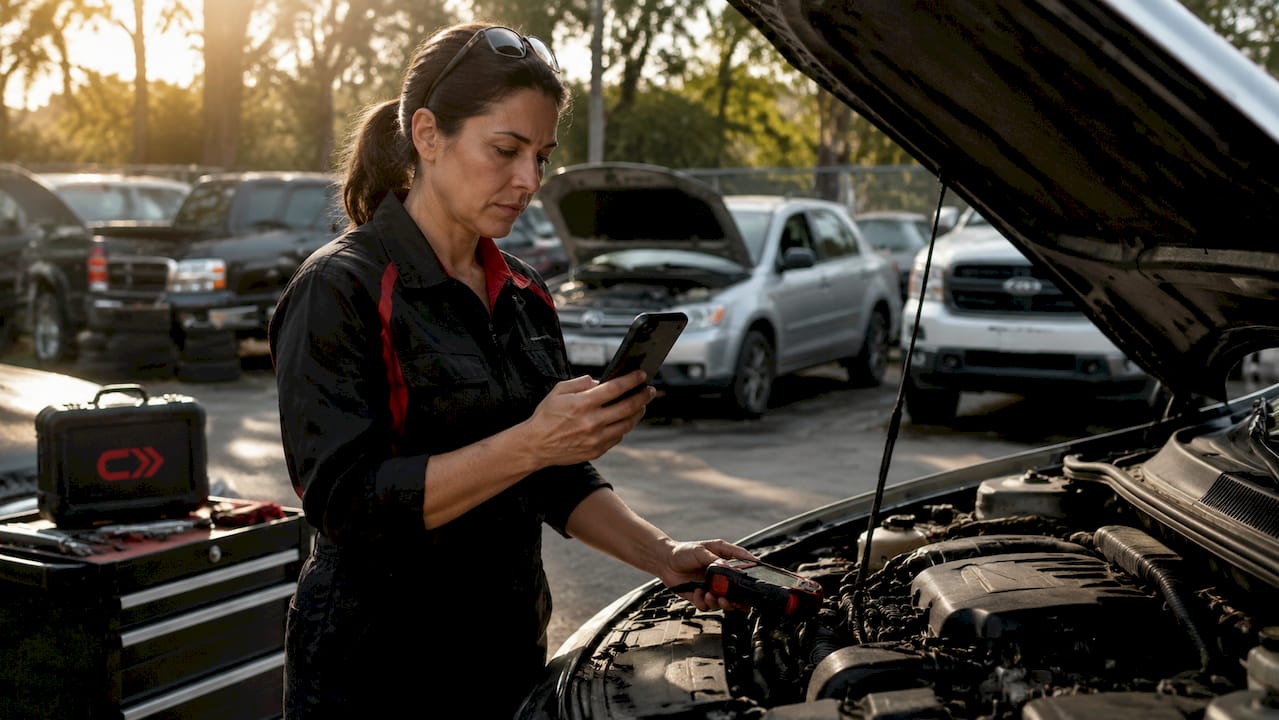
AI tools are only as good as the data you give them. The three core inputs are vehicle identification (year, make, model, trim), OBD-II trouble codes from a Bluetooth adapter, and photos of visible issues like leaks, tire wear, or dashboard warning lights. Connected vehicles with built-in sensors send this data automatically. Older vehicles require manual input, but the process takes less than five minutes with the right app.
Here is a comparison of popular AI car care tools and what they offer:
| Tool | Core Feature | Best For | Data Input |
|---|---|---|---|
| Jenova AI | Symptom and DTC analysis | Diagnosing warning lights | OBD-II codes, photos, symptoms |
| VehicleScore | Vehicle health scoring | Tracking overall condition | Sensor data, service history |
| Rivian AI Assistant | Onboard predictive alerts | EV owners | Built-in vehicle sensors |
| Carjourney | AI maintenance tracking | Enthusiasts and multi-vehicle owners | Service docs, build data, community |
Pro Tip: Buy a Bluetooth OBD-II adapter like the Veepeak or FIXD before downloading any diagnostic app. Without live vehicle data, most AI tools can only give you generic answers.
Step-by-step: using AI to diagnose and maintain your car
Using AI for vehicle diagnostics follows a repeatable process. Each step builds on the last, and skipping steps reduces accuracy significantly.
-
Connect your OBD-II adapter. Plug it into the port located under your steering column. Pair it with your diagnostic app via Bluetooth. This gives the AI access to live sensor readings and stored fault codes.
-
Describe your symptoms clearly. Type in what you hear, feel, or see. “Rough idle at startup” gives the AI far more to work with than “car feels weird.” Specificity drives accuracy.
-
Upload photos of the problem area. Clear photos of engine bays, fluid leaks, and tire wear significantly improve diagnosis accuracy. Photo-based AI assessments provide more precise diagnostics than symptom descriptions alone, saving you time and money.
-
Review the ranked probable causes. AI diagnostics rank symptoms by probability to prevent time wasted on unlikely repairs. Read through the top three causes before acting. The AI will flag urgency levels so you know what needs attention today versus next month.
-
Check the recommended maintenance schedule. AI tools cross-reference your mileage, climate, and driving patterns against manufacturer data. You can learn how to optimize your maintenance schedule based on your actual usage rather than generic mileage intervals.
-
Act on the recommendations. Some fixes are DIY-friendly. Others require a shop. The AI will tell you which is which, along with estimated labor costs so you can verify quotes.
-
Log the completed service. Feed the outcome back into the system. AI systems improve as they process more data over time, which means your maintenance predictions get sharper with every service entry.
Pro Tip: After any repair, clear your OBD-II codes and drive for at least 50 miles before running another scan. This lets the system reset and gives you a clean baseline for the next diagnostic cycle.
What are the real benefits of AI for car owners?
The advantages of AI for car owners go well beyond convenience. The numbers back this up clearly.
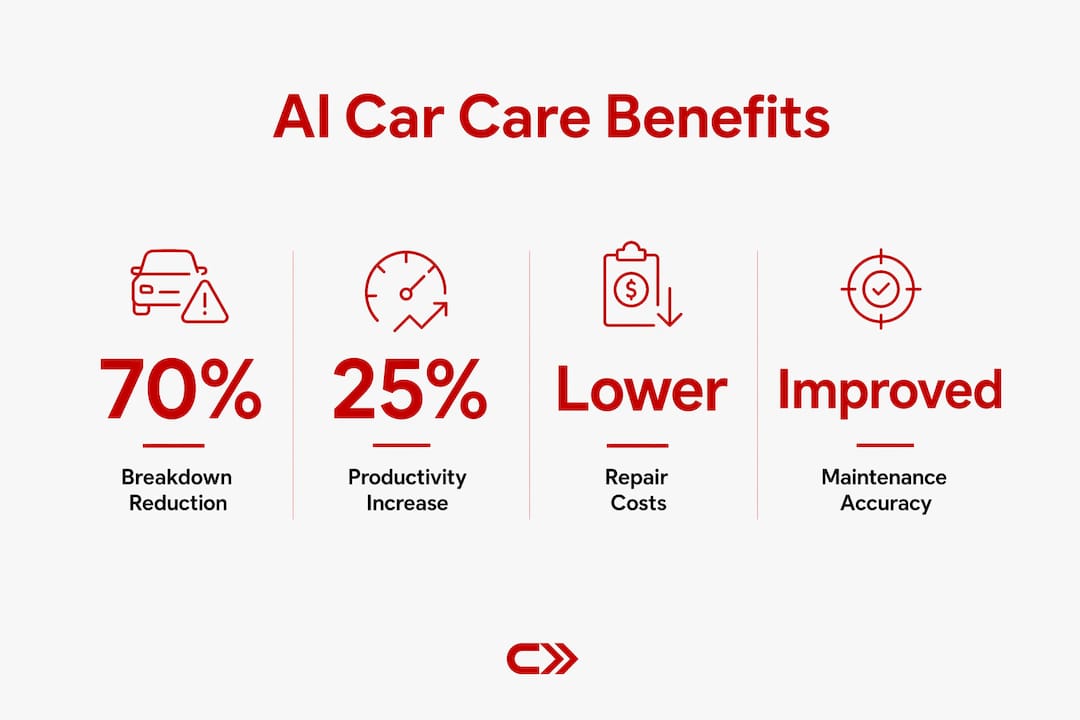
AI-driven predictive maintenance can reduce vehicle breakdowns by 70%, increase operational productivity by 25%, and lower maintenance costs by up to 25%, according to Deloitte Analytics Institute 2025 data. That is not a marginal improvement. It means you spend less time stranded and less money at the shop.
Smart diagnostics and predictive maintenance ranked as the top AI implementation priority for 34% of automotive industry respondents in a may 2026 survey. The industry is moving this direction because the return on investment is proven.
Here are the core advantages you get as a car owner:
- Fewer surprise breakdowns. AI predictive analytics identify early signs of wear like transmission degradation or battery health issues before failure occurs.
- Lower repair bills. Catching a $40 sensor failure before it causes a $900 catalytic converter replacement is exactly what AI does well.
- Improved safety. AI-powered Automatic Emergency Braking systems reduce crashes by 52%, based on data from 98 million vehicles surveyed.
- Reduced driver mental load. AI copilots in modern vehicles manage tasks like charging route planning and climate control, which reduces decision fatigue on long drives.
- Longer vehicle lifespan. Consistent AI-guided maintenance keeps wear patterns in check and extends the life of major components.
You can explore what an AI maintenance assistant does in practice to understand how these benefits show up in daily use.
Common mistakes when using AI for vehicle diagnostics
AI car care tools are powerful, but they are decision-support tools, not replacements for mechanical expertise. The most common mistake is treating an AI recommendation as a final diagnosis. A good AI tool gives you a ranked list of probable causes. A good mechanic confirms which one is actually the problem.
The second most common mistake is feeding the AI incomplete data. If you describe your symptoms vaguely or skip the photo upload step, you get generic output. Garbage in, garbage out applies here as much as anywhere in technology.
Watch out for these specific pitfalls:
- Skipping the photo upload. Most users type symptoms and stop there. Uploading a photo of the actual issue can cut diagnostic time in half.
- Ignoring urgency ratings. AI tools flag issues as urgent, moderate, or low priority. Treating a high-urgency alert like a suggestion is how small problems become big ones.
- Not updating service records. AI predictions improve with data. If you never log completed repairs, the system cannot learn your vehicle’s actual history.
- Over-relying on AI for safety-critical systems. Brakes, steering, and suspension require hands-on inspection. Use AI to flag the concern, then get a professional to confirm it.
For a deeper look at how maintenance AI works and where its limits are, that context helps you use it more effectively. The best outcomes come from pairing AI insights with a trusted mechanic who can physically verify what the data suggests.
Pro Tip: When an AI tool gives you a repair estimate, use it as a benchmark, not a budget. Get two shop quotes and compare them against the AI’s cost projection. If one quote is significantly higher, ask the shop to walk you through why.
Key takeaways
AI-powered predictive maintenance is the most effective way for car owners to reduce breakdowns, lower repair costs, and extend vehicle lifespan in 2026.
| Point | Details |
|---|---|
| Start with an OBD-II adapter | A Bluetooth OBD-II adapter gives AI tools the live data they need for accurate diagnostics. |
| Photos improve accuracy | Uploading clear images of leaks, wear, or engine bays significantly sharpens AI diagnosis results. |
| Predictive maintenance saves money | Deloitte 2025 data shows AI-driven maintenance cuts costs by up to 25% and reduces breakdowns by 70%. |
| AI ranks, mechanics confirm | Use AI to prioritize probable causes, then verify safety-critical findings with a professional. |
| Log every service | AI systems improve with more data, so recording completed repairs makes future predictions more accurate. |
Why AI is the co-driver your car actually needs
I have been around vehicles long enough to remember when diagnosing a rough idle meant an afternoon under the hood with a vacuum gauge and a lot of guesswork. AI has not replaced that hands-on knowledge. What it has done is compress the diagnostic timeline from hours to minutes and given everyday car owners access to the kind of pattern recognition that used to live only in experienced mechanics’ heads.
What surprises most people is how much better AI gets when you feed it your specific vehicle’s history. Generic maintenance schedules are built for the average driver in average conditions. Your car is not average. It has a specific build, a specific climate, a specific set of driving habits. AI tools that learn from your data give you recommendations that actually fit your situation.
The part I find underappreciated is the financial planning angle. Knowing three months in advance that your transmission fluid is degrading lets you budget for the service instead of scrambling for it. That shift from reactive to proactive ownership changes how you relate to your vehicle entirely.
My honest advice: start simple. Get an OBD-II adapter, connect it to one AI diagnostic app, and run a scan on your current vehicle. You will likely find something worth knowing. From there, the habit builds naturally. The technology is ready. The question is whether you are willing to let it work for you.
— Chally
Take your car care further with Carjourney
Carjourney was built specifically for car owners and enthusiasts who want more than a generic maintenance reminder.
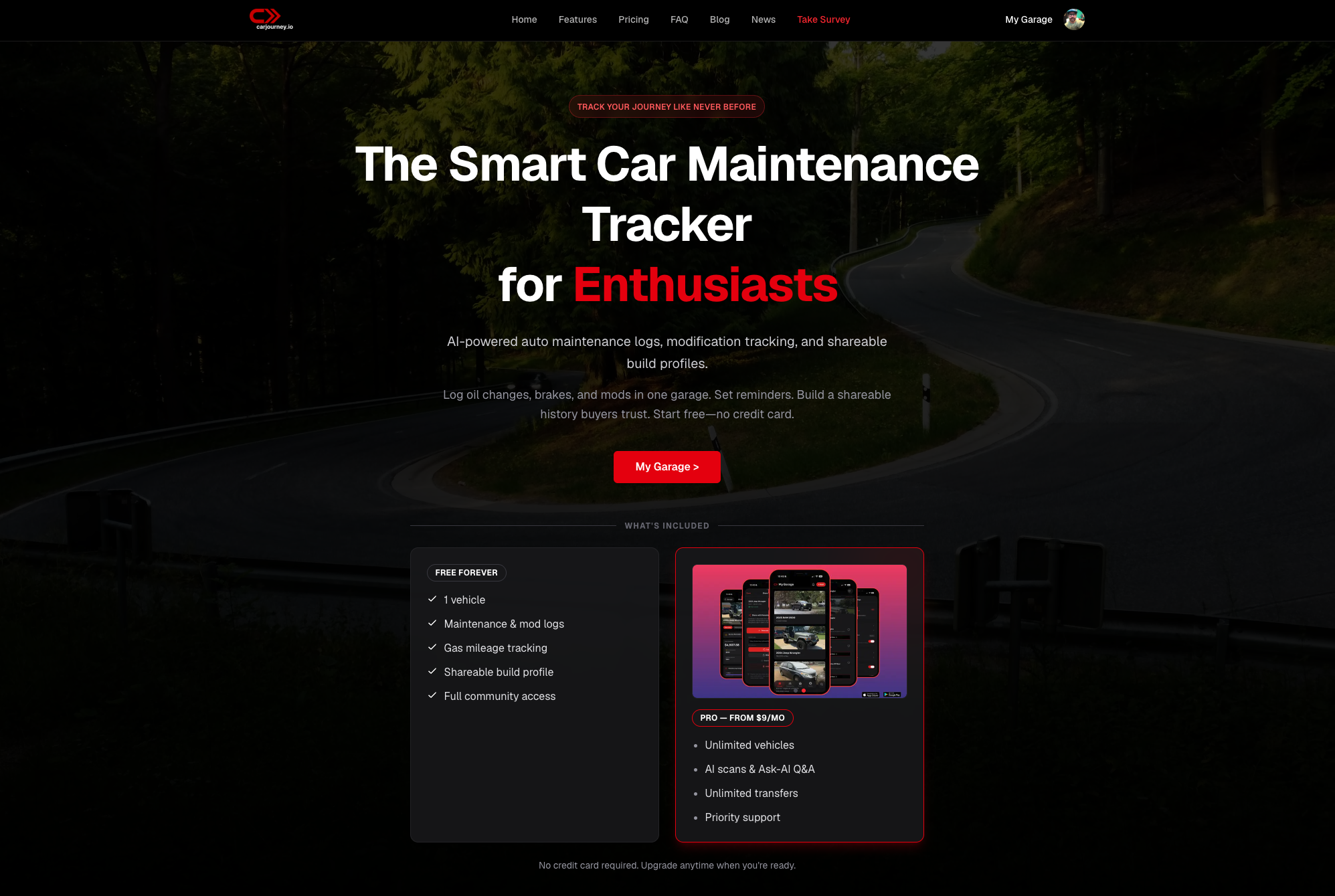
Carjourney’s AI scans your service documents, answers detailed questions about your exact vehicle, and recommends maintenance schedules verified by multiple AI models. You get personalized alerts based on your actual build and driving history, not a one-size-fits-all schedule. The platform also connects you with a community of enthusiasts sharing real-world product data and build knowledge. If you are ready to put everything in this article into practice, start tracking your vehicle with Carjourney and see what your car has been trying to tell you.
FAQ
What is AI predictive maintenance for cars?
AI predictive maintenance uses sensor data, service history, and machine learning to identify wear patterns before they cause failures. Deloitte 2025 data shows it can reduce breakdowns by 70% and cut maintenance costs by up to 25%.
Do i need a new car to use AI diagnostics?
No. Most AI diagnostic tools work with any vehicle made after 1996 using a Bluetooth OBD-II adapter. You input your vehicle data manually, and the AI provides recommendations based on your specific make, model, and mileage.
How accurate are AI car diagnostic tools?
AI tools that combine OBD-II codes, symptom descriptions, and photos deliver the most accurate results. Photo-based assessments provide more precise diagnostics than symptom descriptions alone, though a mechanic should confirm any safety-critical findings.
What is the best AI tool for vehicle maintenance?
The best tool depends on your needs. Jenova AI excels at symptom and DTC analysis, while Carjourney is built for enthusiasts who want full vehicle history tracking, community knowledge, and AI-powered maintenance scheduling in one place.
Can AI replace a mechanic for car repairs?
AI is a decision-support tool, not a replacement for mechanical expertise. It ranks probable causes and flags urgency levels, but hands-on inspection by a qualified mechanic is required to confirm diagnoses on safety-critical systems like brakes and steering.