 carjourney
From the CarJourney journal
Why Upgrade Brake Lines: Safety and Performance Guide
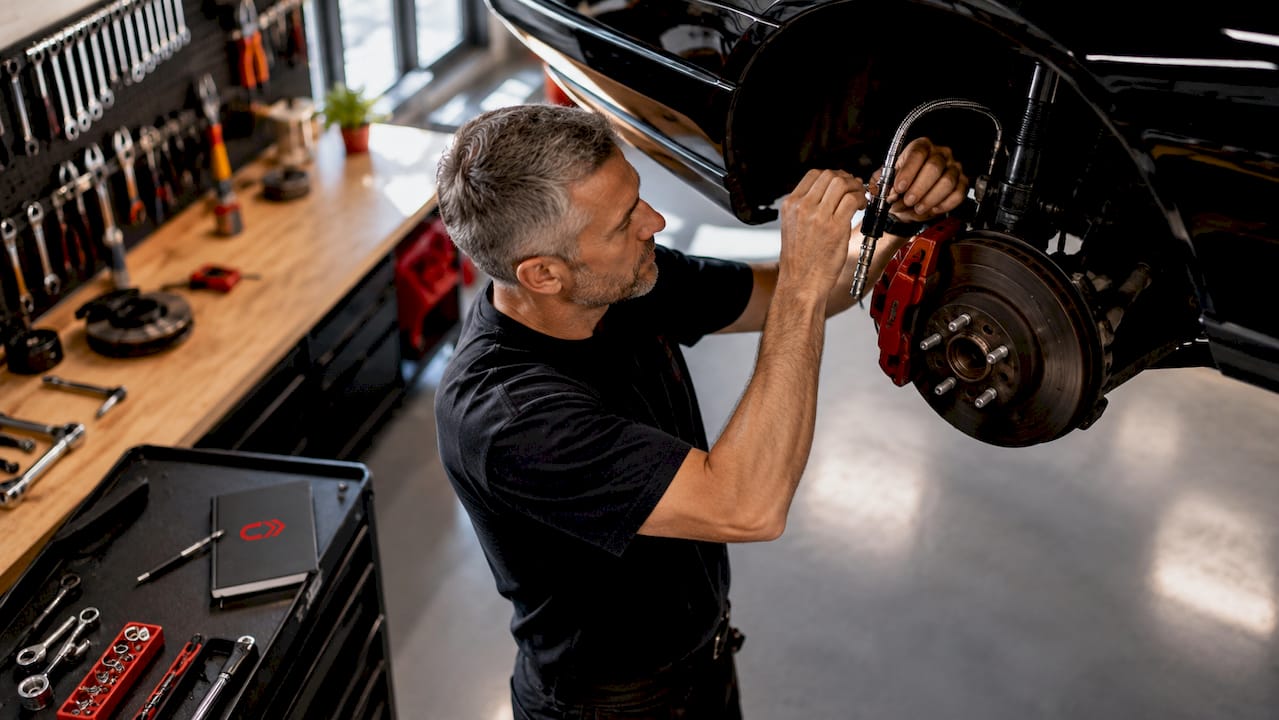
Upgrading brake lines means replacing factory rubber hoses with braided stainless steel lines that prevent hose expansion under pressure, delivering a firmer and more precise brake pedal. Factory rubber hoses flex outward when pressurized, absorbing force that should reach your calipers. That wasted energy is what creates the spongy, vague pedal feel many drivers accept as normal. Brands like Steeda and AME Motorsport have documented how stainless steel braided lines with a PTFE inner core eliminate that expansion, improving both braking confidence and system response. The upgrade is one of the most direct and measurable changes you can make to your brake system.
Why upgrade brake lines: the core mechanical reason
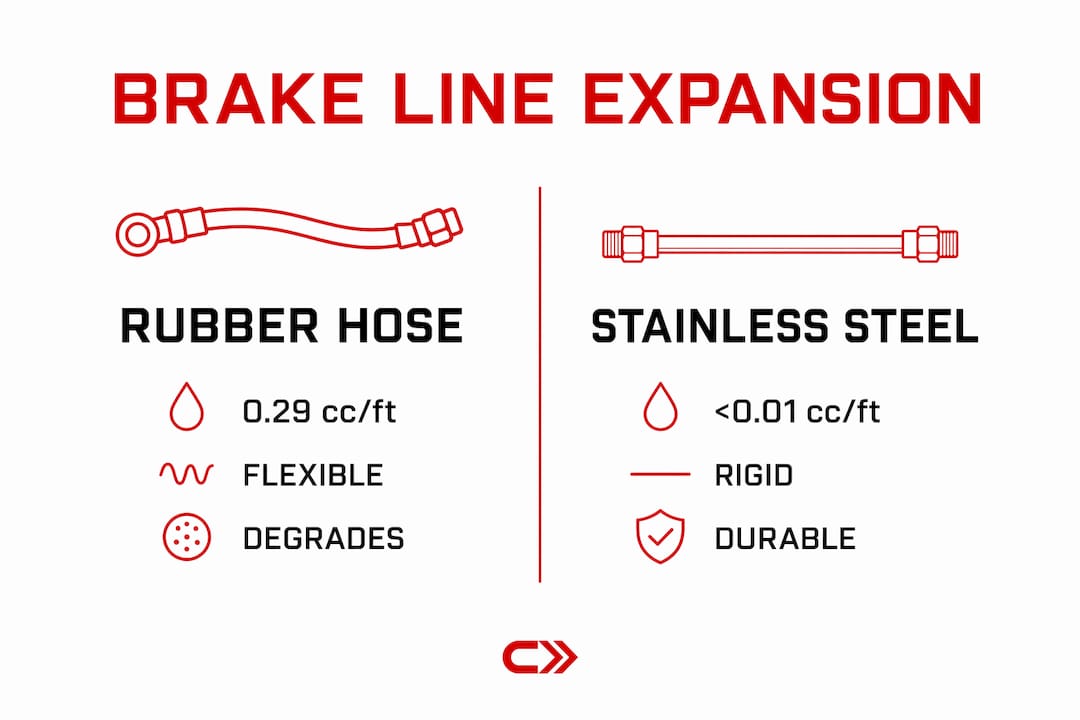
The root cause of a spongy brake pedal is volumetric expansion. When you press the brake pedal, pressure travels through your brake hoses to the calipers. Factory rubber hoses expand under pressure, ballooning outward instead of transferring all that force forward. The result is a pedal that feels soft, requires more travel, and delivers pressure to the calipers with a slight delay.
The numbers tell the story clearly. Rubber hoses expand at roughly 0.29 cc per foot under pressure. Stainless steel braided lines with a PTFE inner liner reduce that expansion to approximately 0.0002 cc per foot. That is a reduction of over 99%, meaning nearly all pedal force goes directly to the calipers instead of being lost to hose flex.
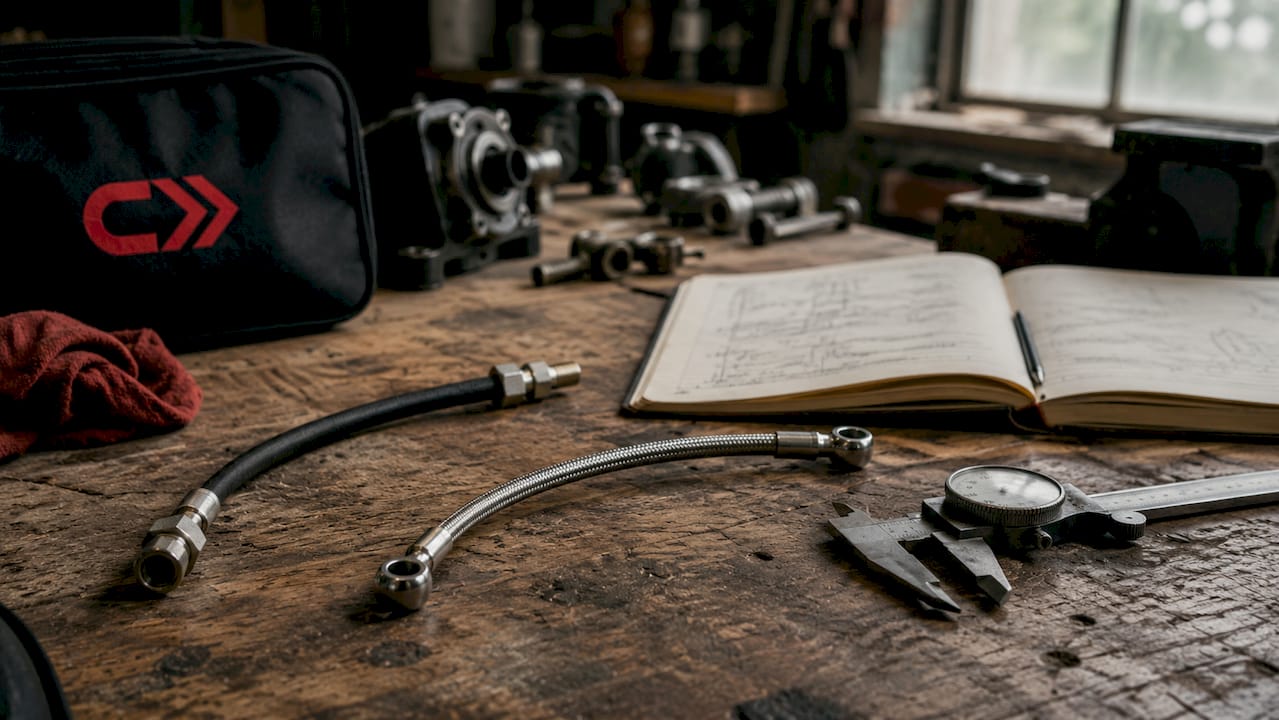
The practical effect is immediate. Drivers report elimination of spongy pedal feel and noticeably improved brake modulation after switching to stainless steel lines. Modulation matters because it lets you apply graduated, controlled braking force rather than an on-or-off response. That control is what separates a confident driver from a nervous one in a hard stop.
Pro Tip: Stainless steel brake lines also improve pedal stiffness even without changing brake fluid. However, old or moisture-saturated fluid still reduces overall feel, so pair your line upgrade with a fresh brake fluid flush for the best result.
Comparing expansion: rubber vs. stainless steel brake lines
| Metric | Rubber brake hose | Stainless steel braided line |
|---|---|---|
| Volumetric expansion | ~0.29 cc/ft | ~0.0002 cc/ft |
| Pedal feel | Soft, spongy | Firm, direct |
| Pressure transfer efficiency | Reduced by hose flex | Near-complete transfer |
| Modulation control | Imprecise | Precise |
How long do brake lines last, and what wears them out?
Factory rubber brake lines are not built to last forever. Rubber hoses typically degrade after 5–7 years, even without visible damage. Heat cycles, ozone exposure, road chemicals, and constant pressure cycling cause the inner lining to crack and the outer jacket to swell. By the time a rubber hose looks bad from the outside, it has often already compromised your pedal feel from the inside.
Stainless steel braided lines address this differently. The outer braided steel sheath resists mechanical damage from road debris and physical snags. The inner PTFE liner does not absorb moisture or degrade from heat the way rubber does. Stainless steel lines commonly last the full life of the vehicle when installed correctly.
There is one trade-off worth knowing. The braided sheath makes external inspection harder. Internal damage to the PTFE liner can hide under the braid, so you cannot rely on a visual check the same way you might with a rubber hose. Periodic pressure testing and professional inspection remain necessary.
Here is how the two line types compare across key durability factors:
- Service life: Rubber lines last 5–7 years on average. Stainless steel lines typically last the vehicle’s lifetime.
- Heat resistance: Rubber degrades under repeated heat cycles. PTFE liners handle high temperatures without breakdown.
- Corrosion resistance: Rubber is vulnerable to road chemicals and ozone. Stainless steel braid resists both.
- Physical damage protection: Rubber tears and abrades easily. Braided steel resists snags and cuts.
- Inspection ease: Rubber hoses show visible cracking and swelling. Braided lines require closer inspection techniques.
Pro Tip: Never install stainless steel brake lines where they can rub against suspension components or chassis edges. Improper routing causes a “file effect” where the braid slowly cuts through surrounding materials and eventually damages the line itself.
When should you consider upgrading your brake lines?
The clearest signal is a brake pedal that feels softer than it used to. Pedal softness that was not there when the vehicle was new points to hose expansion, fluid contamination, or both. Other physical signs of brake line failure include visible cracking on rubber hoses, swelling at connection points, and any trace of fluid leakage near the hose body.
If one brake hose shows cracking, swelling, or leakage, replace the entire set. Hoses age together, so a failure in one means the others are close behind. Replacing only the damaged hose leaves you with mismatched line conditions and an unpredictable pedal feel. Brake lines are a critical safety component, and patching or spot-fixing them is not an acceptable solution.
Beyond failure symptoms, certain driving situations make an upgrade worth scheduling proactively:
- Spirited or track driving. Hard braking generates heat and pressure spikes that expose rubber hose limitations faster than normal commuting.
- Towing or hauling heavy loads. Heavier vehicles demand more braking force. Hose expansion under high pressure becomes more noticeable and more dangerous. A brake upgrade for towing should include lines alongside pads and rotors.
- Vehicles over 5–7 years old with original hoses. Age alone is a valid reason to replace rubber lines, even without visible symptoms.
- Post-brake-job reviews. Any time you replace pads or rotors, check the hoses. The labor overlap makes it a cost-effective time to upgrade.
- Persistent spongy pedal after a fluid bleed. If bleeding the system does not restore pedal firmness, the hoses are the next logical suspect.
Knowing when your car needs maintenance before symptoms become dangerous is the difference between a planned upgrade and an emergency repair.
How do upgraded brake lines fit into a full brake system upgrade?
Brake line upgrades improve pedal feel and system response. They do not increase raw stopping power. That distinction matters because many drivers expect shorter stopping distances after switching to stainless steel lines. The improvement is in system latency and modulation, not clamping force at the rotor.
Raw stopping power comes from brake pads and rotors. High-friction pads generate more clamping force. Larger or slotted rotors improve heat dissipation. Upgraded lines make sure the pressure you generate at the pedal reaches the calipers without loss. Each component does a different job, and none of them fully compensates for a weakness in another.
The honest priority order for most drivers is pads first, rotors second, fluid third, and lines fourth. That said, if your lines are aged rubber and you are already replacing pads and rotors, adding stainless steel lines at the same time is a logical and cost-effective decision. The complete brake upgrade guide at Carjourney covers how these components interact across different build goals.
| Brake component | Primary benefit | Affects stopping distance? |
|---|---|---|
| Upgraded brake lines | Firmer pedal, better modulation | No |
| Performance brake pads | Higher friction, more clamping force | Yes |
| Slotted or drilled rotors | Better heat dissipation | Indirectly |
| Fresh brake fluid | Prevents vapor lock, maintains feel | Yes, under heat |
Pro Tip: Upgraded lines paired with degraded brake fluid will still feel better than rubber lines with fresh fluid. But the combination of stainless steel lines and fresh fluid produces the most consistent pedal feel across a full range of driving conditions.
Key takeaways
Stainless steel braided brake lines reduce volumetric expansion by over 99%, delivering a firmer pedal and more precise modulation without changing raw stopping power.
| Point | Details |
|---|---|
| Expansion is the core problem | Rubber hoses expand at ~0.29 cc/ft; stainless steel lines cut that to ~0.0002 cc/ft. |
| Durability gap is significant | Rubber lines degrade in 5–7 years; stainless steel lines typically last the vehicle’s life. |
| Replace all hoses together | If one hose shows failure symptoms, replace the full set to maintain system integrity. |
| Lines improve feel, not stopping power | Expect a firmer pedal and better modulation, not shorter stopping distances. |
| Pair with fluid and pads | Stainless steel lines work best as part of a full brake system refresh. |
What I’ve learned from upgrading brake lines on real builds
The first time I swapped rubber hoses for stainless steel lines on a track-day car, the pedal change was immediate and obvious. Not dramatic in a scary way. Just firm and trustworthy in a way the stock setup never was. That confidence at the pedal is the real value, and it is hard to put a number on it.
What surprises most DIY enthusiasts is how much installation quality matters. Routing the lines incorrectly, over-torquing the banjo bolts, or letting a line sit against a suspension arm will undo every benefit within a season. I have seen braided lines with internal PTFE damage that looked fine from the outside because the braid hid everything. That is why I always recommend a pressure test after installation, not just a visual check.
The other thing I push back on is treating brake lines as the first upgrade. If your pads are glazed and your rotors are warped, new lines will not save you. Fix the fundamentals first. But if your brake system is otherwise healthy and you are chasing that last bit of pedal precision, stainless steel lines are one of the few upgrades that deliver exactly what they promise. Log your brake jobs and inspection dates so you always know where your system stands.
— Chally
Track your brake system with Carjourney
Knowing when to upgrade brake lines starts with knowing the age and condition of every component in your brake system.
Carjourney is built for car owners and DIY enthusiasts who want to stay ahead of maintenance instead of reacting to failures. You can log brake jobs, set reminders for fluid changes, and track the age of your hoses all in one place. The AI inside Carjourney reads your service documents and flags components that are approaching their service window, including brake lines. Start tracking your brake maintenance with Carjourney and know exactly when your next upgrade is due.
FAQ
What is the main benefit of upgrading brake lines?
Upgraded stainless steel brake lines eliminate hose expansion under pressure, producing a firmer and more responsive brake pedal. The improvement is in pedal feel and modulation, not raw stopping distance.
How do I know if my brake lines need replacing?
Look for visible cracking, swelling, or fluid leakage on rubber hoses. A pedal that feels softer than it used to, even after a fluid bleed, also points to hose degradation. Check signs of brake wear if you are unsure what to look for.
Do stainless steel brake lines improve stopping distance?
No. Stainless steel lines improve pedal feel and system latency, not clamping force. For shorter stopping distances, prioritize high-friction brake pads and quality rotors.
Can I upgrade brake lines myself?
Yes, with the right tools and attention to routing and torque specs. DIY installers must follow manufacturer torque specifications and routing guidelines exactly, since improper installation causes premature line wear and potential failure.
How often should brake lines be inspected?
Inspect rubber brake lines every 2–3 years and replace them at or before the 5–7 year mark. Stainless steel lines should be inspected annually for routing wear and connection integrity, even though they rarely need replacement.