 carjourney
From the CarJourney journal
Upgrade Your Car: Complete Guide for 2026

Modern vehicle ownership has evolved beyond basic transportation. Whether you're looking to boost performance, enhance comfort, or simply personalize your ride, the decision to upgrade your car opens countless possibilities. Today's automotive aftermarket offers solutions for every budget and skill level, from simple bolt-on modifications to comprehensive system overhauls. Understanding which upgrades deliver the best value and align with your goals is essential for making informed decisions that enhance both your driving experience and your vehicle's long-term value.
Understanding Your Upgrade Goals
Before investing in modifications, you need to establish clear objectives. Different upgrades serve different purposes, and spreading your budget too thin across multiple categories rarely delivers satisfying results.
Performance vs. Aesthetic Upgrades
Performance modifications focus on improving how your car drives. These include engine tuning, suspension upgrades, brake improvements, and exhaust systems. The essential upgrades recommended by performance specialists typically deliver measurable improvements in acceleration, handling, or stopping power.
Aesthetic upgrades change how your car looks and feels. This category encompasses body kits, wheel upgrades, interior enhancements, and lighting modifications. While these don't typically improve performance metrics, they significantly impact your daily enjoyment and can increase resale value when executed tastefully.
Practical upgrades bridge both worlds. Items like advanced infotainment systems, improved lighting, or better tires enhance both functionality and appearance. These modifications often provide the best return on investment for daily drivers.
Setting a Realistic Budget
Upgrading your car requires financial planning. Modification costs vary dramatically based on your vehicle, desired outcomes, and installation complexity.
| Upgrade Category | Budget Range | Typical ROI |
|---|---|---|
| Performance Parts | $500-$5,000+ | Moderate |
| Aesthetic Mods | $200-$3,000+ | Variable |
| Tech Integration | $300-$2,000 | High |
| Suspension/Brakes | $800-$4,000 | High |
| Exhaust Systems | $400-$3,000 | Moderate |
Consider both parts and labor costs. Some modifications require professional installation, adding 30-70% to the total expense. Research thoroughly before committing to any upgrade path. Tracking these investments properly helps you understand your total ownership costs and can increase resale value when documented correctly through platforms focused on vehicle maintenance records.

Performance Enhancements That Deliver Results
When you upgrade your car for performance, prioritizing modifications that complement each other creates the most noticeable improvements. Random upgrades rarely deliver optimal results.
Engine and Powertrain Modifications
The engine represents your vehicle's heart, and several modifications can increase power output significantly. Cold air intakes replace restrictive factory airboxes, allowing cooler, denser air into the combustion chamber. This simple upgrade typically costs $200-$500 and can add 5-15 horsepower while improving throttle response.
Performance exhaust systems reduce backpressure, helping engines breathe more freely. A quality cat-back exhaust system improves flow while adding an aggressive sound signature. These systems range from $400 to $2,500 depending on materials and design complexity.
ECU tuning or performance chips reprogram your engine's computer to optimize fuel delivery, ignition timing, and boost pressure on turbocharged engines. Professional tuning typically costs $400-$1,200 but can unlock 20-50 additional horsepower on many modern vehicles.
Forced induction systems represent serious performance investments. Supercharger or turbocharger kits can double your engine's power output but cost $4,000-$8,000 installed. These modifications often require supporting upgrades like improved fuel systems and stronger internals.
Suspension and Handling Upgrades
Improved handling transforms your driving experience more dramatically than raw power increases. Upgrading suspension components delivers noticeable benefits whether you're navigating canyon roads or daily commutes.
Coilover suspension systems replace factory springs and shocks with adjustable units. These allow you to fine-tune ride height, damping rates, and spring preload. Quality coilover kits cost $800-$2,500 and dramatically improve cornering capability while maintaining acceptable ride quality.
Sway bars reduce body roll during cornering by connecting opposite wheels and resisting chassis twist. Front and rear sway bar upgrades typically cost $200-$600 and complement suspension improvements effectively.
Performance tires provide the most cost-effective handling improvement. Even budget-friendly performance tires dramatically outperform all-season rubber in dry and wet conditions. Expect to spend $600-$1,200 for a quality set.
Brake System Improvements
Upgraded brakes ensure you can control increased performance safely. Larger rotors and multi-piston calipers improve stopping power and fade resistance during aggressive driving.
Performance brake pads offer higher friction coefficients than stock pads. They cost $100-$300 per axle and require minimal installation expertise. Stainless steel braided brake lines eliminate the spongy pedal feel caused by rubber line expansion under pressure, costing just $80-$150 for most vehicles.
Big brake kits represent comprehensive upgrades featuring larger rotors, multi-piston calipers, and performance pads. These systems cost $1,500-$4,000 but provide race-level stopping power and heat dissipation.
Technology and Comfort Upgrades
Modern technology transforms how you interact with your vehicle. These upgrades often provide immediate satisfaction and enhance daily usability.
Infotainment and Connectivity
Aftermarket head units bring smartphone integration to older vehicles lacking factory systems. Quality units with Apple CarPlay and Android Auto cost $300-$800 and significantly improve navigation, communication, and entertainment capabilities.
Dash cameras protect against insurance fraud and document road incidents. Dual-channel systems recording front and rear cost $150-$400 and provide peace of mind during every drive. Some advanced models include parking mode surveillance and cloud connectivity.
Sound system upgrades range from simple speaker replacements to comprehensive audio overhauls:
- Component speakers: $100-$400 per pair
- Amplifiers: $150-$600 depending on power
- Subwoofers: $100-$500 plus enclosure costs
- Sound deadening materials: $150-$400 for complete treatment

Interior Comfort and Convenience
Seat upgrades dramatically improve comfort during long drives. Aftermarket sport seats provide better lateral support and reduce fatigue. Quality seats cost $400-$1,500 each, with installation adding $200-$400 for professional work.
Interior lighting upgrades create ambiance while improving visibility. LED footwell lighting, door puddle lights, and ambient lighting strips cost $50-$200 and install easily in most vehicles. These affordable modifications deliver immediate visual impact.
Remote start systems add convenience in extreme climates. Quality systems with smartphone control cost $200-$500 installed and allow cabin preconditioning before you enter the vehicle.
Advanced Safety Features
Modern safety technology can be retrofitted to many older vehicles. Blind spot monitoring systems alert you to vehicles in adjacent lanes, costing $200-$400 for quality aftermarket units. Parking sensor kits help navigate tight spaces, with front and rear systems available for $100-$300.
Advanced driver assistance features continue evolving. Some aftermarket systems now offer lane departure warnings and forward collision alerts, though these remain more expensive at $300-$800 for comprehensive packages.
Aesthetic Modifications and Exterior Upgrades
Visual modifications personalize your vehicle and distinguish it from identical models. These upgrades range from subtle enhancements to dramatic transformations.
Wheels and Tires
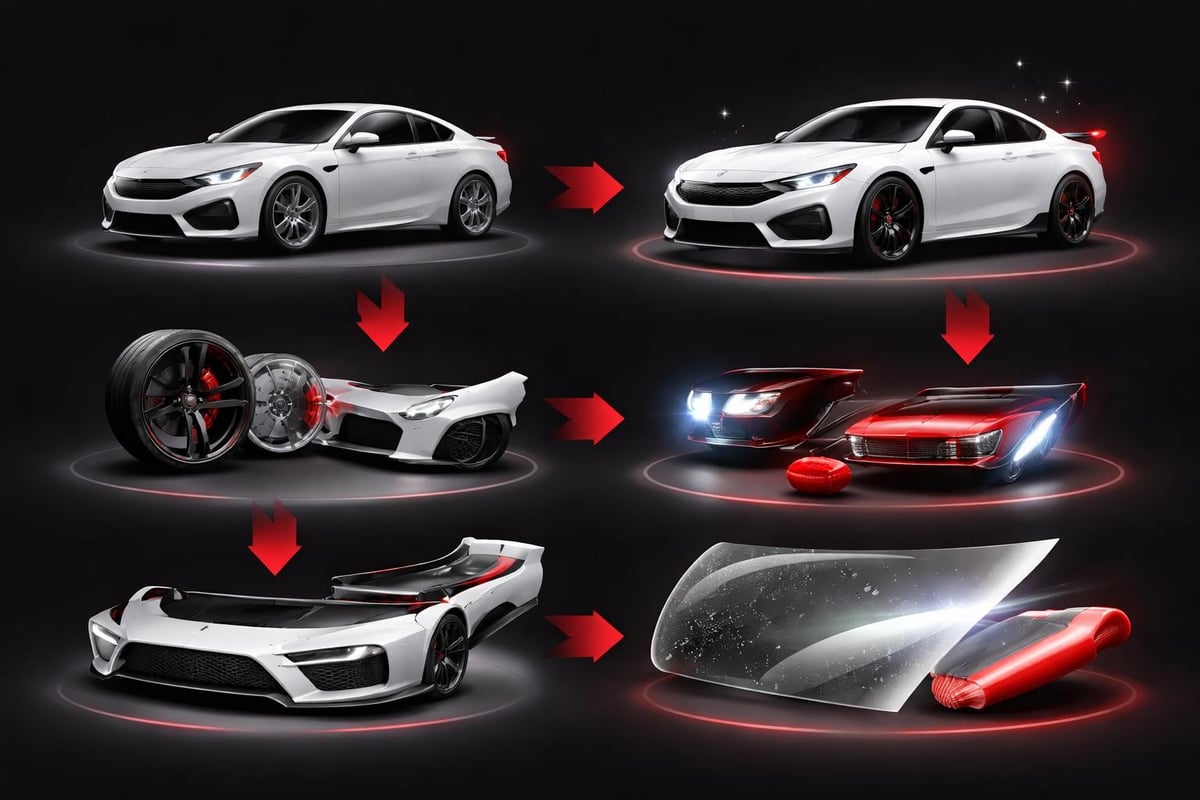
Wheel upgrades represent the most impactful visual modification. Larger diameter wheels with aggressive designs completely transform your vehicle's stance and appearance.
| Wheel Size | Typical Cost | Performance Impact |
|---|---|---|
| +1" Diameter | $800-$1,500 | Minimal |
| +2" Diameter | $1,200-$2,500 | Moderate |
| Forged Lightweight | $2,000-$5,000 | Significant |
Consider these factors when selecting wheels:
- Proper offset and width for your vehicle
- Weight reduction for performance benefits
- Finish durability and maintenance requirements
- Tire availability and costs for unusual sizes
Exterior Styling Components
Body kits modify your vehicle's appearance through front splitters, side skirts, rear diffusers, and spoilers. Quality polyurethane or fiberglass kits cost $500-$2,000 plus painting and installation. Carbon fiber components cost significantly more but reduce weight.
Window tinting improves comfort and privacy while reducing interior heat. Professional ceramic tint installation costs $200-$600 depending on vehicle size and tint quality. Quality tint blocks up to 60% of heat while maintaining visibility.
Vinyl wraps offer color changes without permanent paint modification. Complete wraps cost $2,500-$5,000 professionally installed and protect original paint. Partial wraps or accent pieces start around $400-$800.
Lighting Upgrades
LED headlight conversions improve visibility dramatically over halogen bulbs. Quality LED bulb sets cost $100-$300 and typically install without modifications. Projector headlight retrofits provide even better light output but cost $400-$800 installed.
Underglow lighting creates dramatic effects for show vehicles. Quality LED underglow kits cost $150-$400 and feature smartphone control with multiple colors and patterns. Verify local regulations before installation, as some jurisdictions restrict certain colors or require lights to remain off while driving.
Planning and Documenting Your Build
Successfully executing vehicle modifications requires planning, research, and documentation. Random upgrades rarely create cohesive results.
Creating a Modification Roadmap
Develop a comprehensive plan before purchasing parts. Research compatibility issues, installation requirements, and potential complications. Understanding recommended maintenance schedules helps ensure modifications don't interfere with essential service intervals.
Phase your upgrades strategically:
- Essential maintenance and repairs first
- Performance foundation (tires, brakes, suspension)
- Power modifications (intake, exhaust, tuning)
- Aesthetic enhancements (wheels, body, interior)
- Advanced technology integration
This approach ensures your vehicle remains reliable while building toward your ultimate vision. Jumping straight to power modifications before addressing suspension and brakes creates dangerous handling imbalances.
Tracking Modifications and Maintenance
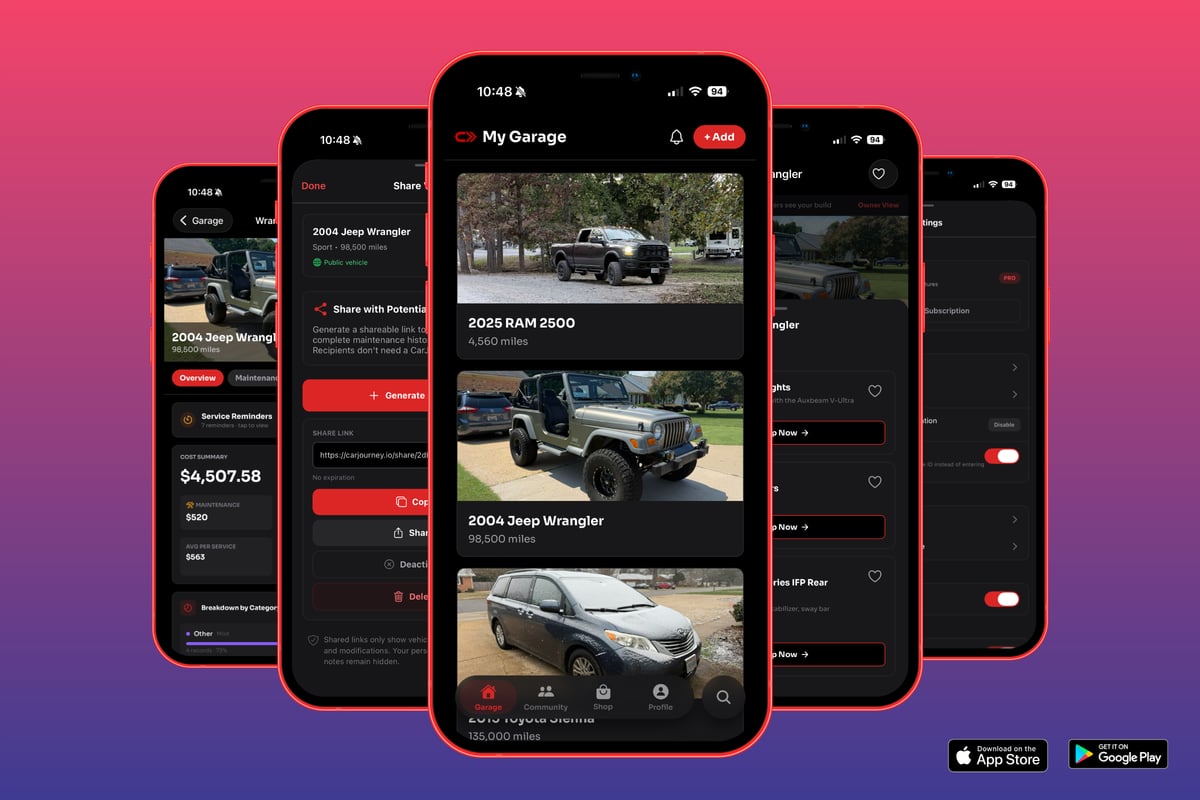
Documenting every modification preserves your investment value and helps troubleshoot issues. Maintain detailed records including purchase dates, part numbers, installation notes, and tuning specifications. Digital platforms now simplify this process significantly.
CarJourney Pro offers unlimited vehicle tracking specifically designed for enthusiasts modifying their cars. The platform combines modification tracking with maintenance logs, creating comprehensive digital records that increase resale value and help you manage complex builds effectively. When potential buyers see detailed documentation of quality parts and professional installations, they're willing to pay premium prices for modified vehicles.
Working with Professional Installers
Some modifications require professional expertise. Complex electrical work, engine tuning, suspension alignment, and body modifications often exceed DIY capabilities. Research reputable shops specializing in your vehicle make and modification type.
Professional installation costs vary by complexity and location. Simple installations like intake systems might add $100-$200 in labor, while comprehensive builds requiring fabrication can cost thousands. Get detailed quotes covering parts, labor, and alignment or tuning services before authorizing work.
Establish clear communication with your installer. Provide specific expectations, discuss potential complications, and confirm timeline estimates. Request documentation of work performed and any adjustments made during installation.
Legal Considerations and Compliance
Vehicle modifications face varying regulations depending on location and modification type. Understanding legal requirements prevents costly fines and ensures your modifications remain street-legal.
Emissions and Environmental Regulations
Many states require emissions testing during vehicle registration. Modifications affecting emission control systems may prevent passing these tests. Catalytic converter removal, for example, is federally illegal on street-driven vehicles regardless of state laws.
Performance tuning can maintain emissions compliance while increasing power. Reputable tuners understand regulatory requirements and calibrate engines to pass emissions testing. Some states like California have particularly strict regulations requiring CARB certification for many aftermarket parts.
Insurance Implications
Some modifications increase insurance premiums or require policy modifications. Performance upgrades, extensive body modifications, and expensive wheel/tire packages should be disclosed to insurers. Failing to report modifications can result in claim denials if your insurer determines undisclosed parts contributed to an accident.
Comprehensive modification insurance protects aftermarket parts not covered by standard policies. These policies cost 10-20% of your parts' value annually but ensure full replacement if theft or accidents occur.
Sound Regulations and Exhaust Laws
Exhaust modifications must comply with local noise ordinances. Many jurisdictions limit exhaust sound levels to 95-98 decibels measured from specific distances. Extremely loud exhausts attract police attention and may result in fix-it tickets requiring return to stock configurations.
Research local regulations before installing loud exhaust systems. Some municipalities prohibit modifications removing factory mufflers entirely, while others ban specific components like cutouts or straight pipes.
Maximizing Your Upgrade Investment
Smart modification strategies preserve vehicle reliability while achieving your performance and aesthetic goals. Following proven approaches helps avoid costly mistakes.
Choosing Quality Components
Cheap parts rarely deliver satisfactory long-term results. Reputable manufacturers offer warranties, proven fitment, and reliable performance. Research product reviews, installation experiences, and failure rates before purchasing.
Evaluate manufacturers based on:
- Warranty coverage and terms
- Customer service responsiveness
- Product testing and validation
- Market reputation and longevity
- Compatibility with your specific vehicle
Name-brand components typically cost 20-40% more than generic alternatives but provide superior durability and performance. The initial savings from cheap parts disappears quickly when premature failures require replacement.
Understanding Installation Requirements
Some modifications appear simple but require specialized tools or knowledge. Suspension installations need alignment equipment. ECU tuning requires diagnostic software. Body kit installation demands painting facilities and experience.
Honestly assess your mechanical capabilities before attempting installations. YouTube tutorials help, but they can't replace hands-on experience with proper tools. Botched installations waste money and potentially damage your vehicle.
Maintaining Modified Vehicles
Modified vehicles often require adjusted maintenance schedules. Performance parts may need more frequent service than factory components. Lowered suspensions require alignment checks after any impact. Tracking yearly vehicle maintenance becomes even more critical when you upgrade your car with aftermarket components.
Monitor fluid levels, tire wear patterns, and unusual sounds carefully. Modifications sometimes reveal weaknesses in related systems. For example, increased power may accelerate transmission wear or expose cooling system inadequacies requiring additional upgrades.
Common Mistakes to Avoid
Learning from others' errors saves money and frustration. These frequent mistakes plague modification projects across all experience levels.
Over-Modifying for Your Use Case
Track-focused modifications often compromise daily drivability. Extremely stiff suspension, loud exhausts, and gutted interiors become tiresome during regular commutes. Match modifications to how you actually use your vehicle rather than building for imaginary track days.
Ignoring Supporting Modifications
Increasing engine power without upgrading brakes creates dangerous situations. Wider wheels without proper suspension adjustment causes tire wear and handling problems. Consider the complete system when planning upgrades.
Sacrificing Reliability for Performance
Extremely aggressive tuning or poorly manufactured parts reduce engine longevity. Maximize reliability by staying within conservative performance limits and choosing proven components. Remember that maintaining proper service records becomes even more important when modifications push components harder.
Following Trends Blindly
Popular modifications don't necessarily suit your vehicle or goals. Excessive negative camber looks aggressive but destroys tire life. Enormous spoilers on front-wheel-drive cars provide no aerodynamic benefit. Make informed decisions based on actual needs rather than social media trends.
Resources and Community Support
Successful modification projects benefit from knowledge sharing and community expertise. Connecting with experienced enthusiasts accelerates your learning curve.
Online Communities and Forums
Vehicle-specific forums contain decades of collective knowledge. Members share installation guides, troubleshooting tips, and vendor recommendations. Search existing threads before asking questions, as most common issues have documented solutions.
Social media groups provide real-time assistance and inspiration. Instagram and YouTube showcase completed builds while demonstrating installation processes. Follow builders working with your vehicle make to discover compatible parts and avoid known issues.
Professional Resources and Specialists
Performance shops offer expertise beyond parts installation. Dyno tuning optimizes engine performance safely. Corner balancing ensures suspension modifications work harmoniously. Fabricators create custom solutions when off-the-shelf parts don't fit your vision.
Build relationships with quality shops early. Regular customers receive priority scheduling and often better pricing. Reputable shops stand behind their work and help troubleshoot issues long after installation.
Parts Sources and Vendors
Purchase from authorized dealers whenever possible. Counterfeit parts flood online marketplaces, offering suspiciously low prices on popular components. These fakes often fail prematurely or cause vehicle damage.
Compare prices across multiple vendors but verify authenticity. Manufacturer websites list authorized dealers and help identify legitimate sources. Slightly higher prices from authorized dealers include warranty support and guaranteed authentic products.
The performance upgrade tips shared by industry experts emphasize selecting quality components from reputable sources. This approach prevents the frustration and expense of dealing with failed parts or incompatible components.
Upgrading your car transforms ordinary vehicles into personalized expressions of your automotive passion, whether you prioritize performance, aesthetics, or technology integration. Success requires careful planning, realistic budgeting, and comprehensive documentation of every modification and maintenance activity. CarJourney provides the perfect platform for tracking your build journey, maintaining detailed modification records, and sharing your progress with fellow enthusiasts while ensuring you never miss critical maintenance intervals. Start documenting your automotive journey today and transform how you manage your modified vehicle.