
10 Basic Car Maintenance Tools for Beginners
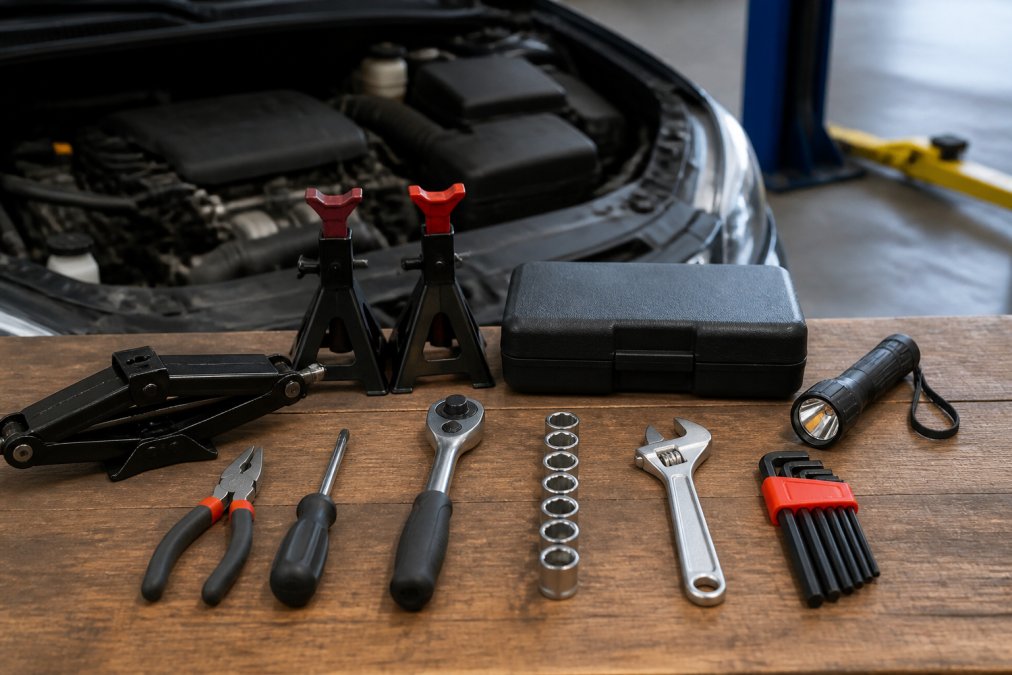
Table of Contents
- Why These 10 Car Maintenance Tools Belong in Every Beginner's Garage
- Quick Comparison: The 10 Basic Car Maintenance Tools for Beginners
- 1. Mechanic's Tool Set (Sockets, Ratchet, and Wrenches)
- 2. Torque Wrench: The Tool That Prevents Costly Damage
- 3. OBD-II Scanner: How to Read Car Dashboard Warning Lights
- 4. Floor Jack and Jack Stands: Lifting Your Car Safely
- 5. Screwdrivers, Pliers, and Breaker Bars
- 6. Jumper Cables and Emergency Roadside Gear
- How to Build Your First Toolkit
- Tool Storage and Organization
- Tool Maintenance and Care
- Budget-Friendly vs. Professional Grade
- Frequently Asked Questions
Last Updated: September 14, 2026
Why These 10 Car Maintenance Tools Belong in Every Beginner's Garage
A basic set of car maintenance tools turns a $400 repair bill into a $40 Saturday afternoon. That math is why so many owners start building a garage setup the moment their first warning light appears, and it is the exact starting point this CarJourney guide is built around.
The problem is knowing what to buy first. Walk into any parts store and you will find hundreds of tools, most of which you will not touch for years. Buy too little and you cannot finish a job. Buy too much and you have spent money on tools that sit in a drawer.
A common mistake is buying a single "everything" kit and assuming it covers every job. It rarely does. The better approach is a staged toolkit: core hand tools first, safety and lifting gear second, diagnostics and emergency equipment third.
Car maintenance tools are the hand tools, lifting equipment, and diagnostic devices a vehicle owner needs to perform routine service safely at home. For a beginner, that set is smaller than most people expect, and cheaper than one trip to a repair shop for a job you could have done yourself.
Below is the exact list of 10, what each one does, and how to avoid the mistakes that send beginners back to the store mid-repair.
Quick Comparison: The 10 Basic Car Maintenance Tools for Beginners
The table below summarizes the full list so you can plan a purchase order before reading the detail. Start with the top four rows, then add the rest as your confidence grows.
| # | Tool | Primary Job | Priority |
|---|---|---|---|
| 1 | Mechanic's tool set (sockets, ratchet, wrenches) | Loosening and tightening fasteners | Buy first |
| 2 | Torque wrench | Tightening to manufacturer spec | Buy first |
| 3 | OBD-II scanner | Reading and clearing warning lights | Buy first |
| 4 | Floor jack and jack stands | Lifting and supporting the vehicle | Buy first |
| 5 | Screwdrivers, pliers, breaker bar | Gripping, prying, breaking seized bolts | Buy second |
| 6 | Jumper cables and roadside gear | Emergencies and battery issues | Buy second |
| 7 | Tire pressure gauge and tread depth tool | Tire health and safety | Buy second |
| 8 | Multimeter | Battery voltage and electrical checks | Buy second |
| 9 | LED work light and safety glasses | Visibility and protection | Buy second |
| 10 | Hex keys and fastener organizer | Interior panels and lost hardware | Buy second |
1. Mechanic's Tool Set (Sockets, Ratchet, and Wrenches)
A mechanic's tool set is the foundation of every DIY toolkit, and it is the one purchase where buying a complete kit beats assembling pieces individually. The Crescent mechanics tool set product line covers the socket sizes, ratchets, and wrenches that handle most routine jobs.
Look for a set that includes both metric and SAE sockets. Metric covers most vehicles built after the mid-1980s, but SAE sizes still appear on older trucks and certain fasteners. A quick-release ratchet speeds up socket changes, and a blow-molded case keeps everything findable.
Pro Tip Check the socket count before buying. A 200-piece set often includes dozens of tiny duplicates you will never use. A focused 100-piece set with clean size coverage beats a bloated 300-piece kit every time.2. Torque Wrench: The Tool That Prevents Costly Damage
A torque wrench is a precision tool that applies a specific tightening force to fasteners like lug nuts and engine bolts. Over-tightening stretches threads and warps brake rotors; under-tightening lets parts work loose. The TEKTON torque wrench specifications show the accuracy range you should expect from a beginner-grade tool.
The audible click when you reach the target torque is what makes these usable for beginners. Set the value, turn until it clicks, stop. Store it at its lowest setting between jobs, and have it recalibrated periodically if you use it often.
Watch Out Never use a torque wrench to loosen bolts. It is calibrated for tightening only, and using it as a breaker bar will knock it out of spec permanently.3. OBD-II Scanner: How to Read Car Dashboard Warning Lights
Learning how to read car dashboard warning lights starts with an OBD-II scanner. This device plugs into the port under your dashboard and reads the fault codes behind the Check Engine light. The INNOVA OBD2 scanner range is a common starting point because the interface assumes no mechanical background.
Most scanners work on any vehicle built after 1996, when OBD-II became standard. Basic models read and clear engine codes; advanced models also pull live data and read ABS or SRS codes. For a beginner, the basic tier is enough.
Key Takeaway A $60 scanner that reads one code can save you a $150 diagnostic fee at a shop. That single job pays for the tool.4. Floor Jack and Jack Stands: Lifting Your Car Safely
A floor jack lifts the vehicle; jack stands hold it up. You need both, and you never work under a car supported only by a jack. A Consumer Product Safety Commission report on auto safety underscores why this rule is not optional.
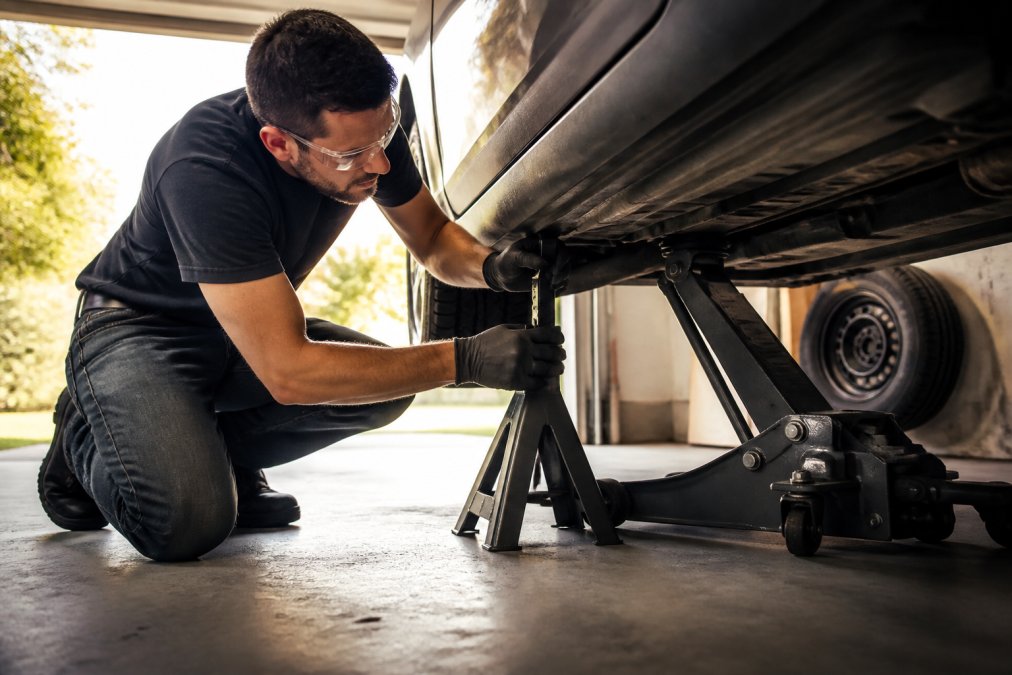
Pick a jack rated well above your vehicle's weight, and match the stands to the same rating. The ASME safety standards for jack stands set the load and locking requirements that reputable stands meet. A locking pawl is what keeps the stand from dropping under load.
5. Screwdrivers, Pliers, and Breaker Bars
Screwdrivers, pliers, and a breaker bar handle the jobs that sockets cannot reach. Screwdrivers remove interior panels and battery terminals. Pliers grip hoses, clamps, and stubborn fasteners. A breaker bar gives you the use to crack loose a lug nut that a standard ratchet simply cannot move.
Buy a screwdriver set with both Phillips and flathead tips, and keep them away from prying tasks. Tips wear down fast when used as a lever, and a stripped screw head turns a five-minute job into an hour.
6. Jumper Cables and Emergency Roadside Gear
Jumper cables belong in every trunk, even if you never plan to touch a wrench. A dead battery is the most common roadside failure, and cables turn a tow call into a two-minute fix with a willing stranger.
Pair them with a tire pressure gauge, a tread depth tool, and a basic first aid kit. A National Highway Traffic Safety Administration guide to roadside emergencies recommends keeping these basics accessible rather than buried under cargo.
How to Build Your First Toolkit
Build your toolkit in stages, not in one shopping trip. Start with the four core tools, add the second-tier items as jobs come up, and let your own maintenance history tell you what you actually need next.
A simple DIY car maintenance checklist keeps the process on track:
- Buy a mechanic's tool set with metric and SAE sockets
- Add a torque wrench and learn your vehicle's lug nut spec
- Get an OBD-II scanner and run a scan before any repair
- Purchase a floor jack and matching jack stands
- Add screwdrivers, pliers, and a breaker bar
- Pack jumper cables and roadside gear in the trunk
- Add a tire pressure gauge and tread depth tool
- Get a multimeter for battery and electrical checks
- Buy an LED work light and safety glasses
- Add hex keys and a fastener organizer
This is where a tracker pays off. Logging each job in CarJourney turns that checklist into a record of what you have done and what is due next. The VIN-based setup pulls your vehicle's specs automatically, and mileage-based reminders flag services before they become repairs. When you sell the car, the shareable build profile shows a buyer a documented history instead of a stack of loose receipts.
Tool Storage and Organization
Tool storage determines whether you actually use what you buy. A cluttered drawer costs you ten minutes of searching before every job, and that friction is why so many beginner toolkits end up abandoned.
A rolling chest or wall-mounted pegboard keeps tools visible and within reach. Group by job type: sockets and ratchets together, pliers and cutters together, diagnostic gear in its own case. Label drawers if you share the garage.
Pro Tip Photograph your tool layout after organizing it. When something goes missing, the photo tells you what to replace without a full inventory.Tool Maintenance and Care
Tool maintenance is the step most beginners skip, and it is the reason cheap tools fail early. Wipe metal surfaces with a light oil after use to prevent rust. Store torque wrenches at their lowest setting. Keep ratchets clean of grit, and replace worn screwdriver tips before they strip a fastener. Proper care for your equipment ensures that you remain prepared for the essential car maintenance tips required to keep your vehicle running reliably on the road.
A few minutes of care after each job extends the life of a starter kit by years. It also keeps your tools accurate, which matters most on the torque wrench and the scanner.
Budget-Friendly vs. Professional Grade
Budget tools make sense for a beginner, with two exceptions. Buy mid-grade for the torque wrench and the jack stands, because those two tools carry safety consequences if they fail. Everything else can start at the budget tier.
As you take on bigger jobs, upgrade the tools you use most. A ratchet that feels loose after a year of regular use is a sign to step up, not a sign to buy a whole new set.
Frequently Asked Questions
What are the best tools for a beginner mechanic?
A socket and ratchet set, torque wrench, OBD-II scanner, floor jack, jack stands, screwdrivers, pliers, breaker bar, jumper cables, and a tire pressure gauge cover most basic jobs. Start with a mechanic's tool set that includes both metric and SAE sockets. Add safety gear like glasses and gloves. These car maintenance tools handle oil changes, tire rotations, battery checks, and warning light diagnostics without a shop visit.
Do I need a torque wrench for basic car maintenance?
Yes, a torque wrench prevents over-tightening or under-tightening critical fasteners like lug nuts and oil drain plugs. Over-tightening can warp brake rotors or strip threads, while under-tightening risks a wheel coming loose. A click-type torque wrench in the 10-150 ft-lb range covers most beginner tasks. Check your owner's manual for exact specs and recalibrate the wrench yearly if you use it often.
What basic tools should I keep in my car for emergencies?
Keep jumper cables, a tire pressure gauge, a flashlight, and basic screwdrivers in your trunk. Add a compact socket set and pliers if you have space. These car maintenance tools help with dead batteries, low tires, or loose interior panels. A small first-aid kit and reflective triangles also make sense. Check your spare tire and jack monthly so they work when you need them.
How do I start building a DIY car maintenance checklist on a budget?
Begin with a DIY car maintenance checklist that covers monthly, quarterly, and annual tasks. Monthly: check tire pressure, oil level, and lights. Every 3,000-5,000 miles: oil and filter change, tire rotation. Annually: brake inspection, battery test, and fluid top-offs. Buy tools gradually, starting with a socket set and jack stands. Track everything in a logbook or a digital garage app to spot patterns and stay ahead of repairs.
How do I read car dashboard warning lights without a scanner?
You cannot read specific trouble codes without an OBD-II scanner, but you can interpret colors. Red means stop safely and check immediately (oil pressure, temperature, brakes). Yellow or amber means service soon (check engine, tire pressure, traction control). Green or blue are informational. For any yellow or red light, use a scanner to pull the code. A basic scanner costs $50-$120 and often pays for itself by avoiding unnecessary shop visits.
Start free