 carjourney
From the CarJourney journal
DIY Car Maintenance Checklist for Beginners (2026 Guide)
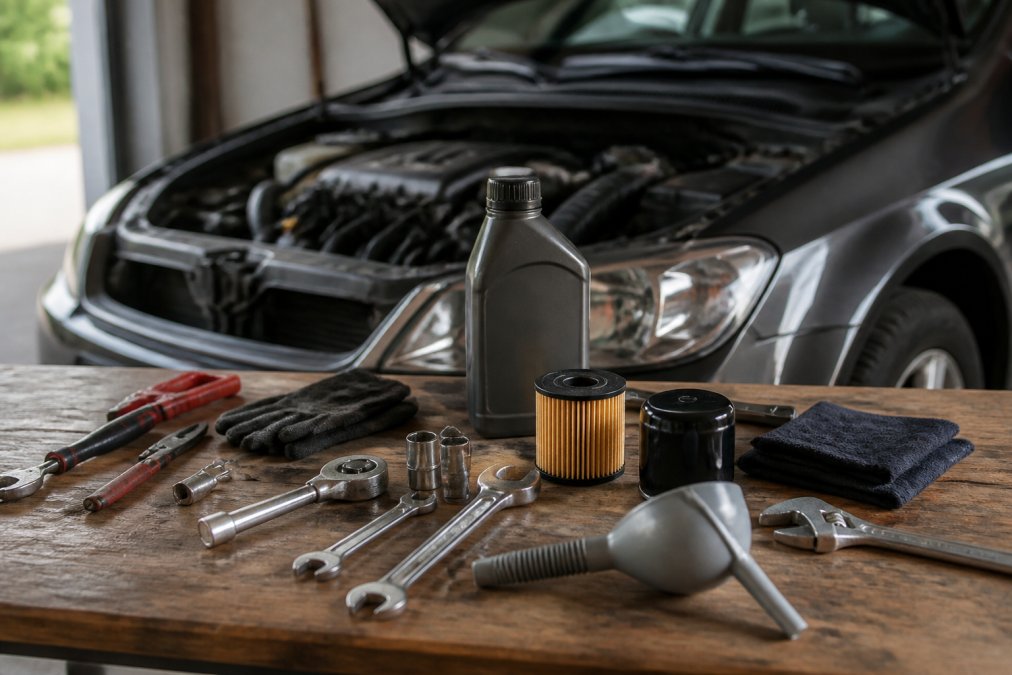
Table of Contents
- Why DIY Car Maintenance Matters for Beginners
- Basic Car Maintenance Tools for Beginners
- Monthly DIY Car Maintenance Checklist
- Seasonal Maintenance Tasks: Oil, Filters, and Battery
- Car Maintenance Schedule by Mileage
- How to Read Car Dashboard Warning Lights
- Track Your Work: Benefits of Digital Car Maintenance Logs
- Common DIY Mistakes to Avoid
- Frequently Asked Questions
Last Updated: September 9, 2026
Routine services cost hundreds of dollars at a shop when the parts alone are a fraction of that price. A diy car maintenance checklist for beginners is the most direct way to reclaim that money while building genuine confidence under the hood.
Why DIY Car Maintenance Matters for Beginners
DIY car maintenance is performing basic service and inspection tasks on your own vehicle rather than paying a shop for labor, saving hundreds of dollars annually while building working knowledge of how your car behaves and wears.
According to CarLiftLab’s 2026 car maintenance statistics report, the average annual cost of car maintenance and repairs continues to climb, making every service you can safely perform yourself a direct savings. One DIY learner in a Facebook DIY Automotive Community shared how self-performing ignition coil and spark plug replacements instead of dealer service avoided steep labor fees while teaching foundational mechanical skills.
The real value extends beyond money: knowing how to check fluid levels and tire pressure helps you catch small issues before they become roadside emergencies.
Key Takeaway DIY maintenance is about prevention, not perfection. A 15-minute monthly inspection catches the small problems that turn into $1,000 repairs if ignored.Basic Car Maintenance Tools for Beginners
Before touching your car, you need a starter kit that covers the tasks on your checklist without emptying your wallet. Basic car maintenance tools for beginners include a socket set, a torque wrench for lug nuts, a filter wrench for oil changes, and safety goggles. The real challenge for many beginners isn't buying the tools, it's storing them safely and legally without a garage.
Your essential list breaks down into four categories:
- Measurement tools: Tire pressure gauge, tread depth gauge, and a dipstick rag
- Hand tools: Socket set, screwdrivers, pliers, and a torque wrench
- Lifting gear: Jack stands (never a bumper jack alone) and wheel chocks
- Safety items: Safety goggles, nitrile gloves, and a fire extinguisher
The Apartment Dweller's Tool Kit
Most DIY guides assume a two-car garage. If you park on the street or in a shared lot, a full 200-piece mechanic's set is impractical when you carry tools up three flights of stairs. Build a kit that fits in a single rolling tote or compact tool bag you can stash in a closet or under a bed.
Prioritize a 3/8-inch drive socket set with both SAE and metric sockets (most modern cars are metric), a ratcheting wrench set, and a torque wrench for lug nuts. Skip the massive floor jack; a scissor jack that comes with the car is fine for a tire change, but you must pair it with jack stands, never work under a car supported only by a jack. Lightweight aluminum jack stands that store flat are a worthwhile investment for apartment dwellers.
Safety and Legal Storage Rules
Storing automotive fluids in an apartment is a fire hazard and often violates lease terms. Never keep gasoline, brake cleaner, or large containers of coolant inside your living space. If you must store a small amount of oil for top-offs, use a sealed container and keep it on a balcony or in a locked exterior storage closet, check your lease first.
Your tools themselves are less hazardous but still need a home. A locking tool chest prevents curious children or roommates from accessing sharp or heavy items. If you use a soft bag, add a small padlock to the zipper. Keep a fire extinguisher rated for Class B (flammable liquids) and Class C (electrical) within reach of your work area.
Watch Out Never store gasoline or large containers of oil in an apartment, even temporarily. Vapors can ignite from a water heater pilot light or an electrical spark. Use a sealed, approved container and keep it outside your living space.Where to Buy Without Overpaying
Harbor Freight, Amazon, and AutoZone all carry beginner kits. A basic socket set runs $20-$40; a torque wrench costs $25-$50. You do not need Snap-on or Matco quality for monthly checks. What matters is that the tools fit your car's fasteners, check your owner's manual for metric or SAE sizes. A tire pressure gauge with a digital readout costs under $10 and is more accurate than the pencil-style gauge.
Keep your gear organized and accessible so the monthly check takes minutes, not a scavenger hunt. A pegboard in a closet or a labeled tote under the bed turns a 30-minute task into a 10-minute one.
Monthly DIY Car Maintenance Checklist
Consistency beats intensity. A monthly routine of roughly 30 minutes keeps your car road-ready and catches wear while it is still cheap to fix. The Wittnapa 2026 monthly inspection guidance recommends a six-point check covering engine oil, tire pressure and tread, lights, wipers, belts and hoses, and fluid top-offs.
Check Engine Oil and Other Fluid Levels
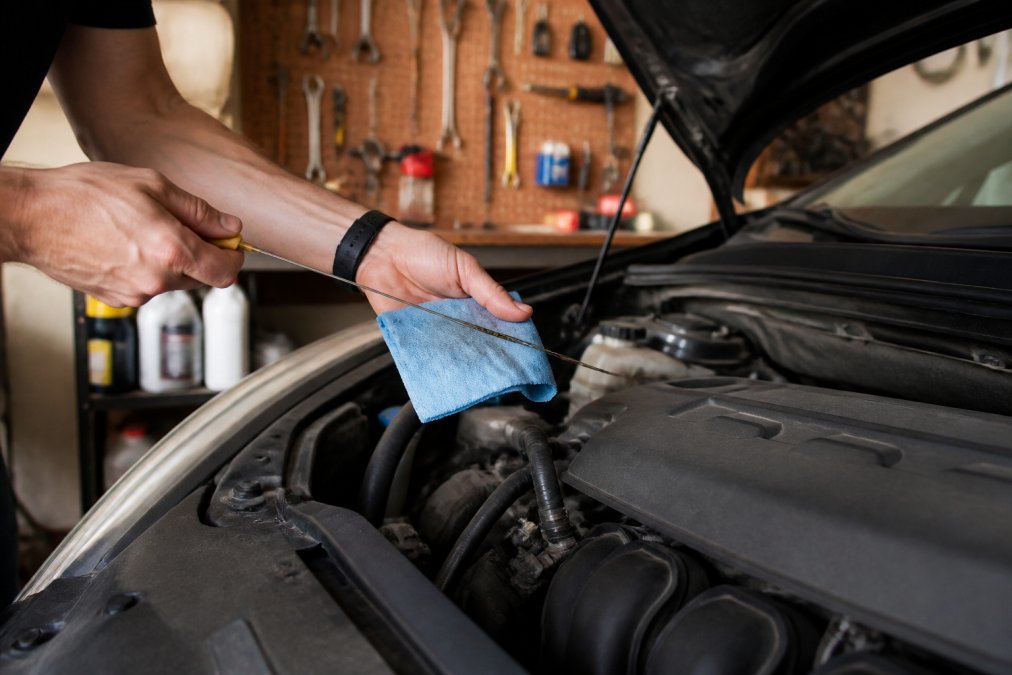
Engine oil is the lifeblood of your motor, and checking it takes two minutes. Park on level ground, wait for the engine to cool, then pull the dipstick, wipe it clean, reinsert it, and read the level against the marks.
While under the hood, check the coolant reservoir, brake fluid, and windshield washer fluid. Low coolant often signals a leak rather than normal consumption. Brake fluid should sit between the minimum and maximum lines and look amber, not dark brown.
Inspect Tire Pressure and Tread Depth
Tire pressure changes with temperature, dropping roughly 1 psi for every 10 degrees Fahrenheit. Check pressure monthly when tires are cold and inflate to the psi listed on the driver's door jamb sticker, not the number molded into the tire sidewall.
Use a tread depth gauge to measure remaining rubber. The legal minimum is 2/32 inch, but Sullivan Tire’s 2026 car care checklist recommends replacing tires at 4/32 inch for wet-weather safety. Uneven wear across the tread face points to alignment problems or incorrect inflation.
Test Lights, Wipers, Belts, and Hoses
Walk around the car with the parking lights on, then test turn signals, brake lights, reverse lights, and the high beams. A second person helps with brake lights, or you can back up to a reflective surface.
Inspect wiper blades for cracking or streaking and replace them if they smear. The Sullivan Tire winter maintenance guide highlights wiper blade assessments as a critical seasonal task. Visually check the serpentine belt for cracks and the hoses for bulges or soft spots.
Seasonal Maintenance Tasks: Oil, Filters, and Battery
Seasonal maintenance is where you graduate from inspection to actual service. The Sullivan Tire 2026 New Year Car Care Checklist identifies winter-specific priorities including battery health checks, tire pressure resets, and brake inspections.
Oil changes: Follow your owner's manual service interval, not the old 3,000-mile rule. Modern synthetic oil lasts 5,000 to 7,500 miles or more. Use the oil viscosity grade printed in the manual and a filter wrench to swap the filter without damaging the housing.
Air and cabin filters: The engine air filter keeps dirt out of the combustion chamber. Check it every oil change and replace when light does not pass through it. The cabin filter cleans the air inside the car and typically needs replacement every 12,000 to 15,000 miles.
Battery: Corrosion on battery terminals is a common cause of starting problems. Disconnect the negative cable first, clean the terminals with a wire brush and baking soda solution, then reconnect. Test battery health before winter, as cold weather cuts cranking power. towing safety checklist.
Car Maintenance Schedule by Mileage
A car maintenance schedule by mileage groups tasks into service intervals that align with how components actually wear. Your owner's manual is the definitive source for your specific model, and it is worth keeping a copy in the glovebox for reference.
| Mileage Interval | Tasks to Perform | Typical Frequency |
|---|---|---|
| Every 5,000-7,500 | Oil and filter change, tire rotation, fluid top-offs | Every 6 months |
| Every 15,000-30,000 | Air filter, cabin filter, brake inspection | Every 1-2 years |
| Every 30,000-60,000 | Coolant flush, brake fluid replacement, spark plugs | Every 2-4 years |
| Every 60,000+ | Transmission service, serpentine belt, hoses | Every 4-5 years |
How to Read Car Dashboard Warning Lights
Dashboard warning lights are your car's diagnostic communication system, and knowing how to read car dashboard warning lights separates a quick fix from a tow bill. The color tells you the urgency: red means stop immediately, yellow means schedule service soon.
The check engine light is the one most drivers dread, but it is not always catastrophic. A flashing check engine light indicates a serious misfire that can damage the catalytic converter, and you should pull over. A steady light could be anything from a loose gas cap to a failing oxygen sensor.
Using an OBD-II Scanner: A Beginner's Guide
An OBD-II scanner, available for under $30 on Amazon or at AutoZone, reads the diagnostic trouble codes (DTCs) that trigger the light. Plug it into the port under the dashboard, usually near the steering column or the fuse box, turn the ignition to the "ON" position without starting the engine, and wait for the scanner to power up. Press "Read Codes" and the scanner displays a five-character code starting with a letter (P for powertrain, B for body, C for chassis, U for network).
For example, a P0420 code means the catalytic converter efficiency is below threshold, a costly repair if ignored. A P0301 code means cylinder 1 is misfiring, which could be a spark plug, ignition coil, or fuel injector issue. A P0455 code points to a large evaporative emissions leak, often just a loose gas cap.
How to Interpret What the Code Means
Do not panic when you see a code. The code tells you where to look, not what is broken. A P0301 misfire could be a $15 spark plug or a $200 ignition coil. Research the code on forums like CarComplaints.com or the CarJourney database before buying parts. Many auto parts stores, including AutoZone and O'Reilly, will read your codes for free, but they are in the business of selling parts, so verify their recommendation against your own research.
When a Scanner Won't Save You
A scanner cannot diagnose a mechanical failure like a bad alternator or a slipping transmission. If your car runs rough but no codes appear, the issue may be mechanical rather than electronic. Also, some codes require a bidirectional scanner to test components, a tool that costs $200 or more and is beyond beginner scope. In those cases, a professional mechanic's diagnostic fee of $100-$150 is money well spent.
Pro Tip Buy a scanner that includes a freeze frame feature. This records engine conditions (RPM, coolant temperature, speed) at the moment the code was set, giving you context that helps distinguish a one-time glitch from a recurring problem.The Cost-Benefit of DIY Diagnostics
A $30 scanner pays for itself the first time you avoid a $100 diagnostic fee at a shop. One DIYer avoided a dealer visit entirely by reading their own code and identifying a simple sensor replacement. But the scanner is a tool, not a crystal ball. Use it to gather information, then decide whether the fix is within your skill level or worth a professional's time.
Track Your Work: Benefits of Digital Car Maintenance Logs
Paper receipts fade and get lost, but digital logs create a permanent, searchable record of every service. The benefits of digital car maintenance logs include never guessing when the last oil change happened and having proof of care when you sell.
The Kelley Blue Book guidance on digital maintenance tracking notes that drivers are shifting toward digital logs to manage oil changes, filter replacements, and fluid levels. A complete history also boosts resale value because buyers trust a documented car over one with an unknown past.
A platform like CarJourney handles this automatically with VIN-based setup and AI-powered logs. Reminders tied to both time and mileage keep you ahead of the next interval. When you sell, generate a shareable build profile that proves the car was maintained, not just driven.
Common DIY Mistakes to Avoid
The most common DIY mistake is overconfidence. While basic fluid checks are accessible, Consumer Reports guidance on DIY limitations warns that modern vehicle electronics and specialized components can exceed beginner capabilities, potentially leading to improper repairs.
Other frequent errors include:
- Over-tightening drain plugs and filters, which strips threads and causes leaks
- Using the wrong fluid type, such as adding coolant meant for a different system
- Ignoring the owner's manual in favor of generic internet advice
- Jacking the car without jack stands, which risks serious injury
- Disposing of oil and coolant improperly, which harms the environment and violates regulations in many areas
Used oil and coolant are hazardous waste. Most auto parts stores accept them free of charge for recycling. Never pour them down a drain or into the trash.
Pro Tip Take a photo of the engine bay before you start any job. When you reassemble, reference the photo to confirm every hose and connector is back where it belongs.Frequently Asked Questions
What are the easiest car maintenance tasks to do yourself?
Checking fluid levels, inspecting tire pressure with a gauge, replacing windshield wiper blades, and swapping out the engine air filter are the easiest DIY tasks. Each takes under 30 minutes and requires only basic tools. Start with these to build confidence before tackling oil changes or brake inspections. Always consult your owner's manual for the correct procedures and specifications for your specific vehicle.
What basic car maintenance tools should every beginner own?
Start with a quality tire pressure gauge, a tread depth gauge, a socket set with both standard and metric sizes, a filter wrench, and a funnel. A torque wrench is critical for properly tightening lug nuts and drain plugs to prevent damage. Safety gear like safety goggles and jack stands are non-negotiable. You do not need a full professional set to begin your basic car maintenance routine.
What is the 30-60-90 rule for car maintenance?
The 30-60-90 rule is a simple schedule for used cars. At 30 days, you perform basic checks like fluids, lights, and tire pressure. At 60 days, you focus on a deeper inspection of belts, hoses, and the battery. At 90 days, you complete more involved maintenance like an oil change and air filter replacement. This phased approach helps new owners address immediate needs without being overwhelmed.
How does tracking maintenance history increase vehicle resale value?
A verifiable service history signals to buyers that the car was properly cared for, reducing their perceived risk of hidden problems. Digital car maintenance logs provide a clear timeline of services, which builds trust and can justify a higher asking price. A documented history also helps you spot patterns and stay consistent with preventative maintenance, which keeps the car in better mechanical condition over time.
How often should I check my car's fluid levels?
Check your engine oil and coolant levels at least once a month. Inspect brake fluid, power steering fluid, and windshield washer fluid on the same schedule, topping them off as needed. Before any long trip, do a full fluid check. Your car maintenance schedule by mileage in the owner's manual will specify when each fluid should be flushed and replaced, which is a different process than just topping off.
Keeping up with maintenance is the single best way to protect your investment, but the paperwork often becomes its own burden. CarJourney simplifies the entire process by keeping every service record, receipt, and reminder in one digital garage, with AI-powered guidance tailored to your specific vehicle. Start free and build a maintenance history that keeps your car reliable and proves its care when it is time to sell.
Start free