 carjourney
From the CarJourney journal
Mileage Reminders Versus Time Reminders
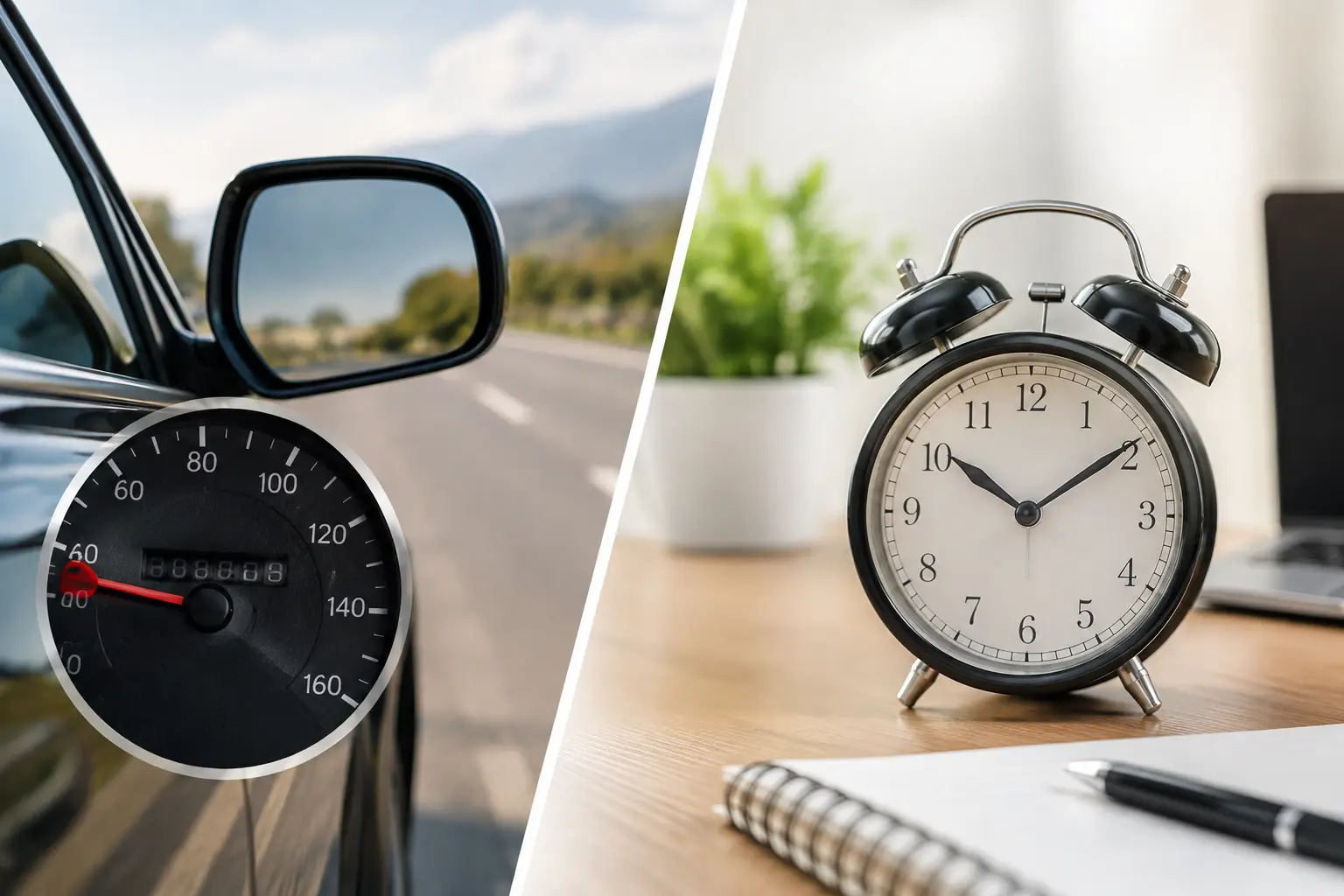
A car can be overdue for service even when it has barely left the garage. It can also rack up enough hard miles in a few months to need attention long before a calendar alert goes off. That is the real choice behind mileage reminders versus time reminders: choosing the service trigger that reflects how your vehicle is actually used.
For enthusiasts, this is more than avoiding an overdue oil change. The right reminder system protects a build you have invested in, creates a service history you can stand behind, and helps you catch small issues before they become expensive repairs.
Mileage Reminders Versus Time Reminders: The Core Difference
Mileage reminders tell you to service an item after the vehicle travels a set distance. A common example is an oil change every 5,000 miles, brake fluid inspection every 30,000 miles, or spark plug replacement at a manufacturer-specified interval.
Time reminders tell you to service an item after a set period, regardless of distance driven. Think annual oil changes for a low-mileage car, brake fluid replacement every two or three years, or a timing belt replacement based on years as well as miles.
Neither approach is universally better. Mileage measures use. Time measures aging. Your vehicle needs attention when either one creates a risk.
That is why many factory maintenance schedules use language such as “every 10,000 miles or 12 months, whichever comes first.” It is not fine print. It is the rule that keeps lightly driven cars and heavily used cars on a sensible maintenance path.
When Mileage-Based Reminders Make More Sense
Mileage reminders are especially useful when wear is directly tied to how far, how hard, and where you drive. Tires, brake pads, engine oil, filters, suspension components, and drivetrain fluids all experience wear through use, even though the exact rate varies.
A commuter who drives 20,000 highway miles a year may hit an oil service interval twice before a yearly time reminder appears. A daily-driven truck that tows regularly may need more frequent checks on fluids, brakes, and tires than a similar truck used only for weekend errands.
Mileage-based tracking also works well for modified cars. If you add performance brake pads, switch to a more aggressive tire compound, install a turbo kit, or begin taking the car to track days, the factory interval may no longer describe your real-world maintenance needs. A build with more power or more demanding use deserves a schedule built around its current setup, not just the owner's manual it left the dealership with.
Mileage is not the same as wear
Odometer-based reminders are useful, but they are not perfect. Ten thousand easy highway miles are different from ten thousand miles of short trips, stop-and-go traffic, towing, autocross runs, or mountain driving.
Use mileage as a dependable baseline, then adjust for your conditions. If your oil temperature runs high, you frequently drive short distances, or your vehicle sees track use, shorten the interval. Record why you made the change. Future you, a shop technician, or a prospective buyer should be able to understand the logic behind your maintenance history.
When Time-Based Reminders Matter More
Time reminders protect vehicles that sit, seasonal vehicles, collector cars, and second cars that do not accumulate miles quickly. A car that sees only 1,500 miles a year can still have aging oil, moisture-contaminated brake fluid, deteriorating rubber, weak batteries, and stale fuel.
Brake fluid is a clear example. It can absorb moisture over time, lowering its boiling point and increasing the risk of corrosion inside the braking system. Waiting for a mileage target alone may leave a low-mileage car on old fluid for far too long.
The same principle applies to engine oil. Modern synthetic oil lasts longer than older formulations, but it is still exposed to condensation, fuel dilution, and contaminants, particularly in vehicles that run briefly and then sit. A garage queen that gets started once a month but rarely reaches full operating temperature may need a yearly oil change even if it is nowhere near its mileage interval.
Time-based reminders also help you stay ahead of age-sensitive items, including tires, coolant, belts, hoses, wiper blades, batteries, and certain timing belt systems. Tires may have plenty of tread but still become unsafe as rubber ages and cracks. A documented tire installation date makes that easier to track than a vague memory of when you bought them.
Use the “Whichever Comes First” Rule
The best system is usually not mileage or time. It is mileage and time, with the first trigger winning.
If your oil change interval is 5,000 miles or 12 months, schedule both reminders when you log the service. Drive 5,000 miles in six months? Service it at six months. Put only 2,000 miles on the car in a year? Service it at 12 months.
This approach keeps maintenance practical without turning ownership into a spreadsheet burden. It also gives each vehicle its own schedule. Your daily driver, project car, tow rig, and weekend coupe should not all receive the same reminder logic.
A practical example for a multi-car garage
Consider a three-vehicle household. The daily SUV covers 15,000 miles a year, the modified coupe gets driven on weekends and a few events, and the classic truck comes out mostly in good weather.
The SUV may need mileage-driven oil, tire rotation, brake, and transmission service alerts. The coupe may need both mileage and time triggers, plus separate reminders for track-day inspections, fluid changes, and alignment checks. The classic truck may rely more heavily on annual fluid checks, battery maintenance, fuel stabilization, and tire-age tracking.
One reminder style for all three vehicles creates blind spots. A vehicle-specific maintenance record creates control.
Let the Owner’s Manual Set Your Starting Point
Your manufacturer schedule is the right place to begin, but it is not always the final answer. Look for normal and severe service schedules, then choose the one that honestly matches your use.
“Severe” does not necessarily mean extreme off-roading or racing. It often includes common habits such as short trips, frequent idling, dusty conditions, stop-and-go traffic, towing, and repeated hot or cold weather operation. Many enthusiast-owned vehicles fall into this category simply because they are driven with purpose rather than parked indefinitely.
If your vehicle has an oil life monitoring system, use it as another input. These systems can account for engine temperature, trip length, load, and other operating conditions better than a basic odometer interval. Still, do not let the dashboard be your only record. A warning light cannot tell you which oil was used, where the service happened, what parts were installed, or whether supporting work was done at the same time.
Build Reminders Around the Parts You Actually Installed
Factory schedules assume factory components. Once you modify a vehicle, your reminders should evolve with it.
An upgraded air filter may need a different cleaning interval. Coilovers may deserve periodic inspection and adjustment. Performance brake fluid can be excellent under heat but may require more frequent replacement. A new clutch, differential, turbocharger, or suspension setup creates its own set of follow-up checks.
Log the part brand, installation date, mileage, cost, photos, and warranty information when the work is done. Then tie reminders to that record. This makes maintenance easier to manage and creates proof that the build was cared for rather than simply assembled.
It also saves money. When you can see exactly when a part was installed and serviced, you are less likely to replace something prematurely or overlook a warranty window.
Keep the Reminder Useful, Not Noisy
A reminder that fires too often gets ignored. One that arrives too late costs you time and money. Set intervals that are specific enough to be useful, but realistic enough that you will follow them.
For each service entry, record the date, mileage, work completed, parts used, labor cost, and next interval. Add notes when conditions matter, such as “track day at 42,300 miles” or “oil changed early after repeated short trips.” Over time, those notes become the story of how the vehicle was owned.
A centralized system such as CarJourney makes this easier across a whole garage by keeping mileage, time-based alerts, receipts, modifications, and service history in one place. The goal is not more notifications. It is a record you can trust.
The right reminder is the one that matches the way your car lives. Set mileage triggers for wear, time triggers for aging, and let the first one due guide your next service. Your vehicle will run better, your records will be stronger, and every mile of the build will have a history worth keeping.