 carjourney
From the CarJourney journal
What Is Predictive Maintenance for Your Vehicle?

Predictive maintenance is defined as a condition-based strategy that uses sensors, real-time data, and AI to detect vehicle problems before they cause a breakdown. Unlike scheduled oil changes or reactive repairs, this approach monitors your vehicle’s actual condition and triggers service only when data signals a real need. For vehicle owners and fleet managers, that distinction matters. It means fewer surprise failures, lower repair bills, and vehicles that stay on the road longer. This article explains how predictive maintenance works, why it outperforms traditional methods, and how you can apply it to your own vehicles or fleet today.
What is predictive maintenance and why does it matter for vehicles?
Predictive maintenance, often called PdM in the industry, is a data-driven maintenance strategy that monitors equipment condition in real time and predicts when a component is likely to fail. The goal is to act before failure happens, not after. For vehicle owners and fleet managers, this means replacing a worn brake component on a Tuesday morning in the shop rather than on the side of a highway at midnight.
The core idea is simple: your vehicle constantly generates data. Engine temperature, oil pressure, vibration patterns, and transmission behavior all tell a story about component health. PdM systems collect that data continuously, analyze it against known failure patterns, and alert you when something looks wrong. That shift from scheduled to condition-based maintenance is what separates predictive maintenance from everything that came before it.

Fleet operators who adopt PdM report 30–50% fewer unexpected outages, which translates directly into better uptime and lower emergency repair costs. That number reflects a fundamental change in how maintenance decisions get made. You stop guessing and start responding to facts.
How does predictive maintenance work to anticipate vehicle issues?
The process behind PdM follows four clear steps. Each one builds on the last, turning raw sensor readings into a specific maintenance recommendation.
-
Sensing. IoT sensors installed on critical vehicle components collect continuous data. In automotive contexts, these sensors monitor vibration, temperature, oil pressure, coolant levels, and exhaust emissions. The data stream is constant, not periodic.
-
Data processing. Raw sensor output is noisy and unstructured. Onboard processors or cloud platforms filter and organize the data into readable signals. Sensor data quality and proper calibration at this stage are critical. Poor setup produces misleading alerts that erode trust in the entire system.
-
AI and machine learning modeling. Processed data feeds into an AI model trained on historical failure patterns. The model identifies anomalies, such as a vibration frequency that precedes bearing failure, and calculates the probability of a component failing within a defined window. This step is where maintenance AI turns data into a prediction.
-
Alerting. When the model detects a pattern that crosses a risk threshold, it sends an alert to the vehicle owner or fleet manager. The alert specifies the component, the risk level, and the recommended action. This is what transforms emergency repairs into planned, scheduled work.
The types of data monitored vary by vehicle and component criticality. High-value fleet assets like commercial trucks often stream data every few seconds. Personal vehicles with basic OBD-II telematics might sync every few minutes. The interval matters because faster data means earlier detection.
Pro Tip: Set alert sensitivity thresholds based on your specific vehicle’s baseline, not generic industry defaults. A diesel truck running at altitude will show different normal temperature ranges than the same truck at sea level. Calibrate to your actual operating conditions to cut false alerts.
Predictive vs. preventive vs. reactive maintenance: which wins?
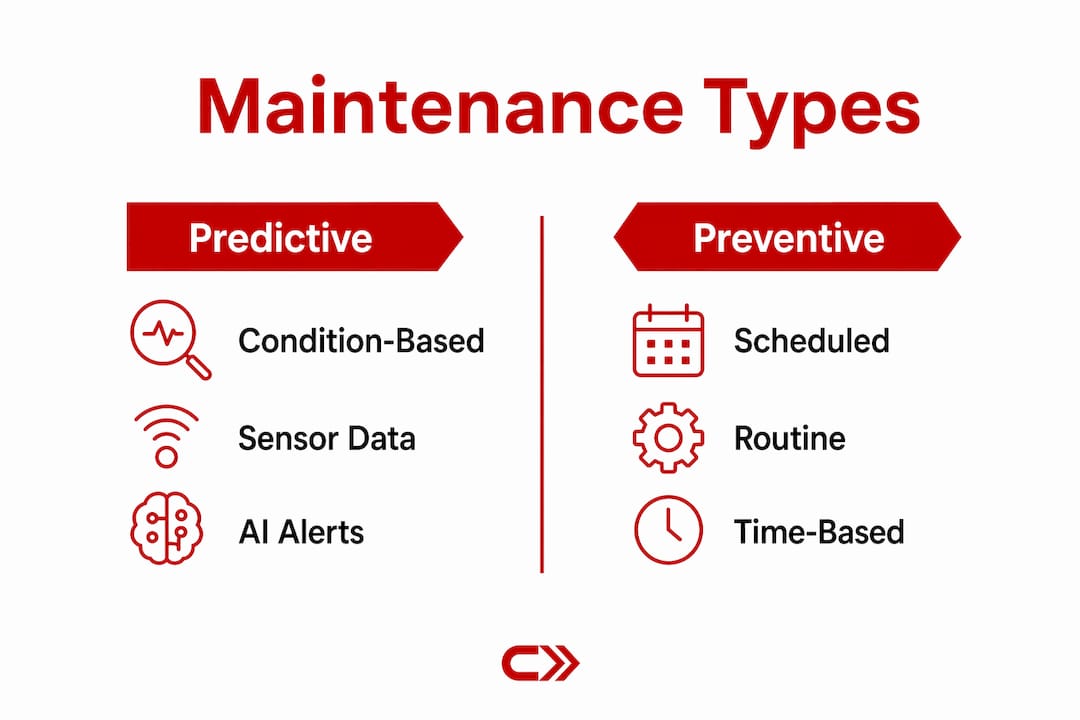
Most vehicle owners operate in one of two modes: they fix things when they break (reactive), or they follow a fixed schedule like changing oil every 5,000 miles (preventive). Both approaches have real costs that PdM addresses directly.
Reactive maintenance is the most expensive option. Emergency repairs carry premium labor rates, unplanned downtime, and the risk of cascading damage when one failed component damages others. Preventive maintenance improves on that by adding structure, but it wastes money too. Replacing parts on a calendar schedule means you often swap out components that still have useful life remaining.
Predictive maintenance replaces both guesses with data. Companies using PdM reduce maintenance costs by 25–30% and extend equipment lifespan by 20–25%. That cost reduction comes from two sources: fewer emergency repairs and fewer unnecessary part replacements.
| Maintenance type | Trigger | Cost profile | Downtime risk |
|---|---|---|---|
| Reactive | Component failure | Highest | Very high |
| Preventive | Fixed schedule | Moderate | Low to moderate |
| Predictive | Condition data | Lowest | Very low |
Safety is another factor that rarely gets enough attention. Early failure detection reduces the risk of catastrophic failures that put drivers and cargo at risk. For fleet managers responsible for drivers on public roads, that safety benefit is not optional. It is a liability issue.
Early detection also extends component life. Predictive methods increase machinery service life by 30% by catching degradation early, before it accelerates into full failure. That means more miles per part and a longer overall vehicle lifespan.
What predictive maintenance strategies and technologies work best for fleets?
Implementing PdM on your vehicles does not require a massive infrastructure investment. The technology has become accessible enough for individual owners and small fleets, not just enterprise operators.
Core technologies to know
- OBD-II telematics devices. These plug into the standard diagnostic port found on any vehicle built after 1996. They stream engine codes, fuel efficiency data, and sensor readings to a connected app or fleet platform. For small fleets, this is the lowest-cost entry point into PdM.
- IoT sensors for specific components. Tire pressure monitoring systems (TPMS), brake wear sensors, and transmission temperature sensors provide targeted data on high-failure-risk components. These are often factory-installed on newer vehicles.
- AI-powered fleet management platforms. Enterprise fleet operators use platforms that aggregate sensor data across entire fleets, apply machine learning models, and generate maintenance work orders automatically. These platforms integrate with parts suppliers for faster procurement.
- Telematics and GPS integration. Combining location data with vehicle health data lets fleet managers correlate route conditions, like rough roads or extreme temperatures, with component wear rates. That context improves prediction accuracy.
A practical strategy for getting started
The importance of predictive maintenance is clearest when you see it applied systematically. Start with the components most likely to cause costly failures: brakes, tires, engine cooling systems, and transmission. Install sensors or use existing OBD-II data to establish a baseline for each. Then set alert thresholds above that baseline and monitor for deviations over 30–60 days before making any maintenance decisions based on the data.
Pro Tip: Integrate your PdM alerts directly into your maintenance scheduling workflow. An alert that sits in an inbox for a week defeats the purpose. Use a platform that connects sensor data to your calendar or work order system so action follows detection automatically.
For fleet managers, multi-vehicle service planning adds another layer of value. When you can see the health status of every vehicle in one view, you can batch maintenance work, reduce shop visits, and keep more vehicles available at any given time.
What challenges should vehicle owners watch out for with PdM?
Predictive maintenance delivers real results, but it fails when implemented carelessly. These are the most common pitfalls and how to avoid them.
- Poor sensor placement. A vibration sensor mounted on a bracket rather than directly on the component it monitors will produce inaccurate readings. Placement follows manufacturer specifications, not convenience.
- Alert fatigue. Systems that generate too many minor warnings train operators to ignore alerts. Tuning predictive baselines per vehicle, rather than using generic thresholds, is the fix. Each vehicle has its own normal operating signature.
- Treating PdM as a replacement for all maintenance. Predictive maintenance does not eliminate scheduled maintenance. Fluid changes, filter replacements, and safety inspections still follow manufacturer intervals. PdM adds a layer of condition monitoring on top of those basics.
- Ignoring data quality. Dirty, uncalibrated, or intermittently connected sensors produce garbage data. Poor sensor setup leads to noise and misleading alerts that make the system worse than useless.
- No follow-through process. PdM adds value by providing advance notice for parts ordering and labor scheduling. If your shop cannot act on a two-week lead time, the prediction is wasted. Build the procurement and scheduling process before you deploy the sensors.
The best PdM programs treat the technology as a decision support tool, not an autonomous system. A skilled technician reviewing alert data and making the final call will always outperform a system running on autopilot.
Key takeaways
Predictive maintenance reduces vehicle costs and downtime by replacing guesswork with real-time condition data and AI-driven failure predictions.
| Point | Details |
|---|---|
| PdM is condition-based | It triggers maintenance from sensor data, not fixed schedules or breakdowns. |
| Cost savings are measurable | Companies report 25–30% lower maintenance costs and 20–25% longer equipment life. |
| Four-step process | Sensing, data processing, AI modeling, and alerting form the complete PdM workflow. |
| Alert fatigue is a real risk | Calibrate thresholds to each vehicle’s baseline to keep alerts meaningful and actionable. |
| PdM supplements, not replaces | Scheduled fluid changes and inspections still apply; PdM adds a condition-monitoring layer on top. |
Why I think most vehicle owners are leaving serious money on the table
I have watched fleet managers spend thousands on emergency repairs that a $40 OBD-II dongle and a decent telematics app would have flagged two weeks earlier. The data was always there. The problem was never the technology. It was the habit of waiting for something to break before paying attention.
The safety angle is the part that gets me most. Fleet operators who use PdM tools report fewer breakdowns and fewer workplace hazards. That is not a marketing claim. That is a driver coming home instead of waiting for a tow truck on a dark interstate.
What I find underappreciated is the scheduling benefit. The real win from PdM is not just knowing a part will fail. It is having two weeks of lead time to order the right part, book the right technician, and pull the vehicle during a low-demand window. That lead time is worth more than the part itself in most fleet operations.
My honest advice: start small. One vehicle, one OBD-II device, one platform. Build the habit of reading the data before you build the infrastructure. Once you see a prediction come true and avoid a breakdown, the case for expanding the program makes itself.
— Chally
How Carjourney helps you put PdM into practice
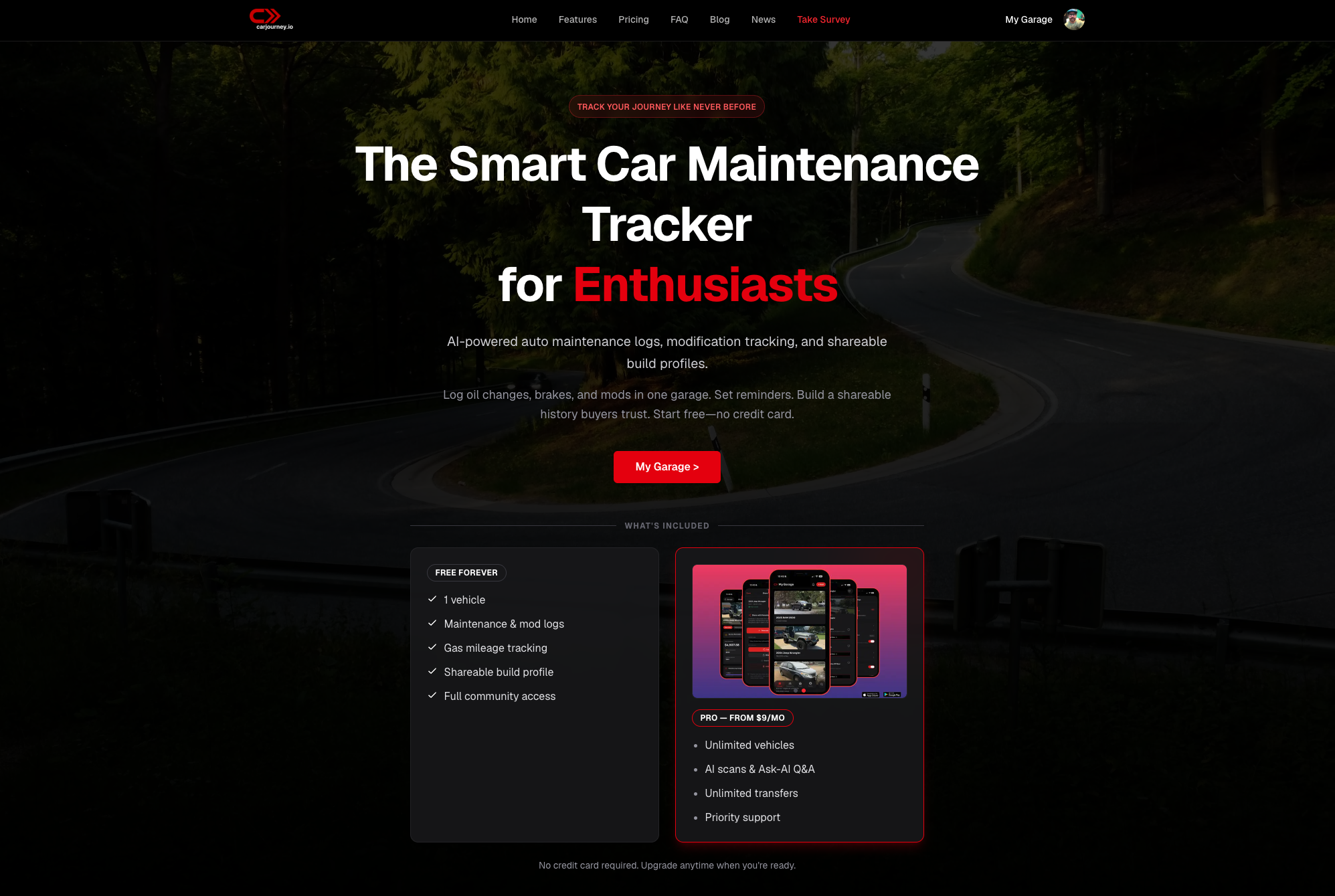
Carjourney is built for vehicle owners and fleet managers who want the benefits of predictive maintenance without the complexity of enterprise software. The platform uses AI to scan your service documents, track component health across your exact vehicle build, and recommend maintenance actions based on real data rather than generic schedules. You can track and optimize maintenance for a single car or an entire fleet from one place. Carjourney connects sensor data, service history, and community knowledge so your next maintenance decision is always backed by more than a guess. If you are ready to stop reacting and start predicting, Carjourney is where that shift starts.
FAQ
What is the difference between predictive and preventive maintenance?
Preventive maintenance follows a fixed schedule regardless of actual component condition. Predictive maintenance triggers service only when sensor data signals a real need, which reduces unnecessary part replacements and lowers overall costs.
How does predictive maintenance work on a personal vehicle?
An OBD-II telematics device plugs into your vehicle’s diagnostic port and streams engine and sensor data to an app. AI models analyze that data against known failure patterns and alert you when a component shows signs of degradation.
What are the main benefits of predictive maintenance for fleet managers?
Fleet managers using PdM report 30–50% fewer unexpected outages, 25–30% lower maintenance costs, and improved driver safety through early detection of component failures before they become road hazards.
Does predictive maintenance replace regular oil changes and inspections?
No. Predictive maintenance adds a condition-monitoring layer on top of scheduled maintenance. Fluid changes, filter replacements, and safety inspections still follow manufacturer intervals.
How do I avoid alert fatigue with a predictive maintenance system?
Calibrate alert thresholds to each vehicle’s specific baseline operating conditions rather than using generic defaults. Tuning sensitivity per vehicle keeps alerts meaningful and prevents operators from ignoring critical warnings.