 carjourney
From the CarJourney journal
Digital vs Paper Car Logs: Which Works Best?
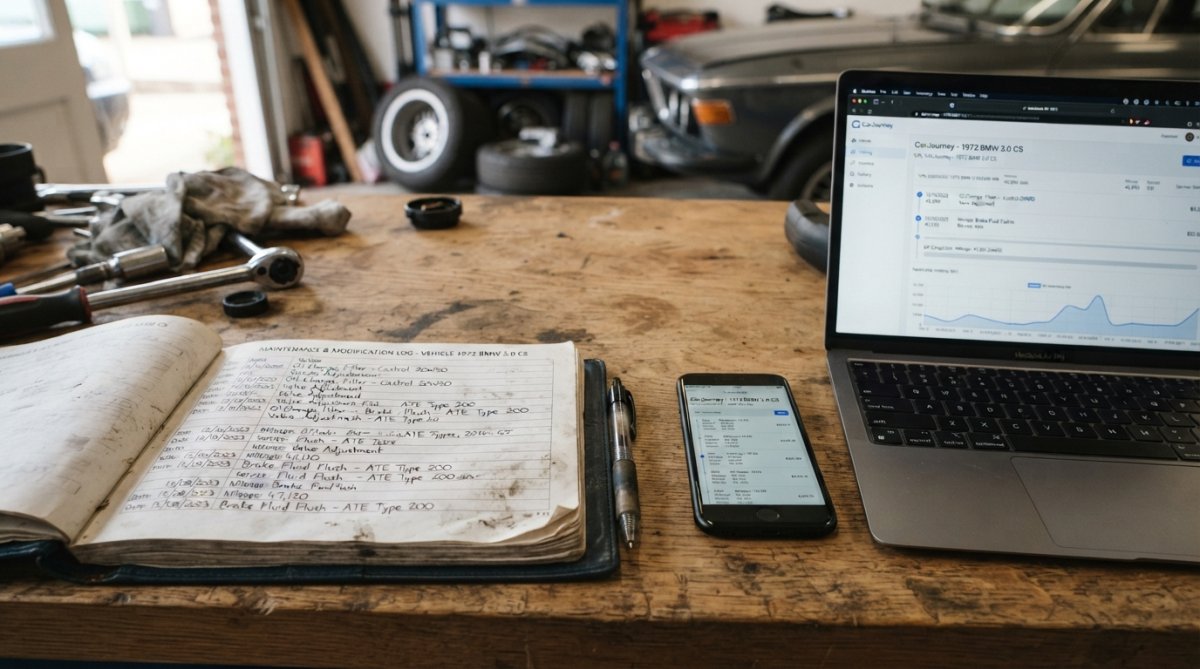
Table of Contents
- Digital vs Paper Car Logs: Key Differences at a Glance
- Understanding Electronic Logging Devices and the ELD Mandate
- HOS Compliance: How Digital and Paper Logs Differ
- Electronic Logging Devices: Pros and Cons for Commercial Operations
- Fleet Management Software Integration and Real-Time Tracking
- Pros and Cons of Digital Logs for Automotive Enthusiasts
- Pros and Cons of Paper Logs for Vehicle Maintenance
- Which Log System Should You Choose?
Last Updated: July 28, 2026
When managing vehicle records, the choice between digital vs paper car logs significantly impacts regulatory compliance, resale value, and operational efficiency. For commercial drivers, federal mandates now require electronic logging devices. For personal vehicle owners, the choice affects how well you document maintenance history and prove vehicle care to future buyers.
Digital vs Paper Car Logs: Key Differences at a Glance
Digital systems use Electronic Logging Devices (ELDs) or smartphone apps to automatically capture data, while paper logs require manual entry. Digital systems track hours of service in real time with GPS integration; paper logs depend entirely on manual recording, introducing human error and falsification opportunities. Digital logs sync to cloud storage for anywhere access; paper logs can be lost or damaged.
For commercial operations, the Federal Motor Carrier Safety Administration (FMCSA) mandates ELDs for most interstate trucking companies. For personal vehicle owners, digital tracking through apps like CarJourney generates detailed maintenance profiles that prove vehicle care to potential buyers.
Key Takeaway Digital logs offer automation, accuracy, and compliance; paper logs offer simplicity and no technology dependency. Your choice depends on whether you value convenience and documentation or prefer the offline approach.What Digital Logs Offer
Digital logging systems provide real-time data capture with minimal manual intervention. When you use an ELD or maintenance tracking app, the system records information automatically, hours on the road, vehicle location, or service milestones tied to mileage.
For commercial drivers, digital logs eliminate guesswork around Hours of Service (HOS) compliance and prevent accidental violations. For personal vehicle owners, CarJourney uses AI-powered setup and automated VIN-based vehicle configuration to populate service schedules instantly, then tracks every maintenance entry, modification, and fuel expense in one place. Digital logs generate professional build profiles that prove vehicle history to buyers and integrate with fleet management software for GPS tracking, automated maintenance alerts, and fuel monitoring.
The downside: digital systems require hardware, internet connectivity, and ongoing subscription costs.
What Paper Logs Offer
Paper logbooks require no technology, internet connection, or subscription fees. For drivers preferring simplicity or working in areas with poor connectivity, paper logs remain viable, though increasingly limited by regulation.
A physical logbook is straightforward to use and offers peace of mind for those skeptical of technology. Paper logs also serve as legal backup documentation for ELD failures, which commercial drivers must carry.
However, paper logs are prone to errors, legibility issues, and loss. The FMCSA documented widespread falsification of paper logs, which prompted the ELD mandate. Paper records don't integrate with other systems, making it difficult to cross-reference maintenance with warranty claims or resale documentation.
Watch Out Paper logs can be easily lost, damaged, or disputed. A single spilled drink or misplaced notebook can erase months of maintenance history, a critical risk if proving vehicle care during resale or warranty claims.Understanding Electronic Logging Devices and the ELD Mandate
An Electronic Logging Device automatically records a commercial driver's hours of service and duty status. The FMCSA mandates ELDs for most interstate commercial drivers to improve safety, reduce falsification, and simplify compliance auditing. The mandate took effect in December 2017 and applies to most commercial motor vehicle drivers subject to federal Hours of Service regulations.
ELDs record four duty statuses: off-duty, sleeper berth, driving, and on-duty not driving. The device timestamps each transition automatically through GPS activation or manual input, creating an accurate, tamper-resistant record that inspectors can review in seconds.
Who Must Comply with ELD Requirements
Most commercial drivers operating vehicles over 10,000 pounds Gross Vehicle Weight Rating (GVWR) and traveling interstate must use an ELD. This includes long-haul trucking companies, interstate for-hire carriers, commercial bus operators on interstate routes, and most delivery services operating across state lines. The mandate applies to drivers subject to federal Hours of Service rules in 49 CFR Part 395.
State-Level Exemptions and Special Cases
Several states and specific scenarios allow exemptions from the ELD mandate. Agricultural operations, certain specialized carriers, and drivers with fewer than eight employees may qualify for exemptions. However, this landscape is changing as more states align with federal standards. Verify current rules with your state's transportation authority, as exemptions are being phased out.
HOS Compliance: How Digital and Paper Logs Differ
Hours of Service (HOS) regulations limit how long commercial drivers can work without rest. Federal rules allow 11 hours of driving per 14-hour on-duty period, with mandatory 10-hour off-duty breaks.
Digital logs enforce HOS compliance automatically. When a driver reaches their 11-hour driving limit, the ELD prevents further driving until the required rest period is complete. Paper logs require manual calculation, an error-prone approach. Studies show paper log falsification is common, with drivers intentionally or accidentally recording inaccurate information.
Manual Entry vs Automated Tracking
With paper logs, every entry is manual. With digital logs, most data is captured automatically. GPS triggers driving status when the vehicle moves, and integrations pull maintenance records, fuel data, and vehicle diagnostics without human input. Automated tracking creates accountability with no ambiguity about when the vehicle was moving or where it was located.
Accuracy and Falsification Risks
Paper logs have a documented falsification problem. Before the ELD mandate, falsified paper logs were a major safety issue. Digital logs eliminate most falsification risks by recording data in real time with tamper-resistant timestamps and edit logs.
Pro Tip If managing a fleet, digital logs reduce liability. You have a complete, verifiable record proving compliance, protecting your company during inspections and accidents.Electronic Logging Devices: Pros and Cons for Commercial Operations
ELD systems are now standard for commercial trucking, but they come with trade-offs.
Pros of ELDs:
- Automatic compliance with federal HOS regulations
- Real-time visibility into driver location and status
- Reduced falsification and safety violations
- Integration with fleet management software for maintenance and fuel monitoring
- Faster roadside inspections
- Lower insurance premiums for carriers with strong compliance records
Cons of ELDs:
- Hardware and subscription costs (typically $35-50 per vehicle per month)
- Learning curve for unfamiliar drivers
- Potential connectivity issues in remote areas
- Device malfunctions require backup paper logs
Hardware vs App-Based ELD Solutions
ELDs come in two forms: dedicated hardware units and smartphone apps. Hardware devices connect to the engine's diagnostic port and provide reliable, always-on recording. App-based ELDs run on smartphones, offering flexibility and lower hardware costs but depending on battery life and cellular coverage.
For large fleets, hardware ELDs are often preferred for consistent data capture. For small operations or owner-operators, app-based solutions offer lower upfront costs.
Data Security and Privacy Concerns
ELDs collect sensitive data: driver location, hours worked, and vehicle diagnostics. Reputable ELD providers encrypt data in transit and at rest, comply with FMCSA standards, and allow drivers to access their own records. Drivers should review their ELD provider's privacy policy to understand data collection and retention practices.
Fleet Management Software Integration and Real-Time Tracking
Digital logs integrate with broader fleet management systems that track vehicle maintenance, fuel expenses, GPS location, and driver behavior in real time. A fleet manager can see which vehicles need oil changes before they're overdue, which drivers exceed speed limits, and which routes consume the most fuel.
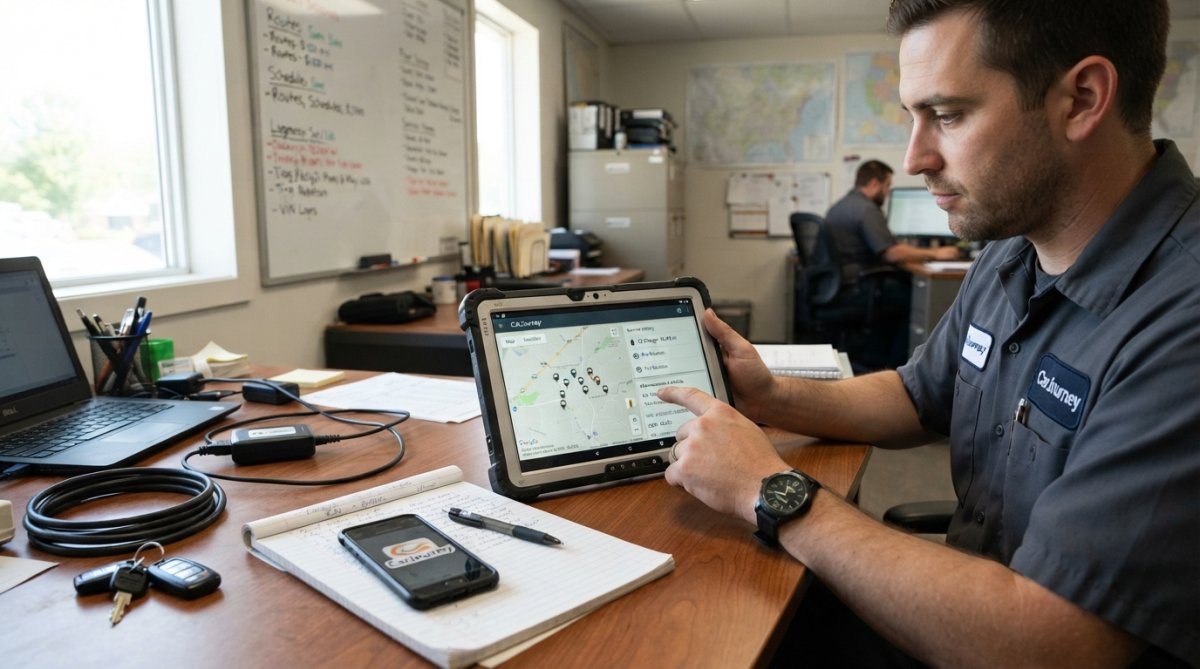
GPS tracking verifies drivers follow assigned routes, helps dispatch optimize delivery sequences, and provides evidence of vehicle location in case of accidents. Real-time tracking enables automated alerts; if a vehicle breaks down, the system immediately notifies the fleet manager.
How Digital Logs Connect to Broader Fleet Operations
When your ELD connects to fleet management software like Motive or Fleetio, you gain a unified platform for compliance, maintenance, and operations. The system consolidates data from your ELD, vehicle diagnostics, fuel cards, and maintenance records into dashboards and reports. A fleet manager can generate compliance reports in seconds, schedule preventative maintenance based on mileage, and identify drivers needing additional safety training.
GPS and Automated Vehicle Maintenance Alerts
GPS data enables predictive maintenance. The system knows how many miles each vehicle has traveled and what terrain it navigated. Combined with manufacturer maintenance schedules, this triggers alerts when service is due. For personal vehicle owners, tools like CarJourney provide similar functionality, generating customized maintenance schedules based on your vehicle's VIN, age, and mileage.
Pros and Cons of Digital Logs for Automotive Enthusiasts
For people maintaining project cars, daily drivers, or collectible vehicles, digital logging offers significant advantages over scattered receipts and handwritten notes.
Pros:
- All maintenance and modification records in one searchable, organized place
- Shareable build profiles that increase resale value and buyer confidence
- Automatic reminders for oil changes, tire rotations, and scheduled maintenance
- Proof of vehicle care during warranty claims or resale negotiations
- AI-powered insights about vehicle health and upcoming service needs
Cons:
- Requires learning a new app or platform
- Subscription costs (though many platforms offer free tiers)
- Data privacy concerns if the platform is hacked
Shareable Records and Resale Transparency
One of the biggest advantages of digital logs is generating shareable build profiles. Instead of telling a potential buyer "I've maintained this car really well," you can show a complete history: every service date, every part replaced, every modification made. Buyers increasingly expect this documentation. A car with verified maintenance history commands a higher price than one without records.
Long-Term Organization and Accessibility
Paper receipts get lost; digital logs don't. Digital logs store everything in one place, indexed and searchable. You can filter by service type, date range, or cost, and generate reports showing total maintenance spending or identify recurring issues.
Key Takeaway Digital logs for personal vehicles transform scattered paperwork into a professional, shareable history that increases resale value and simplifies warranty claims.Pros and Cons of Paper Logs for Vehicle Maintenance
Paper logbooks remain popular with some vehicle owners, particularly those distrusting technology or preferring a tactile approach.
Pros:
- No subscription fees or technology required
- Simple to use
- No privacy concerns about data collection
- Works offline without internet
- Physical record available anytime
Cons:
- Prone to loss, damage, or fading ink
- Difficult to search or organize as records accumulate
- Cannot be easily shared with buyers or mechanics
- No automatic reminders for upcoming maintenance
- Difficult to prove vehicle care during resale or warranty claims
Simplicity and No Technology Dependency
For drivers uncomfortable with technology or operating in areas with unreliable internet, paper logs offer straightforward simplicity. A notebook and pen are always available and always work. Some vehicle owners prefer the mindfulness of writing, creating engagement with their vehicle.
Limitations and Loss Risks
The practical drawbacks of paper logs are significant. A single incident, a spilled drink, a lost notebook, a fire, can destroy years of maintenance records. Unlike digital logs backed up to cloud storage, paper records have no redundancy. For resale purposes, paper logs are increasingly seen as incomplete. Buyers expect digital documentation they can verify.
Which Log System Should You Choose?
The right choice depends on your specific situation, regulatory requirements, and priorities.
For Commercial Drivers and Fleet Operators
If you operate a commercial vehicle interstate, federal law requires an ELD. For fleet operators, evaluate ELDs based on integration with existing fleet management software, ease of use for drivers, and customer support quality. Motive combines ELD compliance with AI dashcam technology and comprehensive fleet analytics. Fleetio focuses on maintenance management alongside ELD compliance.
For owner-operators, app-based ELDs may be more cost-effective than hardware solutions. If you operate intrastate only, check your state's specific regulations. Even if paper logs are legal, consider switching to digital for compliance and safety benefits.
For Personal Vehicle Owners and Enthusiasts
For personal vehicles, digital logging is increasingly the smart choice. Tools like CarJourney are designed specifically for enthusiasts and daily driver owners. You get automatic VIN-based setup, unlimited tracking of maintenance and modifications, and the ability to generate shareable build profiles. The cost is minimal compared to the value provided during resale.
If maintaining multiple vehicles, digital logs keep everything organized in one place. Paper logs make sense only if maintaining a single vehicle long-term with no plans to sell it and you're comfortable with losing records.
| Scenario | Best Choice | Why |
|---|---|---|
| Interstate commercial driver | ELD (hardware or app) | Legally required; improves safety and compliance |
| Intrastate fleet operator | Digital ELD + fleet management | Integrates compliance, maintenance, and operations |
| Owner-operator (small business) | App-based ELD | Lower cost than hardware; adequate for small scale |
| Personal vehicle owner | Digital log app (e.g., CarJourney) | Organizes records; increases resale value; shareable |
| Multi-vehicle enthusiast | Digital platform | Tracks all vehicles; generates build profiles; searchable |
| Occasional driver, single vehicle | Either option | Paper logs acceptable if vehicle won't be sold; digital better for resale |
The choice between digital vs paper car logs reflects your priorities: compliance and efficiency versus simplicity and offline reliability. For commercial drivers, the decision is legally mandated. For personal vehicle owners, digital logs offer tangible benefits in organization, resale value, and peace of mind. CarJourney and similar platforms make the transition seamless, turning scattered receipts into a professional maintenance history that buyers trust and mechanics appreciate. Start with a free account to see how digital logging transforms the way you manage your vehicles.
Frequently Asked Questions
What is the difference between digital logs and paper logs for vehicle maintenance?
Digital logs automatically capture maintenance records, service dates, and mileage using software or apps, while paper logs require manual handwritten entries. Digital logs reduce errors, enable real-time tracking, and create shareable records, ideal for proving vehicle care to buyers. Paper logs are simple and require no technology but are prone to loss, damage, and legibility issues. For commercial drivers, digital logs (ELDs) are mandated by the FMCSA for Hours of Service compliance, while paper logs serve as backups.
Are paper logs still legal for commercial drivers under the ELD mandate?
Paper logs are no longer the primary requirement for most commercial drivers covered by the FMCSA ELD mandate. However, paper logs remain legal as a backup when an Electronic Logging Device malfunctions. Some exemptions exist, certain carriers with short-haul operations or specific vehicle types may qualify for exemptions. State-level variations also apply. Drivers should verify their specific regulatory requirements with their fleet manager or the FMCSA, as HOS compliance rules depend on operation type and vehicle weight.
How do digital logs improve fleet management software integration?
Digital logs sync automatically with fleet management platforms, enabling real-time GPS tracking, automated maintenance alerts based on mileage or time intervals, and comprehensive data analytics. This integration eliminates manual data entry, reduces compliance errors, and provides visibility into vehicle maintenance schedules and driver status. Fleet managers can generate reports on vehicle utilization, fuel efficiency, and service history instantly. Paper logs cannot integrate with digital systems, requiring manual transcription and limiting operational efficiency and safety insights.
What are the main security concerns with digital car logs?
Digital logs store sensitive vehicle data, modification details, and personal information in the cloud, raising privacy and data security concerns. Risks include unauthorized access, data breaches, or information being sold to third parties. When choosing a digital logging platform, verify that the provider encrypts data, offers transparent privacy policies, allows you to control data sharing, and complies with data protection standards. Many platforms, including CarJourney, allow users to keep builds private and control exactly what information is shared publicly.
Should I use digital logs or paper logs for my personal vehicle?
For personal vehicle owners and enthusiasts, digital logs are the better choice. They organize scattered receipts and photos into one accessible record, generate shareable build profiles that prove vehicle care to potential buyers, and provide reminders for essential services like oil changes and tire rotations. Digital logs are especially valuable if you customize your vehicle or plan to sell it. Paper logs work for minimal tracking but offer no resale value and are easily lost. Digital platforms designed for automotive enthusiasts simplify the process of building a comprehensive vehicle history.
This article was written using GrandRanker