 carjourney
From the CarJourney journal
Essential Records for Collector Cars That Protect Value
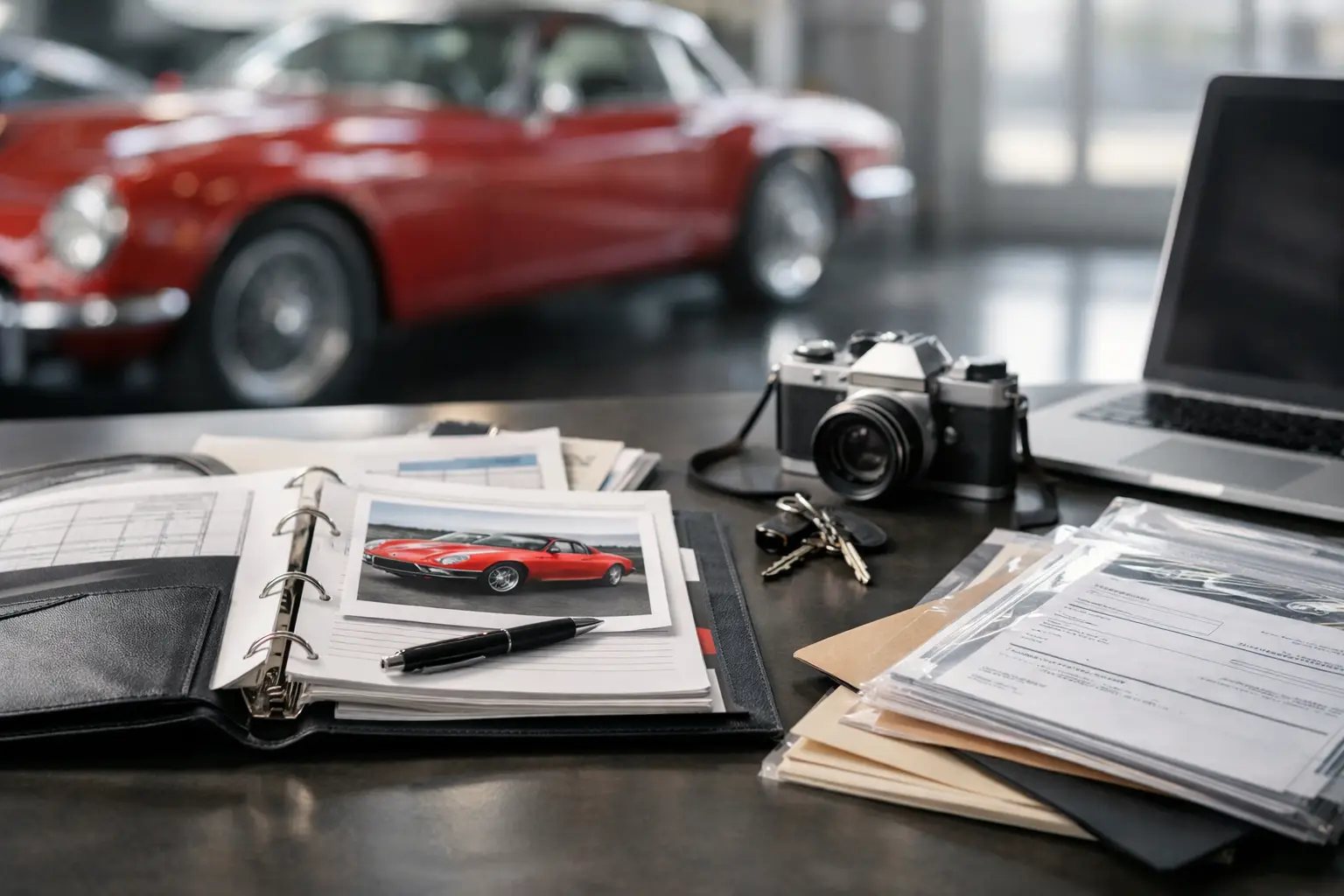
A collector car can look spotless under the lights and still leave a serious buyer uneasy. The gap is usually not the paint, the engine, or the asking price. It is the missing story. Essential records for collector cars turn a vehicle from an attractive unknown into a documented asset with a history people can verify.
For a numbers-matching survivor, a concours restoration, or a well-built restomod, records protect more than resale value. They help you make smarter maintenance decisions, support an insurance claim, prove what was done, and preserve the details that made you buy the car in the first place.
Why Collector Car Records Carry Real Weight
Collector-car buyers are not just evaluating the car in front of them. They are evaluating its provenance, condition over time, originality, and the care behind it. A thick, organized history file will not make a rough car perfect, but it can remove doubt around a good one.
Documentation is especially valuable when the vehicle has a story that cannot be confirmed by appearance alone. Was the engine rebuilt 2,000 miles ago or 20,000? Was the car repainted in its factory color? Were the original parts retained during a restoration? Did the current owner actually address the cooling issue, or just stop mentioning it?
The answer should not depend on memory. Good records give the next owner clear evidence, and they give you control over your own ownership experience.
Essential Records for Collector Cars
Title, registration, and ownership history
Start with the legal foundation. Keep copies of the current title, registration, bill of sale, and any prior titles or ownership documents you received with the car. For older vehicles, title history can help establish continuity and identify states where the car was previously registered.
If the vehicle has a VIN that differs by location, such as a separate chassis or body number, record each one with clear photos. This matters for early cars, imported vehicles, and models with factory identification tags that can be lost during restoration.
A prior-owner timeline can also be useful. It does not need to be dramatic or complete back to new. A simple record of known owners, locations, purchase dates, and major events creates useful context. Be careful with personal information if you plan to share the file with prospective buyers. Keep private contact details out of the version you provide publicly.
Original purchase materials and factory documentation
If you have original materials, protect them. These may include the window sticker, build sheet, dealer invoice, warranty booklet, owner’s manual, maintenance booklet, factory brochures, and delivery paperwork.
Not every collector car will retain these items, and their value varies by make, model, and era. A build sheet can be a major point of verification for a factory muscle car. An owner’s manual may be less financially significant, but it still strengthens the car’s presentation and helps preserve its character.
Store originals in archival sleeves or a safe, dry location. Scan them for daily reference. The copy belongs in your working record; the original deserves protection.
Maintenance and repair invoices
Service history is the backbone of a usable collector car. Keep invoices for routine work such as oil changes, coolant flushes, brake service, tires, batteries, alignments, and inspections. Just as important, document larger repairs: carburetor rebuilds, fuel-system repairs, electrical diagnosis, transmission work, suspension refreshes, and engine rebuilds.
Every entry should include the date, mileage, shop or technician, work performed, parts used, and total cost. If you perform the work yourself, log the same details and save parts receipts. A handwritten note saying “tuned carb” is better than nothing. A dated record with jet sizes, timing settings, replacement parts, and photos is far more useful.
Mileage deserves special attention. Many older cars have five-digit odometers, replaced clusters, or unknown mileage. Do not guess. Record what the odometer showed at every service and explain known discrepancies. Honest documentation is more credible than a convenient story.
Restoration records and condition photos
A restoration can add value, but the documentation often determines how much confidence it creates. Save estimates, invoices, paint formulas, parts lists, and correspondence from body shops, engine builders, upholstery specialists, and restoration shops.
Photos are just as valuable. Capture the car before work begins, during disassembly, after metal repair, before paint, during drivetrain work, and at completion. Show stampings, factory tags, body panels, rust repair, chassis condition, and major components before they disappear behind fresh paint or undercoating.
These photos are not only for resale. They can help diagnose future issues and support insurance discussions after damage. A detailed image record also proves the difference between a cosmetic refresh and a full restoration.
Modification and build records
A modified collector car needs a clear build history. Keep receipts, part numbers, installation dates, photos, tuning files, dyno sheets, alignment settings, and before-and-after documentation for every meaningful upgrade.
This applies whether you added EFI to a classic truck, upgraded brakes on a vintage sports car, installed a modern overdrive transmission, or built a period-correct performance package. A buyer may not want every modification, but they will want to know exactly what is on the car and how it was installed.
Document the trade-offs, too. A larger camshaft may improve top-end power but change idle quality. A lowered suspension may sharpen the stance while reducing ground clearance. Honest notes make a build more trustworthy and help the next owner service it correctly.
When possible, retain removed factory parts. Original wheels, carburetors, intake manifolds, radios, and trim pieces can matter significantly, even if they are not currently installed. Label each item and record its condition.
Appraisals, insurance, and valuation records
Standard auto insurance is not always built for collector vehicles. Keep agreed-value policies, appraisals, valuation reports, coverage declarations, and communication related to special equipment or modifications.
Update these records after major restoration work, a market shift, or expensive upgrades. The amount you paid for a car years ago may have little connection to its current replacement value. If your policy does not reflect the vehicle as it sits today, a loss can become much harder to recover from.
Include photos taken specifically for insurance purposes: all sides of the car, interior, engine bay, trunk, VIN tags, wheels, accessories, and stored original parts. Refresh them at least once a year.
Event, award, and provenance records
For show cars and historically notable vehicles, save concours judging sheets, club awards, event registrations, magazine features, race documentation, and correspondence that supports the car’s history. These items may not matter equally to every buyer, but they can add depth to a vehicle with a documented story.
The key is accuracy. Do not present club lore as proven provenance. Separate verified facts, such as a dated race entry or factory paperwork, from stories passed down by previous owners. Serious collectors respect that distinction.
Build a Record System You Will Actually Maintain
A collector-car file only works if you keep using it. A paper binder is useful for original documents and a quick reference at the garage. A digital system is better for searchable receipts, mileage logs, photos, reminders, and access from anywhere.
The strongest setup uses both. Preserve critical originals in a physical file, then create a digital record for the documents and daily ownership details. Organize files by category and date, using names that make sense six years from now, such as “2026-04-12_brake-fluid-flush_48231-miles.”
For each vehicle, track the current mileage, service schedule, modification list, document folder, photo archive, and cost history. A platform such as CarJourney can keep those records, maintenance reminders, receipts, and build details in one centralized garage instead of scattering them across folders, text threads, and spreadsheets.
Do not wait for a future sale to get organized. Start with what you have: scan the paperwork, photograph the car, log the current condition, and add old invoices as time allows. Even an incomplete record becomes more valuable when it is clearly organized and continues forward without gaps.
Records That Often Get Missed
Some of the most useful documentation is easy to overlook. Keep records for keys and fobs, alarm systems, spare wheels, tool kits, manuals, paint touch-up codes, emissions exemptions, storage receipts, transport paperwork, and battery tender purchases. These details help prove completeness and reduce headaches during ownership.
Also save notes about quirks. If the fuel gauge reads low, the choke needs a specific routine, or the car uses a nonstandard oil filter after an engine swap, write it down. The next time you return to the car after winter storage, you will be glad you did.
A collector car’s history should not disappear into a drawer simply because the car is not driven every day. Every receipt, photo, service entry, and honest note adds another layer of trust. Keep the story as carefully as you keep the car, and it will be ready whenever the next chapter begins.