
How Often Replace Cabin Filter?
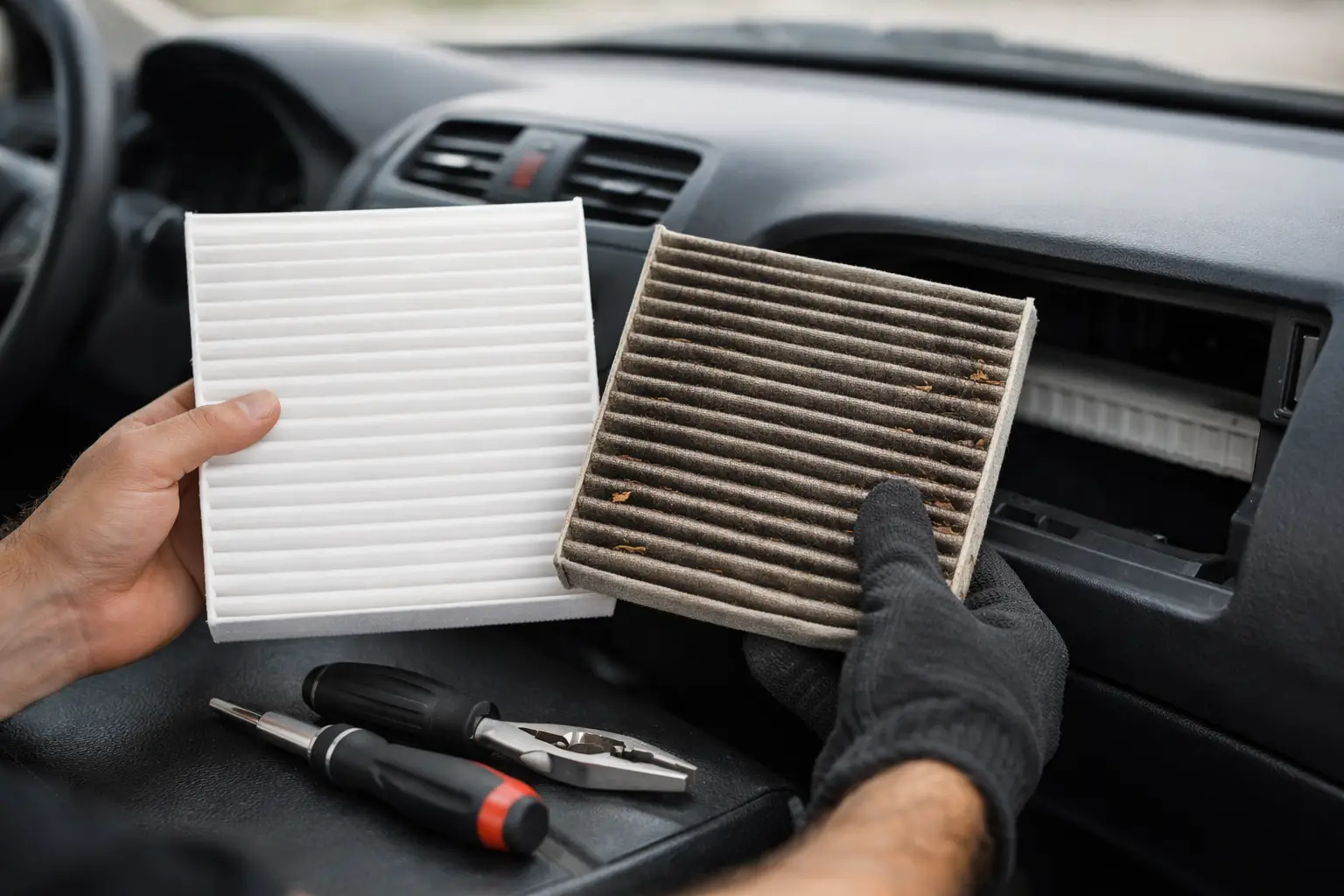
If your HVAC suddenly smells dusty, airflow feels weak, or the windshield takes longer to defog, the cabin air filter is usually the first thing to check. A lot of owners ask how often replace cabin filter, and the honest answer is simple: more often than most people think, especially if the car sees city traffic, construction zones, or heavy pollen.
How often to replace cabin filter
For most vehicles, a good rule of thumb is every 15,000 to 30,000 miles or about once a year. That covers the average daily driver in normal conditions. Some owner manuals push the interval a little longer, while others recommend inspection at every major service.
The catch is that cabin filters do not age on mileage alone. They load up based on what the car breathes. A vehicle driven 10,000 miles through dusty back roads, wildfire smoke, and spring pollen can need a new filter sooner than a highway commuter that covers twice the distance in cleaner air.
If you want the safest default, inspect it at every oil change or at least every six months. That keeps you from guessing and makes it easier to spot a filter that is getting clogged before it starts affecting comfort.
Why the interval changes from one car to another
Cabin filters live behind the scenes, but they deal with a lot. Every time you run the fan, outside air passes through the filter before it enters the cabin. Over time, that filter catches dust, soot, pollen, leaves, and other fine particles. In the right conditions, it can get dirty fast.
If you drive in a dense urban area, stop-and-go traffic exposes the filter to more exhaust and airborne grime. If you live in a dry climate, road dust can fill it quickly. If your area has intense allergy seasons, the filter may be doing overtime for weeks at a time. Park under trees and you also increase the chance of debris collecting around the cowl and intake area.
Then there is the car itself. Some vehicles have easier airflow paths and larger filters. Others have compact filter housings that seem to clog faster. Performance builds and collector cars are not immune either. Even a weekend car can need a filter if it sits long enough in a dusty garage or gets driven during pollen-heavy months.
Signs your cabin filter needs replacement sooner
Mileage intervals are useful, but symptoms matter more. A dirty cabin filter often gives you a warning before it becomes a real annoyance.
The first sign is usually weak airflow from the vents. If the fan is on a high setting but the air still feels soft or restricted, the filter may be blocking flow. Heating and air conditioning can still work, but they have to work harder to move air into the cabin.
You may also notice musty or dusty smells when the system starts up. That does not always mean the filter is the only problem, because mold in the evaporator area can cause similar odors, but an old filter is a common contributor.
Another clue is poor defogging performance. If the windshield takes longer to clear than it used to, reduced airflow can be part of the reason. In allergy season, passengers might also notice more sneezing or irritation if the filter is overdue and no longer trapping particles effectively.
If you pull the filter and it looks dark, packed with debris, or warped from moisture, replace it. They are inexpensive enough that once a filter looks tired, there is little reason to stretch it.
How often replace cabin filter in tough conditions?
If your driving habits are harder than average, shorten the interval to around 10,000 to 15,000 miles. For some owners, especially those dealing with dirt roads, wildfire smoke, desert dust, or constant urban congestion, even that may be optimistic.
A practical approach is to tie cabin filter checks to seasons. Inspect before summer if you rely heavily on AC, and again before winter when strong defogging matters most. That matters even more on cars you care about keeping clean and well-documented. Small maintenance items like this are easy to forget, but they make the ownership experience noticeably better.
For multi-car households, this is one of those services that gets missed because it does not stop the car from running. That is exactly why logging it matters. A simple reminder prevents the usual pattern of noticing weak airflow, forgetting about it, then replacing the filter two years late.
What happens if you wait too long
A neglected cabin filter usually will not strand you, but it can create a chain of small problems. The obvious downside is cabin comfort. Heat and AC performance can feel underwhelming because air cannot move freely through the system.
That restriction can also put extra strain on the blower motor over time. The motor has to work harder to push air through a clogged filter, which is not ideal if you plan to keep the car long term. On some vehicles, excessive debris can also let moisture hang around longer than it should, contributing to stale smells.
More than anything, it just makes the car feel less cared for. Enthusiasts spend real money on suspension, wheels, tires, detailing supplies, and premium fluids, yet a neglected cabin filter can make the whole interior experience feel cheap. Clean airflow is one of those subtle quality markers people notice without always knowing why.
Choosing the right replacement filter
Not every cabin filter is the same. A standard particulate filter works well for basic dust and debris. Activated carbon filters add another layer by helping reduce odors and some gaseous pollutants, which is helpful for city driving or areas with heavy traffic.
The trade-off is price. Carbon filters usually cost more, and on some cars the performance difference feels modest. Still, if you spend a lot of time commuting or carrying passengers, the extra cost is often worth it.
Fitment matters just as much as filter type. Cheap filters with poor seals can let unfiltered air sneak around the edges. If you are particular about maintenance quality, use a reputable brand and make sure the airflow direction is installed correctly. A backwards filter can reduce effectiveness and create avoidable airflow issues.
DIY or shop service?
For many cars, cabin filter replacement is an easy DIY job that takes 5 to 15 minutes. It is often behind the glove box, under the dash, or near the cowl. In those cases, doing it yourself makes sense. You save money, you can inspect the housing for leaves or debris, and you know exactly when it was done.
But not every vehicle is that friendly. Some cabin filters are buried behind trim panels or packed into awkward spaces that make the job annoying. If the labor starts turning a simple filter into a one-hour frustration session, paying a shop is reasonable.
The real win is consistency, not bragging rights. Whether you do it in your garage or have your shop handle it during routine service, keep a record with the mileage and date. That way you are not relying on memory six months later.
The best replacement schedule for most owners
If you want a schedule that works without overthinking it, replace the cabin filter once a year and inspect it every 6 months. Shorten that to every 10,000 to 15,000 miles if you drive in dust, smoke, heavy pollen, or dense traffic. Stretching to 20,000 to 30,000 miles is fine for lighter-duty use, but only if the filter still looks clean and airflow remains strong.
That balance keeps costs low while protecting comfort, HVAC performance, and the overall feel of the car. It also makes your maintenance history cleaner, which matters if you ever sell the vehicle and want to show buyers that the small stuff was handled too.
A platform like CarJourney makes this easier because cabin filters are exactly the kind of low-cost service that slips through the cracks. Log it once, set a mileage or time reminder, and you never have to guess again.
The cabin filter is not the most exciting item on your maintenance list, but it is one of the easiest wins. Replace it before the car starts reminding you the hard way, and every drive feels a little more sorted.