
Best Auto Valuation Apps for U.S. Car Owners in 2026

For enthusiast sellers who need a defensible number, Carjourney is the strongest starting point: its AI document scanning, VIN verification, and exportable buyer packets give you documentation that raw price calculators simply cannot produce. The single highest-impact action you can take is to scan your VIN, attach your service records and high-quality photos, then cross-check the app’s estimate against a history-based source like CARFAX and a market-based tool like Kelley Blue Book. One number from one app is a guess. Three sources with documented records is a price you can defend.
Quick actions before you list:
- Scan your VIN to confirm exact trim and options (prevents the most common valuation error)
- Attach dated service records and repair receipts to your vehicle profile
- Pull a history-based report to flag any title issues or unreported incidents
- Run a market-comps estimate and note the date and region
- Export a buyer-facing packet combining photos, service history, and your valuation
Table of Contents
- What are the best auto valuation apps and what can they do?
- How valuation estimates are calculated and why apps disagree
- What to look for when choosing an auto valuation app
- How to get the most accurate valuation from your apps
- Why you should always consult multiple valuation sources
- When apps can’t capture true value
- How Carjourney supports the full valuation workflow
- Key Takeaways
- The gap most valuation guides won’t tell you about
- What you get when you try Carjourney free
- Sources and further reading
What are the best auto valuation apps and what can they do?
Most car pricing apps cluster around the same core capabilities, but the depth varies sharply once you move past a free instant estimate.
Market-comparison valuation pulls live listings and recent sales to generate a price range. CarGurus’ valuation tool draws on millions of listings to produce its Instant Market Value and deal ratings. That scale makes its comps reasonably current, though it reflects what sellers are asking, not always what buyers are paying.
History-based adjustments are where the numbers get personal. Tools that integrate CARFAX-style data analyze reported accidents, title brands, and ownership history to estimate how those events affect your specific car’s value, not just the model average.
VIN scanning is the feature most casual users skip and most professionals rely on. Entering trim and options manually is where valuation errors start. A VIN scan locks in the factory spec automatically.
Exportable reports separate the enthusiast tools from the basic calculators. Some platforms offer monthly value tracking and exportable reports so you can monitor market movement and hand buyers a document, not just a screenshot.
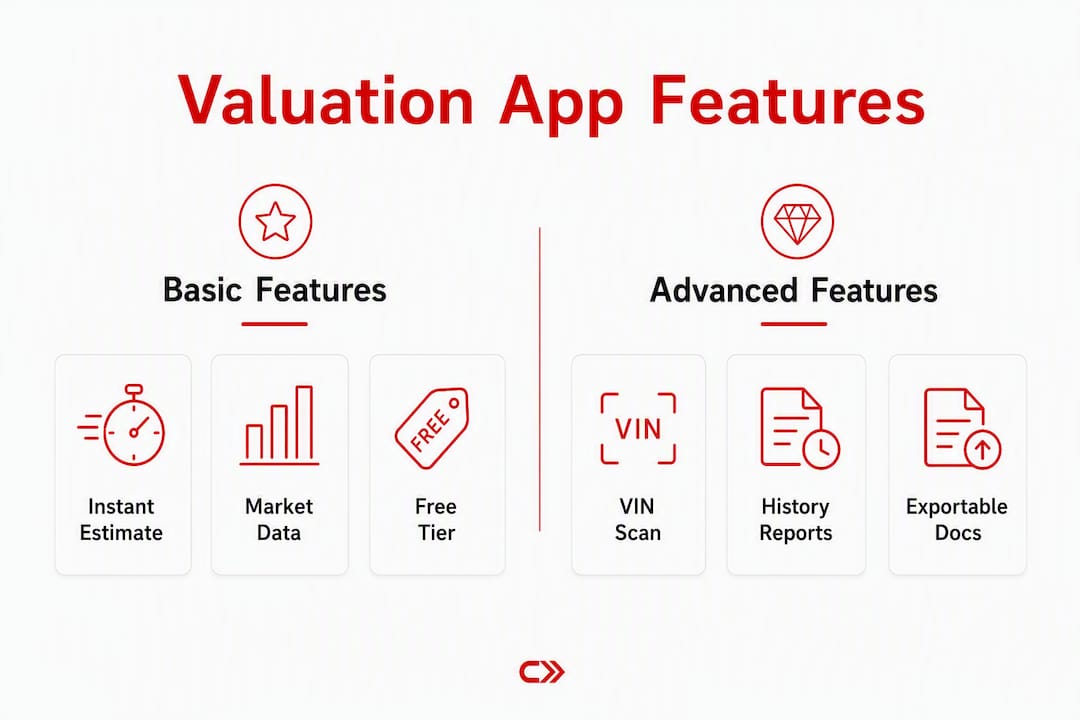
Cost split: free tiers typically cover an instant estimate. Detailed reports, history integration, batch appraisals, and buyer-facing documentation usually sit behind a paid tier or one-time purchase.
How valuation estimates are calculated and why apps disagree
Two apps, same car, $3,000 apart. Here is why that happens.
Every valuation model draws from a mix of data streams: live retail listings, wholesale and auction results, dealer transaction records, and DMV or insurance history feeds. The weight each platform puts on those streams, and how often it refreshes them, drives most of the variance you see. Kelley Blue Book updates pricing at least weekly and segments results across more than 100 geographic regions, which is why a KBB trade-in value in rural Texas looks different from one in suburban Los Angeles.
Auction and wholesale data skews lower because it reflects what dealers pay to acquire inventory, not what a private buyer will pay you. Retail listing data skews higher because it captures asking prices. Neither is wrong; they answer different questions.
Data-entry errors compound the problem fast. An incorrect trim level or a missed factory package can shift an estimate by thousands of dollars. VIN scanning addresses this directly by confirming vehicle details before the model runs, which is why professional appraisers treat it as standard practice rather than a convenience feature.
Condition and modifications add another layer. Most algorithms apply a generic condition multiplier (excellent, good, fair, poor) rather than reading your actual service history. An unreported fender repair or a well-documented engine rebuild both get flattened into the same bucket unless you supply the documentation yourself.
Pro Tip: Before relying on any single estimate, check whether the app discloses its data sources and update cadence. A tool that refreshes weekly from live listings tells you something different from one running monthly on dealer transactions.
What to look for when choosing an auto valuation app
Not every app fits every goal. A dealer doing 50 appraisals a day needs different tools than an enthusiast pricing one modified build. Here is the checklist that actually matters.
Accuracy and data transparency. Does the app tell you where its numbers come from? Platforms that disclose their sources (live listings, auction data, trade-in transactions) give you a basis for weighting the estimate. Black-box outputs are harder to defend to a buyer or a dealer.
VIN and document integration. Can you scan a VIN and attach service records or a CARFAX report? VIN scanning reduces manual entry errors and pulls wholesale and retail market data simultaneously, which is why dealer-grade tools like Carbly treat it as the entry point for every appraisal.
Report outputs. A number on a screen is not documentation. Look for apps that generate buyer-facing exports: a printable or shareable report that combines the valuation, vehicle history, and condition notes.
Cost model. Free instant estimates are useful for a ballpark. Detailed reports, history integration, and exportable packets typically require a paid tier. Check whether a free trial covers the features you actually need before committing.
Mobile UX. Speed of VIN scan, ease of photo upload, and how quickly you can build a buyer-ready listing all matter when you are standing in a parking lot.
Pro Tip: Check the data ownership terms before uploading service records and photos. You want to be able to export everything you put in, especially if you switch apps or sell the vehicle.
How to get the most accurate valuation from your apps
Follow this sequence and you will have a price you can actually back up.
- Scan your VIN. Do not type it manually. A single character error can pull the wrong trim, and the wrong trim produces a wrong number. KBB’s tool uses VIN or license plate confirmation to improve accuracy for exactly this reason.
- Photograph everything. Interior, exterior, odometer, VIN plate, any modifications. Attach photos directly to the vehicle record in your app.
- Upload or scan service records. Note recent repairs, fluid changes, and any modifications with receipts. Documented maintenance history materially affects resale value and gives buyers a reason to trust your asking price.
- Run a market-comps valuation. Note the date, your region, and the price range the app returns. Regional demand shifts, so a valuation from three months ago may not reflect today’s market.
- Pull a history-based report. CARFAX or AutoCheck will surface reported accidents, title brands, and ownership gaps. Adjust your price expectations if anything shows up, and address it proactively in your listing.
- Triangulate. Compare your market-comps estimate, the history-adjusted figure, and your documented condition. Set your listing price where those three converge, adjusted for how quickly you need to sell.
Pro Tip: Build an exportable buyer packet: valuation report, service history, and photos in one shareable document. Buyers who receive organized documentation before they ask for it close faster and negotiate less aggressively.
Why you should always consult multiple valuation sources
No single platform provides the most accurate vehicle valuation because each uses different methodologies and data sources. Treating one estimate as the price is the most common mistake private sellers make.
The four source types worth combining:
- Dealer guides — (KBB, NADA) provide structured trade-in and retail ranges with regional adjustments, useful for anchoring negotiations with dealers.
If you are selling privately and want the highest price, weight market comps and your documented condition heavily. If you are trading in, the dealer guide and wholesale floor matter more.
When apps can’t capture true value
Automated tools work well for common vehicles in average condition. They struggle with everything else.
- Heavily modified builds are routinely undervalued. An algorithm sees a 2018 Subaru WRX; it does not see the $8,000 suspension build, the documented dyno sheets, or the track history. Documenting modifications and maintenance is the only way to justify a higher asking price that an algorithm will not produce on its own. See how to approach this in Carjourney’s guide on valuing car modifications.
- Collector and provenance vehicles carry value tied to ownership history and originality that no pricing model captures.
- Micro-market demand (a specific color combination, a rare factory option) may not register in national models.
- Incomplete history records leave gaps that algorithms fill with conservative assumptions. If your VIN history is thin, your own documentation becomes the evidence.
Pro Tip: For high-value, modified, or rare vehicles, pair your app estimates with a written condition report from a vetted appraiser. That letter gives buyers and lenders a third-party anchor that no app output can replicate.
How Carjourney supports the full valuation workflow
Carjourney was built specifically for the gap that standard car price calculators leave open: the documentation layer.
Core features that improve valuation accuracy:
- VIN verification that locks in trim and factory options before any estimate runs
- AI-powered service document scanning that reads and logs receipts, inspection reports, and repair orders without manual entry
- Photo organization tied to specific service events and modifications
- Build and modification logs that create a timestamped record of every change
The result is a buyer packet that combines valuation data with verifiable service history and photos, the kind of documentation that can service records increase resale value explores in detail.
Carjourney’s exportable buyer packet gives sellers a shareable document that combines vehicle history, service records, photos, and valuation data in one place, giving buyers the transparency they need to commit at your asking price.
Pricing model:
| Tier | What you get |
|---|---|
| Free | Single-vehicle tracking, photo uploads, basic service log, valuation export |
| Pro (monthly/annual/lifetime) | Unlimited vehicles, AI document scanning, buyer packet exports, advanced analytics |
Carjourney is built by Blue Shed Digital, LLC, a Virginia-based team of gearheads and software engineers. The freemium model means you can test the full documentation workflow on one vehicle before deciding whether the Pro features are worth it for your situation.
Key Takeaways
The most reliable app-based valuation combines VIN-verified data, documented service history, and at least two source types: market comps and a history-based report.
| Point | Details |
|---|---|
| VIN scan first | Always scan your VIN rather than typing it; trim errors cause the largest single-step valuation mistakes. |
| Triangulate sources | Combine market comps (KBB, CarGurus) with a history-based report (CARFAX) for a defensible price range. |
| Document modifications | Log receipts and photos for every modification; algorithms undervalue undocumented builds. |
| Export a buyer packet | A shareable document with service history, photos, and valuation closes deals faster than a number alone. |
| Carjourney for documentation | Carjourney’s AI scanning and exportable records are the documentation layer that standard car price calculators skip. |
The gap most valuation guides won’t tell you about
Most articles about vehicle valuation apps treat the number as the product. Get the estimate, compare a few tools, pick the highest one. That framing misses what actually moves a sale.
The estimate is a starting point. What converts a buyer is evidence. A well-documented service history, a timestamped photo record, a modification log with receipts — these are the things that make a buyer stop negotiating and start signing. Automated tools are genuinely useful for understanding where the market sits, but they cannot manufacture trust. That part is on you.
The sellers who consistently get above-market prices are not the ones who found the most optimistic valuation app. They are the ones who made it easy for a buyer to verify the car’s condition without having to take their word for it. That is the workflow Carjourney was designed around, and it is the piece that most pure valuation tools leave out entirely.
What you get when you try Carjourney free
Carjourney gives you a free account to start documenting your vehicle today: scan your VIN, upload service records, log modifications, and build a photo history tied to your exact build.
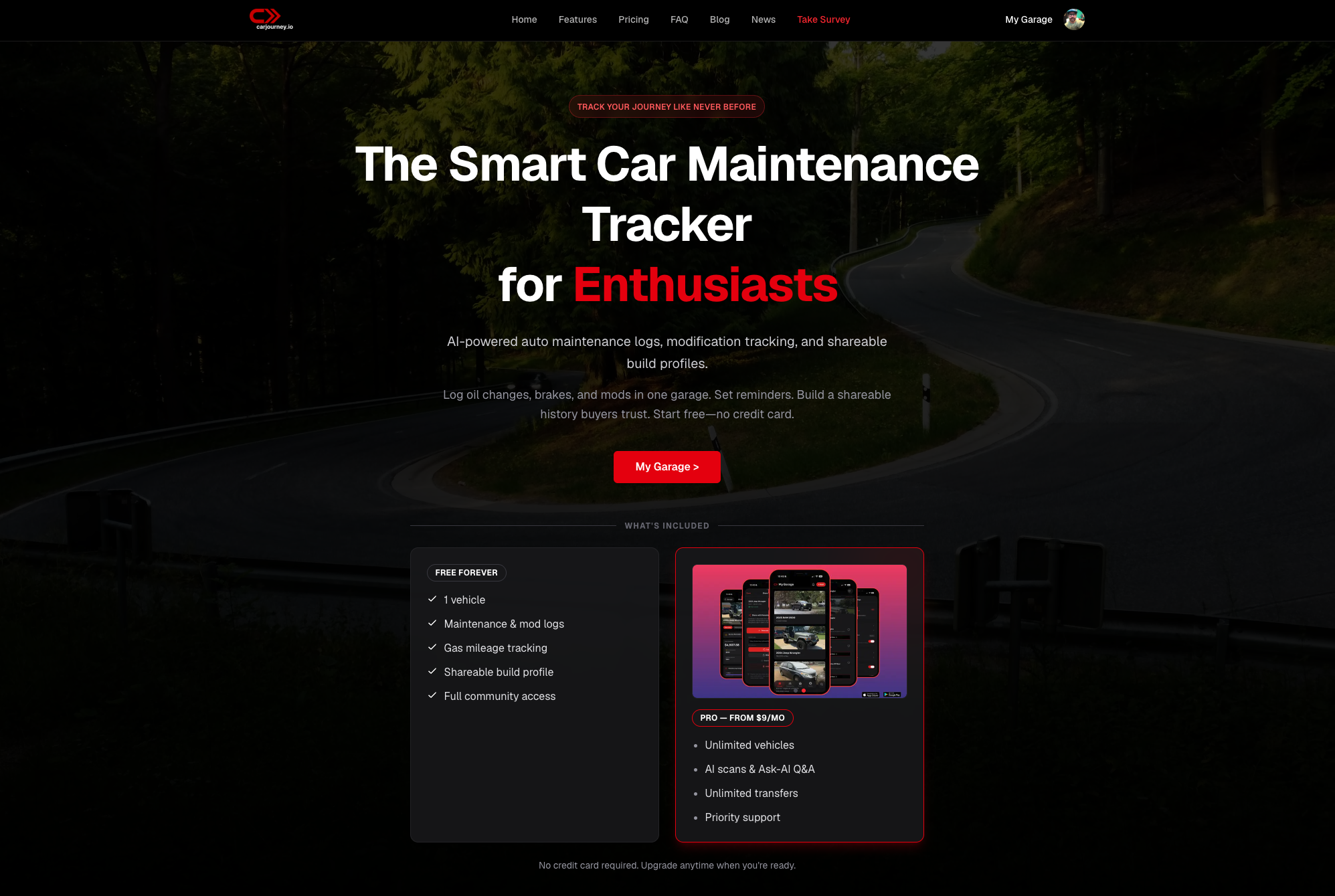
The free tier covers one vehicle with basic service logging, photo uploads, and a valuation export. Upgrading to Pro unlocks unlimited vehicles, AI-powered document scanning that reads your receipts automatically, full buyer packet exports, and advanced analytics across your fleet.
For enthusiast sellers who want documentation that holds up to buyer scrutiny, start your free Carjourney account and run the full workflow on your first vehicle before you list it.
Sources and further reading
Key sources used in this article:
- Kelley Blue Book: Car Values — weekly-updated trade-in and private-party ranges across 100+ U.S. regions
- Carbly VIN Scanner on Google Play — dealer-grade VIN scanning with Black Book, Manheim, KBB, and CARFAX integration
- NADA: Consumer Vehicle Values — structured trade-in and retail guides used by dealers nationwide
Carjourney blog posts for deeper reading:
- Why maintenance history matters for your car’s value
- Can modifications hurt resale value?
- Vehicle resale history guide for sellers
Always consult multiple sources before finalizing a listing price. Market conditions shift, and no single tool captures every variable that affects your specific vehicle’s value.