
Private Sale vs Dealership Trade In: Which Pays More?
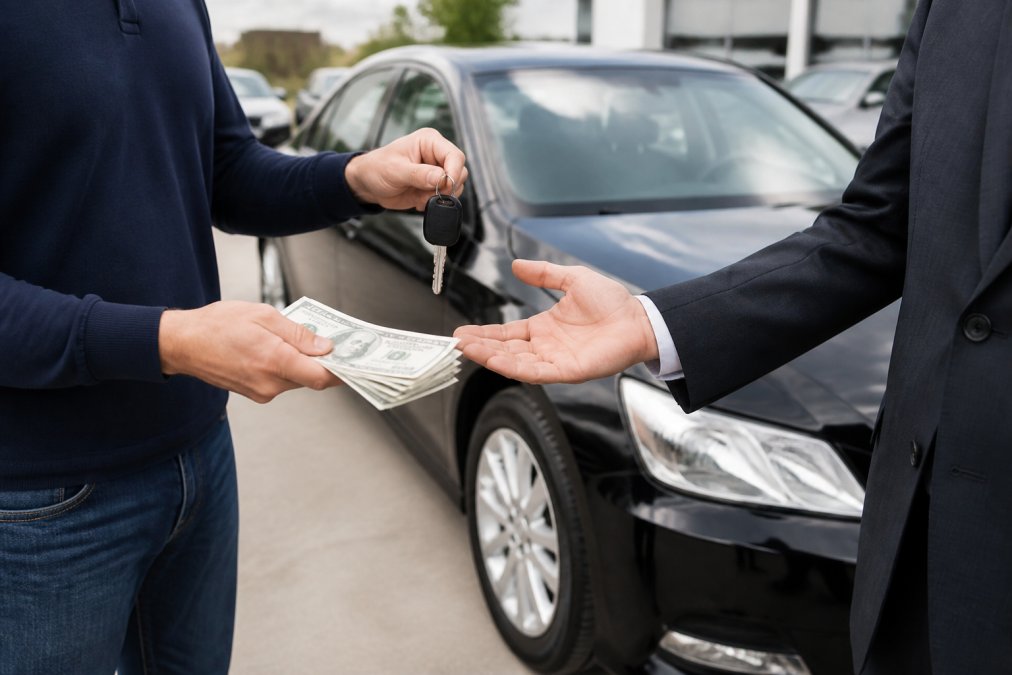
Table of Contents
- Private Sale vs Dealership Trade In: The Core Trade-Off
- How the Two Paths Compare at a Glance
- Sales Tax Benefits of Trading In a Car
- The Real Profit Gap: Market Value vs Wholesale Offers
- How to Prepare Car for Private Sale
- Documents Needed to Sell a Car Privately
- Hidden Costs and Risks of Private Sales
- When a Dealership Trade In Makes More Sense
- Frequently Asked Questions
Last Updated: September 15, 2026
Private Sale vs Dealership Trade In: The Core Trade-Off
The private sale vs dealership trade in decision comes down to one question: do you want maximum cash or minimum hassle? A private sale typically nets more money because you're selling at retail value to another consumer. A trade-in pays wholesale value but eliminates the work of finding a buyer, and in most states it reduces the sales tax you owe on your next vehicle. This guide from CarJourney breaks down the real math so you can pick the path that actually pays.
Most sellers assume the higher private-party number always wins. That assumption ignores the tax credit, the advertising costs, and the hours you'll spend fielding lowball offers. Below, we'll show you exactly how to run the numbers before you commit.
IRS guidance on vehicle sales and taxable transactions
How the Two Paths Compare at a Glance
A private sale is a transaction between you and an individual buyer, with no dealer in the middle. A dealership trade in is an agreement where the dealer buys your car and applies its value toward your next purchase. Each path rewards a different priority.
| Factor | Private Sale | Dealership Trade In |
|---|---|---|
| Typical payout | Retail value | Wholesale value |
| Time to sell | Days to weeks | Same day |
| Sales tax credit | No | Yes, in most states |
| Paperwork burden | Seller handles title transfer | Dealer handles it |
| Buyer risk | Scams, fake payments | Minimal |
The convenience factor is real, but so is the profit gap. Understanding both keeps you from leaving money on the table.
Sales Tax Benefits of Trading In a Car
The sales tax benefits of trading in a car often close much of the gap between the two options. In states that allow it, the dealer subtracts your trade-in allowance from the price of the new vehicle before calculating sales tax, so you only pay tax on the difference (Used Clean Vehicle Credit). That single mechanic is the strongest financial argument for a trade-in, and it is also the one most sellers calculate wrong.
How the Sales Tax Credit Actually Works
Say a dealer offers you a trade-in allowance of $8,000 on a $30,000 purchase. In a state with a 6% sales tax and a full credit, you'd owe tax on $22,000 instead of $30,000. That's $1,320 instead of $1,800, a $480 swing that lands in your pocket immediately, with no private buyer involved.
Now run the same math against a private sale. If a private buyer pays you $9,500 for the same car, you pocket $1,500 more on the sale but pay the full $1,800 in sales tax on the new vehicle. Net difference: roughly $1,020 in favor of the private sale, before you subtract advertising, detailing, and your time. That is the real comparison, not the sticker prices.
The State-by-State Variable Nobody Explains
This is where most guides stop, and where the money actually turns. Trade-in tax credits are set at the state level, and the rules fall into four buckets:
- Full credit states. The trade-in value is subtracted from the purchase price with no cap. Most states with a sales tax operate this way.
- Capped credit states. The credit applies only up to a dollar threshold. Above that threshold, the excess trade-in value no longer reduces your taxable amount.
- No-credit states. A handful of states either have no sales tax at all or do not extend the credit to trade-ins. In these states, the tax advantage of a trade-in disappears entirely, and the private sale's higher gross price wins on math alone.
- Trade-in-only credit states. Some states extend the credit to dealer trade-ins but not to private sales, which is the exact scenario this article is about.
Because the rules are set by each state's department of revenue and change with legislation, the only reliable move is to look up your own state's current rule before you negotiate. state motor vehicle tax rules
Pro Tip If your state offers a full, uncapped trade-in tax credit, a dealer offer that is a few hundred dollars lower than a private offer can still net you more once you account for the tax you'd pay on the full purchase price. Run both numbers before you decide.How to Run the Break-Even Yourself
The break-even point is the private sale price at which the extra cash exactly offsets the sales tax you'll pay by giving up the credit. The formula is simple:
Break-even private price = Dealer trade-in offer + (Trade-in value × Your state's sales tax rate)
If a dealer offers $8,000 and your sales tax rate is 6%, the break-even private price is $8,480. Anything above that, and the private sale wins on cash. Anything below it, and the trade-in wins once tax is factored in. Add your private-sale costs, advertising, detailing, and your time, to the break-even number to get the true threshold.
That single calculation is what separates a real decision from a guess, and it is the number most sellers never run.
The Real Profit Gap: Market Value vs Wholesale Offers
The profit gap between retail value and wholesale value is where the private sale wins on paper. A dealer needs margin to recondition, floor, and resell your car, so its offer reflects wholesale value, not what a retail buyer would pay. A private party buyer pays closer to retail.
That gap can be substantial, but it isn't pure profit. Subtract advertising costs, your time, and the risk of a deal falling through. Many sellers find the net difference is smaller than the sticker numbers suggest.
A common mistake is comparing a dealer's first offer to a private listing price. The fair comparison is the dealer's best offer against your realistic private sale price, minus your costs.
How to Prepare Car for Private Sale
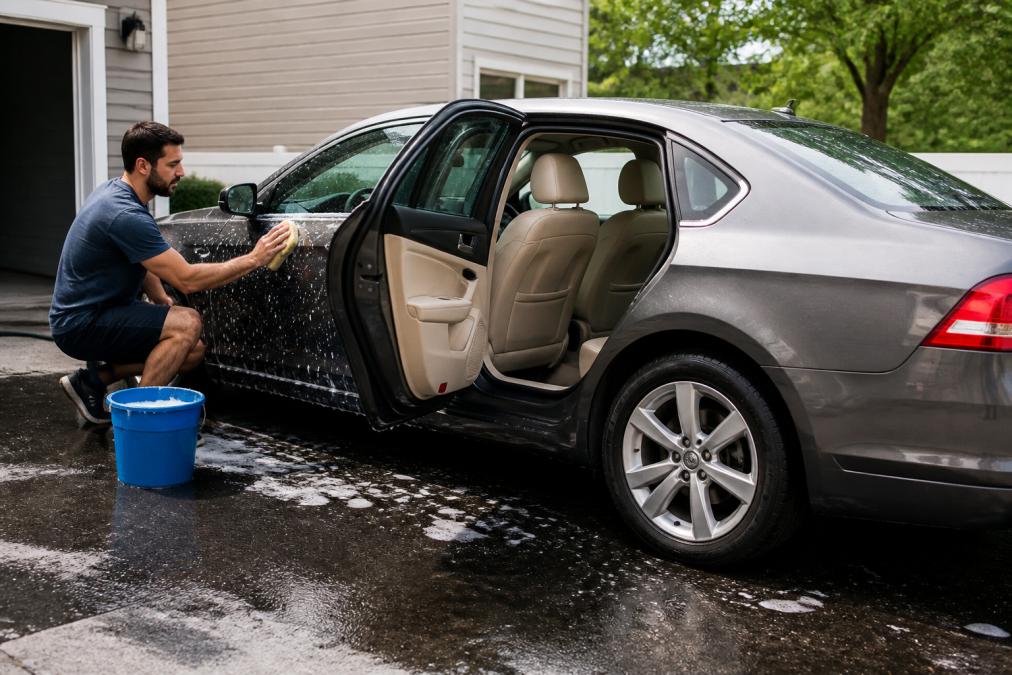
Knowing how to prepare car for private sale separates a fast, profitable listing from one that sits for weeks. Clean the car inside and out, gather your records, and price it against real market listings before you post.
A vehicle condition report and a documented service history give buyers confidence. This is where a maintenance tracker earns its keep. CarJourney lets you generate a shareable build profile so buyers can see every oil change, tire rotation, and upgrade in one place.
Setting Your Asking Price and Handling Test Drives
Price from market value, not from what you hope to get. Pull comparable listings and adjust for mileage and condition.
Watch Out Never accept a payment you can't verify on the spot. Fake cashier's checks and overpayment scams are common in private sales, and once you hand over the title, recovery is nearly impossible.Documents Needed to Sell a Car Privately
Hidden Costs and Risks of Private Sales
The Real Cost Stack
A Safety Protocol for Private Meetings
Secure Payment Methods, Ranked
Watch Out Never accept a payment you can't verify on the spot, and never release the title until funds have settled in your account. An overpayment offer, where a buyer 'accidentally' sends too much and asks for a refund, is a classic scam, not a mistake.The private sale premium is real, but it's payment for your time, effort, and risk. Run the cost stack, follow the safety protocol, and use a verifiable payment method, then compare the net number to the dealer's offer. If those costs exceed the gap, the trade-in wins.
When a Dealership Trade In Makes More Sense
Frequently Asked Questions
Is a private sale always more profitable than a trade-in?
Not always. A private sale typically brings a higher gross price, but you subtract advertising costs, detailing, time, and the sales tax credit you give up. In states with high sales tax, a trade-in offer that is a few thousand dollars lower can still net more after the credit. Run both numbers with your state's tax rate before deciding.
How does the sales tax credit work with a dealership trade-in?
In most states, the dealer subtracts your trade-in value from the price of the new vehicle, and you pay sales tax only on the difference. If you buy a $35,000 car and trade in one worth $12,000, you pay tax on $23,000. At a 6% rate that saves about $720. Rules vary by state, so confirm with your local tax office.
What documents are needed to sell a car privately?
You will need the signed certificate of title, a bill of sale listing the price and date, an odometer disclosure statement for vehicles under 10 years old, and a lien release if you still owe money. Some states also require a smog or safety inspection. Give the buyer the title and a copy of the bill of sale, and keep your own copy for tax records.
How does maintenance history affect trade-in value versus private sale price?
Dealerships appraise conservatively and rarely pay extra for records, since they recondition and resell at wholesale. Private buyers weigh service history heavily, especially for older or modified vehicles. A documented log of oil changes, timing belt service, and upgrades can justify a higher asking price and shorten time-to-sell. Records also help you counter lowball offers with evidence.
What are the primary risks of selling a car to a private party?
The main risks are payment fraud, personal safety during meetings, and title transfer problems. Meet buyers in a public place during daylight, verify funds before handing over keys, and complete the title transfer at a DMV or tag agency. Watch for curbstoning, where an unlicensed dealer poses as a private buyer. Never accept a check without confirming it clears.
The private sale vs dealership trade in choice has no universal winner. Run your own numbers: retail value minus costs against the dealer offer plus the tax credit. Whichever number is higher after you account for your time is the one to take. CarJourney makes that comparison easier by keeping your service history, mileage, and modifications organized in one place, ready to share with any buyer or appraiser. Start free and put your car's records to work.
Start free