
How to Save Repair Receipts for Your Car
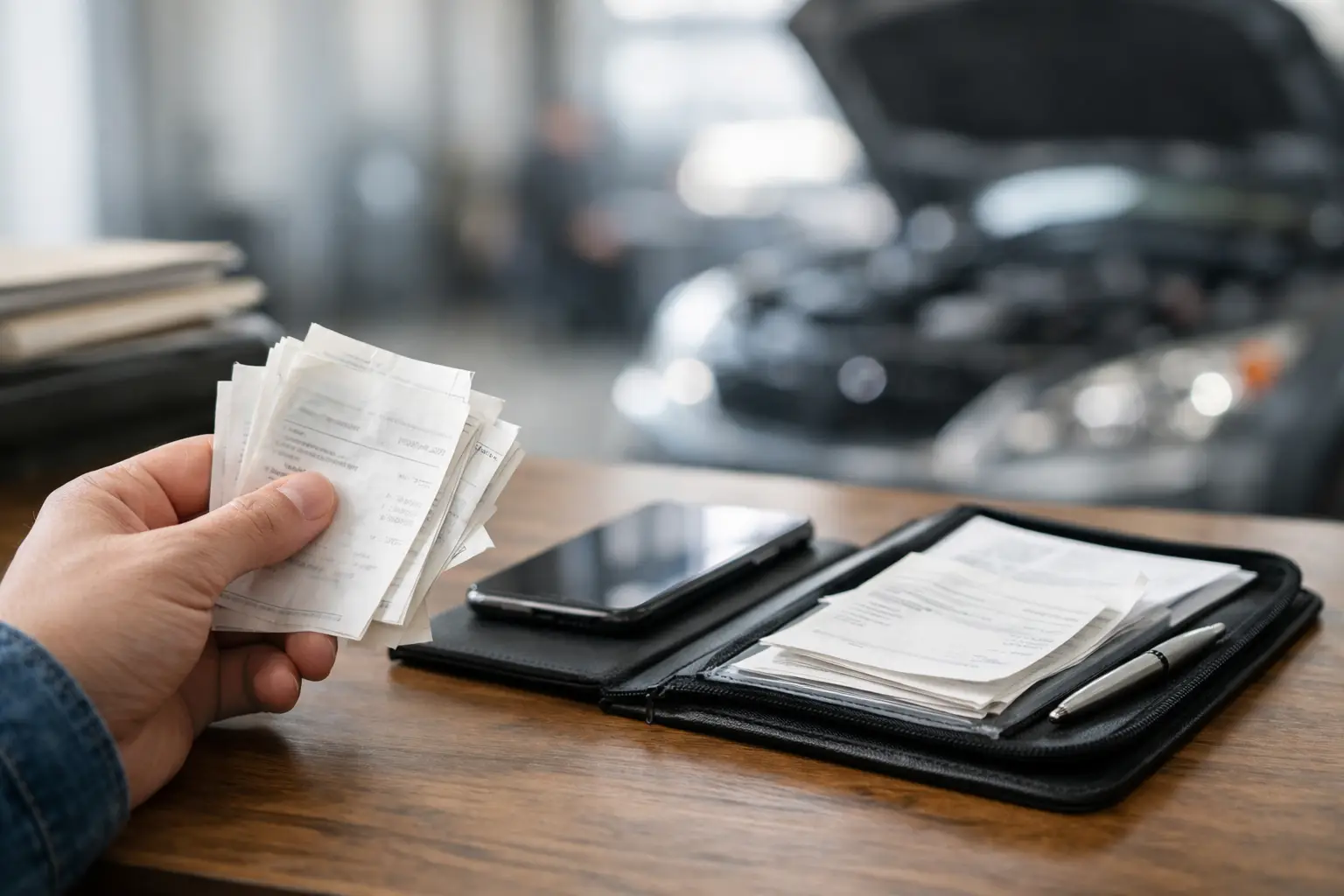
A brake job receipt is easy to ignore until a warranty claim, a confusing noise, or a serious buyer asks when the work was done. Knowing how to save repair receipts turns scattered paperwork into proof of maintenance, a clearer picture of what you have invested, and a vehicle history people can trust.
For enthusiast owners, that history goes beyond oil changes. It shows when you installed the coilovers, which shop aligned the car afterward, what pads and fluid went into the track-day brake refresh, and whether the previous repair is still under warranty. A good record system protects the car you drive now and the story you may eventually hand to the next owner.
Why repair receipts matter more than you think
A receipt confirms more than the price you paid. It can show the date, mileage, vehicle identification number, parts used, labor performed, and shop that completed the work. Those details help you avoid duplicate work, follow maintenance intervals accurately, and spot patterns when a problem keeps returning.
Receipts also matter when the stakes are higher. Many parts and repair shops provide warranties, but a warranty is harder to use if you cannot prove the purchase date or installation. Insurance claims after an accident, theft, or weather damage may require evidence of recent work or upgraded components. If you sell your vehicle, an organized folder of records can give a buyer confidence that the car was cared for instead of merely advertised as "well maintained."
There is a practical money angle, too. A clear record helps you understand your actual cost of ownership. You can separate routine maintenance from unexpected repairs, see what a build has cost over time, and make better decisions about whether the next repair is worth doing.
How to save repair receipts without creating more clutter
The best system is the one you can maintain after a long day at the shop. Do not wait until the end of the year to organize a console full of faded paper. Capture each receipt as soon as you receive it, then add enough context that it will make sense months or years later.
Scan paper receipts immediately
Thermal paper fades quickly, especially when it sits in a hot glove box. Take a clear photo or scan before leaving the parking lot. Make sure the entire document is visible, including the business name, date, invoice number, total, and any warranty language. If the receipt has multiple pages, save every page in the same document.
A phone photo is better than losing the receipt, but a flattened scan or PDF is easier to read later. Keep the original paper for major repairs, high-value parts, title-related documents, or work still covered by a warranty. Store those originals in a labeled file at home, not in the vehicle where heat, moisture, or theft can take them out.
Save digital invoices too
Email receipts can disappear into a crowded inbox just as easily as paper can disappear under a seat. Download digital invoices, order confirmations, and installation receipts as files rather than relying on the retailer or shop to keep them available forever.
This matters for online parts orders in particular. The order confirmation proves what you bought, while the shop invoice proves who installed it and when. Save both when the part has warranty coverage or affects safety, performance, or resale value.
Use a file name you can search
A filename such as `IMG_4827.jpg` creates future work. Give every file a simple, searchable name using the date, mileage, and service or part. For example:
`2026-07-18_84,220mi_Front-brakes_Riverside-Auto.pdf`
That format sorts naturally by date and makes it easy to find records when you need them. If the work involves a specific component, include it: `2026-07-18_84,220mi_Koni-shocks-install.pdf` is more useful than `suspension receipt.`
Keep the receipt connected to the vehicle record
A folder alone is not a maintenance history. Add the service to your vehicle log at the same time, including the date, mileage, shop, work completed, total cost, and next recommended interval. Attach the receipt to that entry so the proof stays with the record.
A dedicated system such as CarJourney keeps service logs, modification details, photos, documents, and reminders in one vehicle-centered history. That is useful when you own more than one car, since a generic cloud folder can become confusing fast. The goal is not just storing files. It is being able to answer, in seconds, what was done, when it was done, and what it cost.
Organize receipts by the way you use the car
There is no single folder structure that fits every owner. A daily driver with dealership service may only need maintenance and repair categories. A project car, collector vehicle, or modified performance build usually needs more detail.
Start with a separate record for each vehicle. Within that record, group work into categories that reflect real ownership decisions: routine maintenance, repairs, tires and wheels, suspension, engine, drivetrain, electrical, body and paint, detailing, and modifications. You can also tag entries by shop, warranty status, or whether the work was DIY.
For a modified car, keep the purchase receipt, installation receipt, photos, tune file details, and alignment or dyno documentation together when relevant. A set of lowering springs may look straightforward on a parts invoice, but the complete history may include installation, camber hardware, alignment, and a follow-up adjustment. Capturing the full chain gives you a more accurate build record.
DIY work deserves the same discipline. Save the parts invoice, note the mileage and date, and record the brand, part number, fluid specification, or torque-sensitive component involved. You do not need to write a shop-level work order for every oil change, but enough detail helps you remember exactly what went into the vehicle.
Record the details that receipts often miss
Some repair invoices are excellent. Others only say something vague like "diagnostic and repair." Add a short note while the work is fresh in your mind. Include the original symptom, diagnosis, and result. If a shop recommended future work, note that too, even if you chose not to approve it yet.
For example, instead of logging only "rear brakes," record that the car had a pulsation under moderate braking, rear rotors and pads were replaced at 62,400 miles, and the shop noted front pads had roughly 5 mm remaining. That entry gives your future self useful context and makes it easier to track whether the issue returns.
For modifications, document the reason for the change. Was the exhaust installed for sound, weight savings, power goals, or to replace a damaged factory component? Did the tune require premium fuel? Were there clearance issues with a wheel and tire setup? These notes help maintain the build responsibly and make the vehicle easier to explain to a knowledgeable buyer.
Protect warranties and prepare for a sale
Create a simple warranty view for repairs and parts that are still covered. Record the warranty length, mileage limit if applicable, provider, invoice number, and expiration date. Set a reminder before coverage ends for expensive repairs such as batteries, tires, alternators, suspension components, or transmission work.
When you are ready to sell, do not overwhelm a buyer with a loose stack of paperwork. Build a clean maintenance timeline that shows major services, recent repairs, and significant modifications. Keep personal information, payment details, and addresses private when sharing copies. A buyer generally needs proof of work and ownership history, not every detail from your payment receipt.
There is a trade-off with modified vehicles. Detailed records can increase buyer confidence, but they also make it clear that a car has been driven hard or altered heavily. The answer is not to hide the record. Present it honestly, with receipts that show quality parts, professional installation where appropriate, and responsible follow-up maintenance.
A simple monthly habit that keeps records useful
Set aside a few minutes once a month to review new receipts, attach any missing documents, and check upcoming maintenance reminders. It is a small routine that prevents the end-of-year cleanup nobody wants to do. If you have a project car that is apart for weeks or months, log purchases as they happen so the final build cost does not become a guessing game.
Your receipts are not just proof that money left your account. They are evidence of care, decisions, and progress. Keep them clear enough that the next repair, the next road trip, or the next owner starts with the real story of the car.