 carjourney
From the CarJourney journal
Maintaining a Daily Driver Properly: Complete 2026 Guide
Table of Contents
- Understanding Daily Driver Maintenance Fundamentals
- Essential Car Fluid Checks Every Owner Should Know
- Building Your Car Maintenance Checklist for Daily Drivers
- Tire Pressure, Tread Depth, and Wheel Care
- Exterior Protection: Paint Chips, Waxing, and Detailing
- DIY vs. Professional Maintenance: Cost-Benefit Analysis
- Seasonal Maintenance Checklists for Year-Round Care
- Digital Maintenance Logs: Why Tracking Matters for Resale
Maintaining a Daily Driver Properly: Complete 2026 Guide
Last Updated: July 18, 2026
Maintaining a daily driver properly protects one of your largest investments while ensuring reliability when you need it most. Owners who follow consistent preventative maintenance schedules spend significantly less on repairs, retain higher resale value, and experience fewer unexpected breakdowns.
Understanding Daily Driver Maintenance Fundamentals
Your car is a system of interconnected parts experiencing constant wear. Oil degrades, seals harden, brake pads thin, and tires lose tread. Preventative maintenance catches problems early, replacing worn components on schedule so your vehicle stays reliable.
Why Preventive Maintenance Matters for Daily Drivers
Preventive maintenance is the difference between a $200 oil change and a $4,000 engine rebuild. When you skip regular oil changes, the lubricant breaks down, metal particles accumulate, and bearing surfaces wear prematurely. Routine fluid checks, filter replacements, and tire rotations cost a few hundred dollars annually. Ignoring these items means replacing transmissions, engines, or suspension components, costs that climb into the thousands. A maintained vehicle also keeps you safe: brake fluid absorbs moisture over time, and tire tread depth directly affects traction in wet conditions.
Pro Tip Track your maintenance schedule with specific mileage intervals, not just calendar dates. A daily driver that sits in a garage most days ages differently than one driven 15,000 miles annually. Use tools like CarJourney to log services tied to both time and mileage, so you never miss critical intervals.How Proper Care Extends Vehicle Longevity
A well-maintained daily driver can easily surpass 200,000 miles. When you maintain your vehicle systematically, you prevent the cascade effect where one worn component stresses others. Proper car care also preserves resale value. According to Kelley Blue Book's vehicle value retention guide, well-maintained vehicles retain 20-30% more value than similar vehicles with spotty service records.
Essential Car Fluid Checks Every Owner Should Know
Your vehicle depends on multiple fluids to function. Each serves a critical role and requires monitoring at different intervals.
Oil Changes and Engine Health
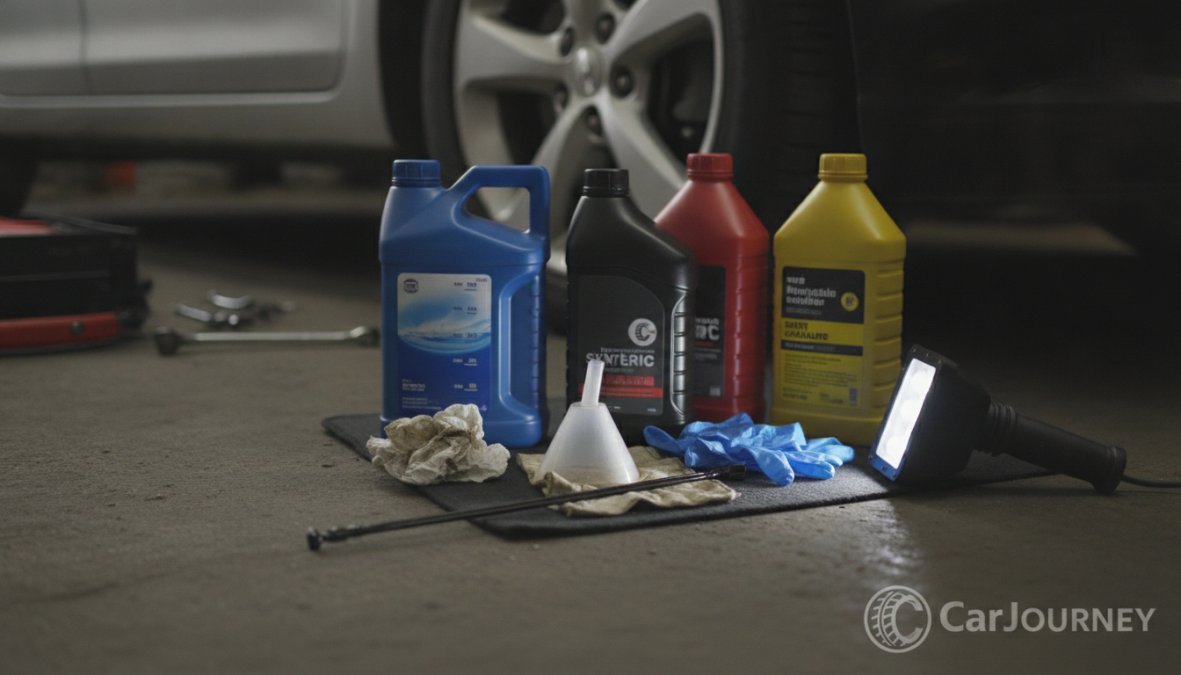
Engine oil lubricates moving parts, cools the engine, and suspends contaminants that get filtered out. Modern synthetic oils last 10,000 to 15,000 miles; conventional oils last 7,500 to 10,000 miles. Check your owner's manual for your specific vehicle's recommendation.
Locate the dipstick, pull it out, wipe it clean, reinsert it fully, then pull it out again to check the level. The oil should sit between the minimum and maximum marks. If it's low, add the correct grade and recheck. Don't overfill; excess oil can damage seals. Oil degrades under heat and stress, and when you change your oil, you're also replacing the oil filter, which traps particles that would otherwise circulate through your engine.
Coolant, Brake Fluid, and Transmission Fluid
Coolant regulates engine temperature. Check coolant level when the engine is cold; never open the radiator cap on a hot engine. Most vehicles have a translucent coolant reservoir with minimum and maximum marks.
Brake fluid transmits your brake pedal pressure to the brake calipers, stopping your wheels. Over time, it absorbs moisture from the air, lowering its boiling point and reducing braking efficiency. Most manufacturers recommend flushing and replacing brake fluid every two years.
Transmission fluid lubricates and cools your transmission. Check the fluid level while the engine idles (some vehicles require the engine off; check your manual). Low transmission fluid causes sluggish shifting and can damage the transmission. If the fluid is dark or smells burnt, a transmission service is overdue.
Watch Out Never ignore warning lights related to fluids. If your check engine light appears, your oil pressure warning illuminates, or your temperature gauge climbs into the red zone, pull over safely and stop driving.Building Your Car Maintenance Checklist for Daily Drivers
A maintenance checklist transforms maintaining a daily driver properly from a vague concept into actionable steps.
Monthly Inspection Tasks
Check tire pressure when tires are cold. Proper pressure is listed on a sticker inside your driver's door, not on the tire sidewall. Underinflated tires wear faster and reduce fuel economy. Inspect your wiper blades and all exterior lights: headlights, taillights, brake lights, and turn signals. Look for visible fluid leaks under the vehicle.
Quarterly and Annual Service Intervals
Every three months, rotate your tires to distribute wear evenly across all four tires. Annually, have a professional inspect your brakes, test your battery, and check your air filter. A clogged air filter reduces fuel economy and engine performance.
| Maintenance Task | Frequency | DIY or Pro | Estimated Cost |
|---|---|---|---|
| Oil and filter change | Every 7,500-15,000 miles | Either | $30-75 |
| Tire rotation | Every 5,000-7,000 miles | Pro | $20-50 |
| Brake inspection | Annually | Pro | $50-150 |
| Coolant flush | Every 30,000-50,000 miles | Pro | $100-200 |
| Transmission fluid check | Monthly | DIY | Free |
| Air filter replacement | Annually | DIY | $15-30 |
| Battery test | Annually | Pro | Free-30 |
| Windshield wiper replacement | As needed | DIY | $20-40 |
Tire Pressure, Tread Depth, and Wheel Care
Tires are your only contact with the road. Check tire pressure monthly when tires are cold using the correct pressure printed on a sticker inside your driver's door jamb. Underinflated tires generate excess heat and wear faster; overinflated tires wear the center of the tread prematurely.
Tread depth directly impacts traction in wet or snowy conditions. Use the penny test: insert a penny into the tread with Lincoln's head upside down. If the top of Lincoln's head is visible, your tread is too shallow. Rotate your tires every 5,000-7,000 miles to distribute wear evenly and extend tire life.
Key Takeaway Proper tire maintenance is a high-ROI task. Correct pressure, adequate tread depth, and regular rotation extend tire life by 10,000+ miles, improve fuel economy, and enhance safety.Exterior Protection: Paint Chips, Waxing, and Detailing
Your vehicle's exterior faces constant assault from UV rays, road salt, bird droppings, tree sap, and minor impacts. Paint chips expose bare metal to the elements, and rust develops quickly. Address paint chips promptly with touch-up paint matching your vehicle's color code.
Waxing protects your paint from UV damage and environmental contaminants. Apply wax every three months for daily drivers. Professional detailing includes clay bar treatment, polishing, and sealant application, costing $150-400 depending on your vehicle's size and condition. Wash your vehicle regularly every two weeks using the two-bucket method with microfiber wash mitts.
DIY vs. Professional Maintenance: Cost-Benefit Analysis
Some maintenance tasks are DIY-friendly; others require professional equipment and expertise.
When to DIY and When to See a Mechanic
Oil changes, air filter replacement, wiper blade installation, and tire rotation are DIY-friendly and cost significantly less when you do them yourself. However, brake service, alignment, transmission service, and electrical diagnostics require professional expertise and specialized equipment. If a task takes you two hours and costs $100 in parts, and a mechanic would charge $200 in labor plus parts, DIY saves $100. But if you lack proper tools or expertise, a mistake could cost far more.
Tracking ROI on Preventive Work
Every dollar spent on routine maintenance prevents three to five dollars in repair costs. An oil change costs $50; an engine rebuild costs $3,000. Track your maintenance spending in a maintenance log to see that your total annual maintenance spending remains consistent, while owners who skip preventive maintenance face sporadic expensive repairs.
Seasonal Maintenance Checklists for Year-Round Care
Your vehicle's needs change with the seasons.
Spring and Summer Preparation
Spring is the time to address winter damage. Inspect your vehicle for rust spots where road salt has corroded paint or undercarriage components. Wash the undercarriage thoroughly. Have your battery tested; cold weather stresses batteries. Summer brings heat stress, so check your cooling system and air conditioning. Check tire pressure monthly during summer, as heat causes tire pressure to increase.
Fall and Winter Protection
Fall requires preparation for winter. Have your battery tested and check your antifreeze concentration. Most vehicles use a 50-50 mixture of antifreeze and water. Inspect your brakes thoroughly before winter arrives. Keep your fuel tank at least half full to prevent fuel line freeze-up and use winter-grade windshield washer fluid. Monitor tire tread depth closely and consider switching to winter tires if you live in areas with significant snow.
Pro Tip Keep an emergency kit in your vehicle year-round, but especially in winter. Include jumper cables, a flashlight with extra batteries, blankets, a first aid kit, and non-perishable snacks.Digital Maintenance Logs: Why Tracking Matters for Resale
Every service you perform creates a record. That record, organized and accessible, becomes your vehicle's history. When you sell your daily driver, that history proves you cared for the vehicle, justifying a higher price.
Organizing Service Records and Build History
A digital maintenance log organized by date and service type tells a compelling story: this vehicle was maintained systematically. Record the date, mileage, service performed, cost, and technician or location. CarJourney simplifies this process with AI-powered maintenance logs that organize services automatically. When you're ready to sell, generate a shareable build profile that shows potential buyers your vehicle's complete service history.
Building Buyer Confidence with Documentation
Buyers worry about hidden problems. A vehicle with documented maintenance history alleviates those concerns. Documentation also supports warranty claims, as manufacturer warranty coverage often requires proof of proper maintenance.
Maintaining a daily driver properly isn't complicated; it's consistent. Oil changes on schedule, tire pressure checked monthly, brakes inspected annually, and exterior protection applied regularly prevent expensive failures and extend your vehicle's life by years. CarJourney eliminates the challenge of staying organized with AI-powered maintenance tracking, automated reminders tied to both mileage and time, and shareable build profiles that prove your vehicle's care to future buyers.
Frequently Asked Questions
What are the most important things to check when maintaining a daily driver properly?
The essentials are fluid levels (oil, coolant, brake fluid), tire pressure and tread depth, windshield wiper condition, and lighting systems. Monthly checks of these items catch problems early. Following a preventive maintenance schedule tied to both time and mileage helps prevent costly repairs and extends vehicle longevity. Digital logs make it easy to track what you've checked and when.
How often should I perform maintenance on my daily driver?
Most daily drivers need fluid checks monthly, oil changes every 3,000-7,500 miles depending on your vehicle and oil type, tire rotations every 5,000-7,000 miles, and annual inspections. Seasonal maintenance checklists help prepare for weather changes. Service intervals vary by manufacturer, so consult your owner's manual. Using a maintenance tracker ensures you never miss a critical service interval.
What's the cost-benefit of DIY car maintenance versus hiring a mechanic?
DIY maintenance like oil changes, wiper replacement, and fluid top-ups saves money if you have basic tools and knowledge. However, brake inspections, transmission work, and complex diagnostics require professional expertise. A mechanic catches wear and tear you might miss. The real value is preventive work, catching issues early through regular checks prevents expensive repairs later and protects your resale value.
How can I organize and track my daily driver maintenance records?
Digital maintenance logs are far more reliable than scattered receipts. Platforms with VIN-based setup automatically populate vehicle specs and service intervals, while reminders tied to both time and mileage keep you on schedule. Organized records prove your car's care history to potential buyers, building confidence and potentially increasing resale value. A shareable build profile showcases your commitment to proper vehicle maintenance.
This article was written using GrandRanker