
Your complete guide to types of car service documents

Most car owners have experienced that sinking feeling: you’re sitting across from a potential buyer or a service advisor, and you can’t locate the one piece of paper that proves your car has been properly maintained. Whether it’s a missing oil change receipt or a warranty document buried under a pile of random paperwork, disorganized service records cost real money. Keeping your vehicle’s documentation in order isn’t just good housekeeping. It directly affects warranty coverage, resale negotiations, and your ability to catch maintenance problems before they become expensive repairs.
Table of Contents
- How to evaluate car service documents
- The essential types of car service documents
- Side-by-side comparison: Physical vs. digital service records
- When and how to use each document
- Why car owners underestimate documentation—and how to fix it
- Effortlessly manage your car documents with CarJourney
- Frequently asked questions
Key Takeaways
| Point | Details |
|---|---|
| Know your documents | Recognize the main types of car service paperwork and their roles in maintenance and value. |
| Paper vs. digital | Both physical and electronic records have pros and cons—use both for best results. |
| Stay organized | Create a system to store, update, and back up your records for every service event. |
| Right document for right time | Use specific documents for warranty claims, selling, or legal compliance to avoid headaches. |
How to evaluate car service documents
Now that you see the value of proper documentation, let’s review how to judge what matters most.
Not every piece of paper your mechanic hands you carries equal weight. Some documents are legally significant. Others are helpful reminders. Knowing the difference lets you prioritize what to file carefully and what you can safely discard. The core purpose of car maintenance paperwork is to create a verifiable record that protects you as an owner, whether you’re making a warranty claim or negotiating a sale price.
When assessing whether a document is worth keeping, apply these four criteria:
Completeness: Does it capture the full scope of the service? A partial invoice that lists labor but omits parts used is far less useful than one that covers everything.
Authenticity: Is there a shop name, address, or technician signature? Unsigned or unbranded documents raise red flags for buyers and warranty administrators alike.
Accessibility: Can you find it when you need it? A document buried in a glove box or a smartphone photo buried in an unorganized camera roll might as well not exist.
Relevance: Does it apply to your specific vehicle? Generic maintenance schedules or borrowed checklists that don’t reference your VIN (vehicle identification number) or mileage are nearly useless for verification.
Here’s what every useful service document should include:
- Date of service
- Current odometer reading (mileage)
- Description of work performed
- Parts used, including part numbers when available
- Labor costs and parts costs listed separately
- Name and contact information of the shop or technician
- Mechanic’s signature or shop stamp
- Your vehicle’s VIN
The auto service history you build over time is essentially a financial asset. Buyers consistently pay more for vehicles with thorough, verifiable records. Warranty administrators are more likely to approve claims when documentation is clean and complete.
Pro Tip: Use a dedicated vehicle app or cloud folder to store photos of every service document the moment you receive it. Naming files by date and service type (for example, “2024-03-oil-change”) makes retrieval fast and stress-free.
The essential types of car service documents
Understanding the evaluation criteria, here’s a breakdown of the main car service documents you should focus on.
There are five core document categories that every car owner should understand. Each serves a distinct purpose, and together they form a complete picture of your vehicle’s health and history.
Service invoices are the receipts issued by a shop after any repair or maintenance visit. They are the most frequently referenced documents during resale and warranty disputes. A well-detailed invoice shows exactly what was done, what parts were installed, and what was charged.
Maintenance log books function as a running timeline of your vehicle’s service history. The role of official maintenance log book records is to provide a structured, chronological account of every service event, from oil changes to major repairs. Many manufacturers include a physical log book with new vehicles, but digital versions are increasingly common.
Service checklists are the inspection forms that technicians complete during scheduled servicing. These maintenance sheets document which systems were inspected, what condition they were found in, and what actions were taken. A completed service checklist from a scheduled service is strong evidence that your vehicle received proper attention.

Warranty records include the original manufacturer’s warranty documentation, any extended warranty contracts, and records of warranty-covered repairs. These documents define what is covered, for how long, and under what conditions. Losing them can make it nearly impossible to enforce coverage you paid for.
Inspection reports are issued by state-authorized inspection stations and document whether your vehicle meets safety and emissions standards. They carry legal weight and are often required for vehicle registration renewal.
| Document type | Purpose | Who issues it | Why it matters |
|---|---|---|---|
| Service invoice | Records work done and cost | Repair shop or dealer | Proves maintenance history; supports warranty claims |
| Maintenance log book | Tracks all service events over time | Owner or shop | Shows complete vehicle care timeline |
| Service checklist | Documents inspection findings | Technician during service | Verifies thoroughness of scheduled services |
| Warranty records | Defines coverage terms | Manufacturer or warranty provider | Required to enforce repair coverage |
| Inspection report | Confirms safety/emissions compliance | State-authorized inspector | Needed for registration; affects resale |
Here’s when and where you typically receive each document:
- Service invoices: Handed to you at the end of every shop visit, whether for routine maintenance or a major repair.
- Maintenance log books: Provided with new vehicles at purchase; updated by the owner or technician after each service.
- Service checklists: Generated during scheduled services; ask for a copy if the shop doesn’t automatically provide one.
- Warranty records: Included in your new vehicle purchase packet; extended warranty documents come from the provider at time of purchase.
- Inspection reports: Issued at the inspection station; some states mail them directly.
When selling your car, buyers and dealers most commonly request service invoices and a complete maintenance log. For warranty claims, the manufacturer will typically require service invoices that confirm the vehicle was maintained according to their recommended schedule.
Side-by-side comparison: Physical vs. digital service records
Since many drivers now consider digital options, let’s see how these formats compare.
The debate between paper and digital records isn’t just about personal preference. It has real implications for security, convenience, and how buyers perceive your vehicle’s history. The rise of electronic service records has changed what buyers expect when they inspect a used vehicle.
| Attribute | Physical records | Digital records |
|---|---|---|
| Security | Vulnerable to fire, water, and loss | Backed up in cloud; protected from physical damage |
| Accessibility | Limited to wherever documents are stored | Available anywhere with a phone or computer |
| Ease of transfer | Requires physical handoff or scanning | Shareable instantly via link or email |
| Risk of loss | High; single point of failure | Low when properly backed up |
| Buyer trust | Familiar; seen as traditional proof | Growing acceptance; often preferred by tech-savvy buyers |
| Cost | Minimal (just storage) | Minimal (app or cloud subscription) |
| Authenticity verification | Requires visual inspection | Can include timestamps and digital signatures |
“Buyers increasingly expect organized digital records. A seller who can pull up a complete service history on their phone during a test drive signals that they’ve cared for the vehicle. That confidence translates directly into willingness to pay asking price.” — CarJourney editorial team, based on community feedback from verified sellers
The role of digital logbooks in modern vehicle ownership is growing fast. Younger buyers in particular are more comfortable with digital records and may actually be suspicious of sellers who only have paper. That said, physical records still carry strong credibility with older buyers and traditional dealerships.
Pro Tip: Even if you prefer paper, scan every document immediately after receiving it and store the image in a dedicated cloud folder. This gives you the credibility of physical records plus the security of digital backup.
For enthusiasts who modify their vehicles, digital records are especially valuable. Tracking parts, upgrades, and tuning changes alongside routine maintenance creates a detailed build history that can significantly increase a vehicle’s value within the enthusiast community.
For casual drivers who plan to keep their vehicle long-term, a simple physical log book supplemented with scanned invoices works well. For owners planning to sell within the next year, a clean, organized digital record set is the most buyer-friendly option available.
When and how to use each document
With both physical and digital formats in mind, here’s how to apply these documents in real-world situations.
Knowing which documents you have is only half the job. Knowing when to use them, and how to present them, is what actually protects your interests. The annual maintenance paperwork you accumulate each year builds the foundation for every major ownership decision.
Follow these steps for the four most common document scenarios:
-
Logging a repair: Immediately after any service visit, file the invoice in your log (physical or digital). Note the mileage and date. If the shop completed a checklist, attach it to the invoice. Update your maintenance log book to reflect the service.
-
Making a warranty claim: Gather every service invoice that shows your vehicle was maintained according to the manufacturer’s schedule. Warranty administrators look for proof that oil changes, filter replacements, and other required services were performed on time. Missing even one key service record can give them grounds to deny a claim.
-
Selling your car: Organize all documents chronologically. Present service invoices, the maintenance log book, and any inspection reports. Buyers respond well to a complete, easy-to-read history. According to industry data, vehicles with documented service histories sell for up to 11% more than comparable vehicles without records.
-
Importing or exporting a vehicle: Customs and regulatory agencies in most countries require proof of the vehicle’s condition and compliance history. Inspection reports and service invoices that reference safety-related repairs are typically required. Check the specific requirements of the destination country well in advance.
Common mistakes that undermine your documentation:
- Missing signatures: An invoice without a shop stamp or technician signature can be dismissed as fabricated.
- Lost invoices for major repairs: If you replaced a transmission or timing belt without documentation, buyers will assume it was never done.
- Inconsistent mileage records: If your log shows 45,000 miles at one service and 52,000 at the next, but your odometer reads 48,000 at sale, that inconsistency raises serious questions.
- Keeping only digital without backup: A phone that breaks or an account that gets locked can wipe your entire history. Always maintain at least two copies.
The yearly service guide approach, where you treat each year as a documentation cycle, helps prevent these gaps from forming in the first place.
Why car owners underestimate documentation—and how to fix it
Here’s something we’ve noticed after talking with hundreds of vehicle owners through the CarJourney community: almost everyone agrees that service records are important. Almost no one keeps them consistently. That gap between knowing and doing is where real money gets lost.
The reason isn’t laziness. It’s friction. When you pick up your car after a service, you’re focused on getting back to your day. The invoice goes in your bag, then on a counter, then into a drawer, and eventually it’s gone. Nobody sets out to have a disorganized service history. It just happens incrementally, one misplaced receipt at a time.
What we’ve seen work is treating documentation as part of the service ritual itself. Before you drive away from the shop, take 30 seconds to photograph the invoice and drop it into a named folder. That one habit, repeated consistently, builds a complete service history without any extra effort. The vehicle logs for tracking approach isn’t about being obsessive. It’s about removing the decision-making from the process entirely.
There’s also a mindset shift worth making. Most owners think of service documents as paperwork, which feels like a burden. Reframe them as a financial record. Every invoice you keep is evidence of money you spent to protect an asset worth thousands of dollars. Viewed that way, filing a document isn’t a chore. It’s protecting your investment.
We’ve seen this play out in real situations. One CarJourney community member was able to get a $2,400 transmission repair covered under warranty because they had every oil change invoice going back three years, proving they’d met the manufacturer’s maintenance requirements. Without those records, the claim would have been denied. That’s not a hypothetical. That’s the actual value of a folder of receipts.
Effortlessly manage your car documents with CarJourney
If keeping documents feels daunting, there’s a simpler solution that fits every modern car owner’s needs.
Every document type covered in this guide, from service invoices to inspection reports, becomes far easier to manage when you have the right tool behind you. Organized records protect your warranty, boost your resale value, and give you real peace of mind every time you open the hood.
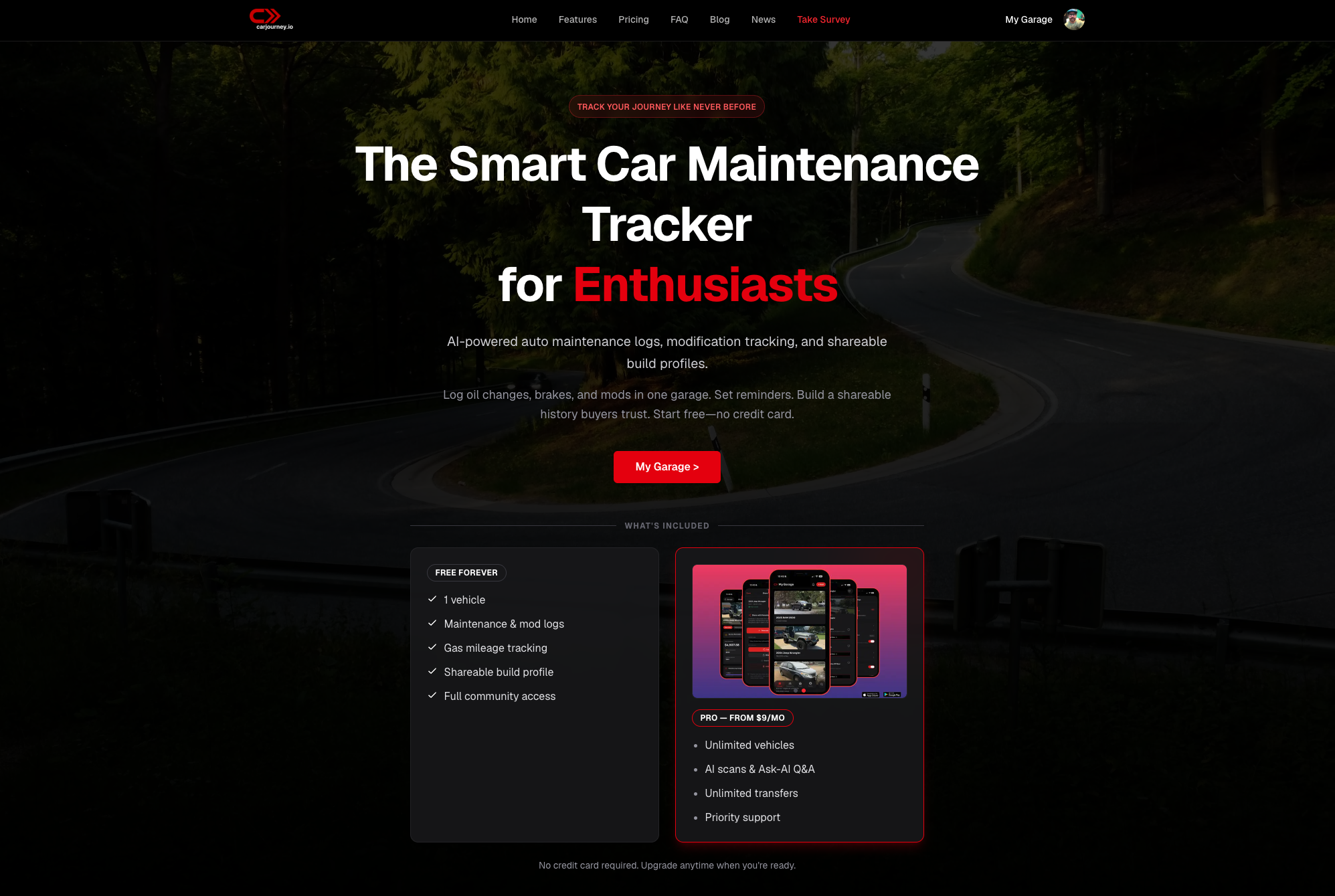
CarJourney was built specifically for this problem. Our AI scans your uploaded service documents, extracts the key details, and organizes everything by date, mileage, and service type automatically. No manual entry. No lost receipts. Just a clean, complete history of your vehicle that you can share with a buyer or a service advisor in seconds. The CarJourney maintenance tracker also sends you reminders based on your actual service history, not a generic schedule. Learn more about CarJourney and see how a small team of gearheads built the tool they always wished existed.
Frequently asked questions
What is the most important car service document to keep?
Service invoices and a complete maintenance log book are the most essential because they prove what work was done and provide the evidence needed for warranty claims and resale negotiations.
Can I use digital records instead of paper for car servicing?
Yes, digital service records are increasingly accepted by buyers, dealers, and service centers as valid proof of maintenance history.
Do I need to keep all old inspection reports?
Keeping your most recent inspection report and any reports that documented failed items is the smart move, particularly for state registration compliance and resale negotiations where condition history matters.
How can I make sure I never lose my service records?
Store a digital photo of every service document immediately after receiving it, and use a dedicated tracking app like CarJourney that maintains organized digital logbooks with automatic backup so nothing slips through the cracks.
Recommended
- Car Service Maintenance Schedule: A Complete Guide – CarJourney Blog
- Car Service Every Year: Essential Maintenance Guide – CarJourney Blog
- Vehicle Maintenance Sheets: Your Complete Guide – CarJourney Blog
- Car General Service Cost: 2026 Price Guide & Factors – CarJourney Blog
- E-service book - online service history · Auto Gas Gaga Banja Luka
- Mastering Certified Mechanic Inspection for Smart Car Buyers | ReVroom