 carjourney
From the CarJourney journal
Understand your car's service lifecycle for longer vehicle life

Understand your car’s service lifecycle for longer vehicle life
Spending money on car maintenance you don’t actually need is frustrating. But skipping the services you do need costs even more. The truth is, most car owners are working from outdated rules, like the old “change your oil every 3,000 miles” advice, rather than a clear, structured plan. A car’s service lifecycle is a scheduled sequence of maintenance and repairs based on mileage, time, and driving conditions. Understanding it turns guesswork into a strategy that saves money and keeps your car running longer.
Table of Contents
- What is a car’s service lifecycle?
- Key maintenance intervals and what to expect
- Factors that modify your service schedule: Normal vs. severe duty
- Service and repair process: What actually happens at the shop
- The costs and benefits of following the service lifecycle
- Why most car owners misunderstand the service lifecycle (and how to do better)
- Take control: Make your car’s service lifecycle work for you
- Frequently asked questions
Key Takeaways
| Point | Details |
|---|---|
| Lifecycle is phased | Your car’s maintenance needs change at predictable stages: early, mid-life, and aging. |
| Intervals, not instincts | Rely on mileage, time, and your manual—not guesses or myths—for timing service. |
| Adjust for real life | Driving in harsh conditions means servicing more often than normal schedules suggest. |
| Big savings possible | Following the lifecycle schedule reduces breakdowns and saves on long-term costs. |
| Empowered ownership | Tracking your service lifecycle helps you make smarter, more confident maintenance choices. |
What is a car’s service lifecycle?
Your car doesn’t age randomly. It follows a predictable pattern of wear, and once you understand that pattern, you can stay ahead of problems instead of reacting to them.
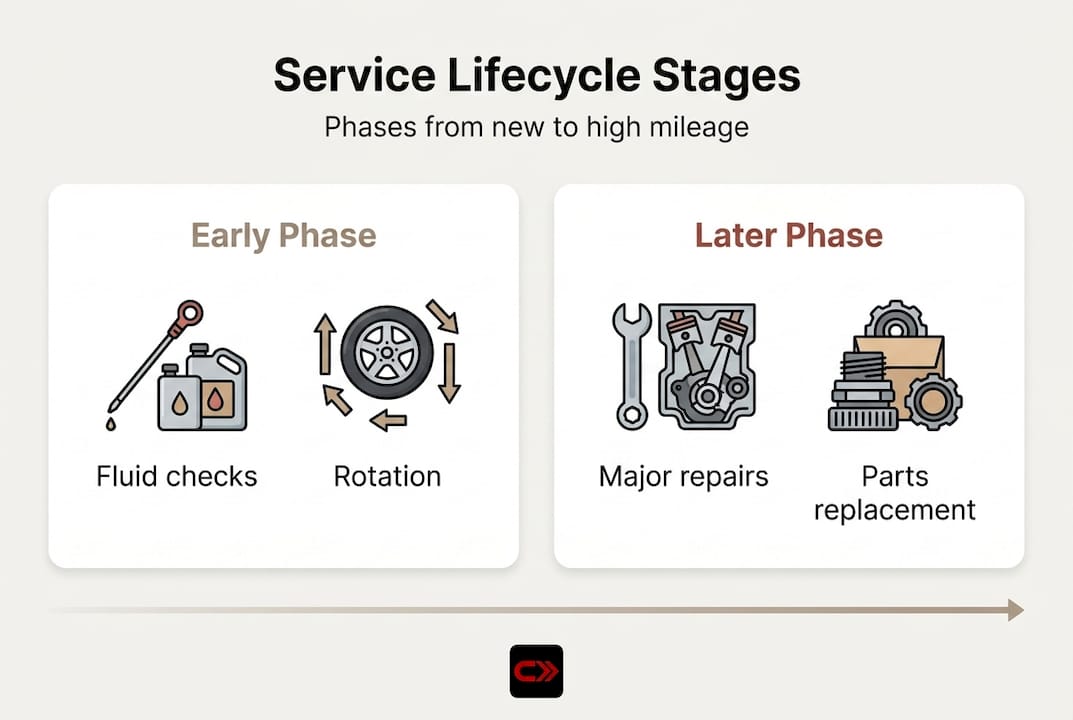
A car’s service lifecycle is the full sequence of maintenance intervals, from routine checks early on to major component replacements later, all triggered by mileage, time, or condition monitoring. Think of it as a roadmap your manufacturer already wrote for you.
The lifecycle breaks into three broad phases:
- Honeymoon phase (0 to 3 years): Your car is under warranty, components are new, and service needs are minimal. Oil changes, tire rotations, and fluid checks are the focus.
- Mid-life phase (4 to 7 years): Wear starts to show. Brakes, filters, belts, and fluids need more attention. Costs rise gradually.
- Aging phase (8+ years): Major repairs become more common, and you’ll face decisions about whether repair costs justify keeping the car versus replacing it.
Here’s a quick comparison of how service priorities shift across phases:
| Phase | Age range | Primary focus | Cost level |
|---|---|---|---|
| Honeymoon | 0 to 3 years | Fluid checks, rotations, oil | Low |
| Mid-life | 4 to 7 years | Brakes, belts, filters, fluids | Moderate |
| Aging | 8+ years | Transmission, cooling, suspension | High |
Following a maintenance schedule by mileage helps you match your actual driving habits to the right service intervals, rather than guessing based on calendar months alone.
Key maintenance intervals and what to expect
Knowing the phases is one thing. Knowing exactly what to do at each mileage marker is where most owners lose track.
Here are the major service checkpoints and what they involve:
- Every 3,000 to 8,000 miles: Oil and filter changes, tire rotations, fluid top-offs, and basic brake inspections. This is the foundation of every maintenance plan.
- 30,000 miles: Time to replace air, fuel, and cabin filters, inspect spark plugs, check transmission fluid, and perform a coolant flush if needed.
- 60,000 miles: A significant checkpoint. Replace belts, hoses, and timing belt if your engine has one, flush transmission and coolant fluids, and inspect suspension components for wear.
- 90,000 to 100,000+ miles: Focus shifts to high-mileage priorities like full transmission service, cooling system overhaul, and switching to high-mileage oil formula to protect aging seals.
Service complexity and cost increase steadily as mileage climbs. A 30,000-mile service might run $150 to $300, while a 60,000-mile service can easily reach $500 to $800 depending on your vehicle. Planning for these costs ahead of time prevents sticker shock.

Understanding maintenance by mileage helps you budget accurately and avoid the trap of deferring services until something breaks. You can also review yearly service essentials to layer time-based checks on top of your mileage plan.
Pro Tip: Routine services like oil changes and tire rotations don’t have to happen at the dealership. Independent shops often charge 20 to 40 percent less for the same work, using quality parts that meet or exceed OEM (original equipment manufacturer) specifications.
Factors that modify your service schedule: Normal vs. severe duty
Not every driver follows the same schedule. How you use your car matters as much as how many miles you put on it.
Severe duty driving means your car works harder than average, and that accelerates wear significantly. Severe conditions include:
- Frequent towing or hauling heavy loads
- Lots of short trips under five miles, especially in cold weather
- Driving in extreme heat or extreme cold regularly
- Stop-and-go city traffic for most of your daily driving
- Off-road or dusty environments
Under severe conditions, oil change intervals can drop from 7,500 miles to 3,000 to 5,000 miles. Other fluid services follow a similar pattern, essentially cutting standard intervals in half.
Why does this matter so much? Because preventive maintenance reduces breakdowns by 70 to 80 percent and keeps repair costs predictable. Ignoring severe-duty adjustments is one of the fastest ways to turn a $100 service into a $1,500 repair.
Pro Tip: Pull out your owner’s manual and look for the “severe duty” or “special operating conditions” section. Most manufacturers list exactly which conditions qualify and what intervals to follow. If your driving matches two or more of those conditions, use the severe schedule.
Checking maintenance recommendations tailored to your specific vehicle and driving style is the most accurate way to set your own schedule, rather than relying on generic advice.
Service and repair process: What actually happens at the shop
Walking into a shop without knowing what to expect puts you at a disadvantage. Understanding the standard repair process helps you ask better questions and avoid unnecessary charges.
The typical shop workflow follows these steps:
- Inspection and diagnosis: A technician reviews your concern and performs a physical inspection or diagnostic scan to identify the issue.
- Written estimate: The shop provides a cost estimate before any work begins. You have the right to approve or decline each item.
- Owner approval: You sign off on the work. Reputable shops won’t proceed without explicit approval.
- Repair to OEM standards: Work is performed using manufacturer-approved procedures and parts that meet original specifications.
- Testing and quality check: The repaired system is tested to confirm the fix worked correctly.
- Handover with documentation: You receive a detailed invoice and, ideally, notes on what was found and what was done.
“A well-run shop treats every service as a process, not just a transaction. Inspection, estimate, approval, repair per OEM standards, testing, and a clear handover with feedback — that’s the standard every owner should expect.” Auto Repair Service Lifecycle
Transparency at every step protects you. If a shop can’t explain what they found or why a repair is needed, that’s a red flag. Knowing the warning signs that your car needs servicing before you walk in makes you a much harder customer to upsell unnecessarily.
The costs and benefits of following the service lifecycle
Let’s put real numbers to this. The average annual maintenance cost for a gas-powered car is around $1,300 per year. But how you time your services makes a significant difference in what you actually spend.
Consider oil changes alone. If you drive 15,000 miles per year and follow an outdated 3,000-mile interval at $35 per change, you’re spending $175 annually just on oil. Follow the OEM-recommended 7,500-mile interval and that drops to $70. Over five years, that’s $525 saved on a single service item.
Here’s a broader cost comparison:
| Maintenance approach | Oil changes/year | Est. annual cost | 5-year total |
|---|---|---|---|
| Outdated 3k-mile rule | 5 changes | $455 | $2,275 |
| OEM 7.5k-mile schedule | 2 changes | $260 | $1,300 |
Beyond oil, dealers may recommend more frequent service than your owner’s manual requires, sometimes to generate revenue. Independent shops typically charge less for the same routine work and are often just as qualified.
The benefits of following the lifecycle correctly go beyond cost savings:
- Fewer unexpected breakdowns and roadside emergencies
- Higher resale or trade-in value because of documented service history
- Longer engine and transmission life due to properly timed fluid changes
- Lower repair bills because small issues get caught before they become major failures
Tracking your yearly car maintenance costs over time gives you real data to work with, and building a maintenance budget around your actual lifecycle stage keeps you from being blindsided.
Why most car owners misunderstand the service lifecycle (and how to do better)
Here’s the uncomfortable truth: the car maintenance industry has done a poor job of helping owners understand what their vehicles actually need. Dealerships profit from frequent visits. Quick-lube shops built their entire model on the 3,000-mile oil change myth. And most owners never read their owner’s manual closely enough to know the difference.
The result is a culture of over-servicing in some areas and under-servicing in others. People pay for oil changes they don’t need yet, then skip the 60,000-mile timing belt replacement that would have prevented a $3,000 engine repair.
The smarter approach is to treat your car like the engineered system it is. Your manufacturer spent years testing exactly when components wear out under real-world conditions. That data lives in your owner’s manual and your vehicle’s OEM service schedule. Following maintenance schedule best practices based on that data, rather than shop upsells or internet folklore, is the single biggest shift you can make.
Modern owners also have tools that previous generations didn’t. AI-powered vehicle tracking, digital service records, and community-sourced knowledge about specific makes and models mean you no longer have to guess. You can make data-backed decisions about every service interval, every repair, and every dollar you spend on your car.
The owners who get the most life and value out of their vehicles aren’t the ones who service most often. They’re the ones who service correctly, based on their specific car, their actual driving conditions, and honest condition monitoring.
Take control: Make your car’s service lifecycle work for you
Managing your car’s full service lifecycle doesn’t have to mean digging through receipts or trying to remember when you last changed your coolant.
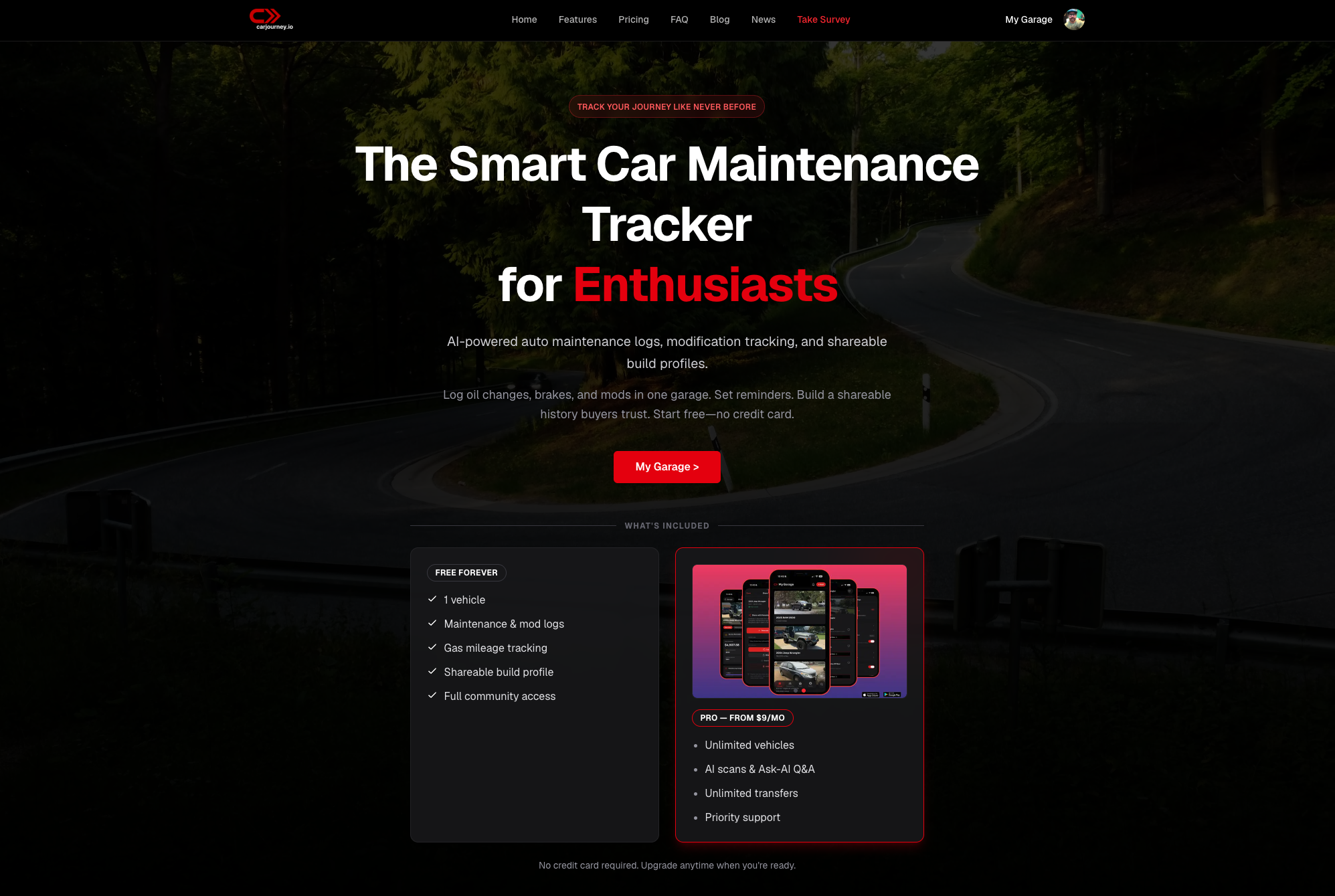
CarJourney was built by a team of gearheads and engineers in Virginia who got tired of scattered records and generic advice that ignores your specific vehicle. The CarJourney maintenance tracker uses AI to scan your service documents, track your intervals, and surface the right recommendations at the right mileage, based on your exact build and driving conditions. No more guesswork, no more missed services, and no more paying for things your car doesn’t need yet. Learn more about the team and mission at CarJourney and see how smarter tracking translates directly into a longer-lasting, higher-value vehicle.
Frequently asked questions
What defines a car’s service lifecycle?
A car’s service lifecycle is the planned sequence of maintenance and repairs as your vehicle ages, based on mileage, time, and real-world use. It progresses from basic fluid checks in the early years to major component replacements as the car ages, following a structured maintenance schedule.
How often should I service my car for normal use?
Most cars need basic servicing like oil changes and inspections every 7,500 miles, but your owner’s manual has the exact intervals for your vehicle. Normal vs. severe duty intervals can differ significantly, so always confirm which category your driving falls into.
What’s the difference between normal and severe driving conditions?
Severe conditions include towing, frequent short trips, and extreme temperatures, and they typically mean maintenance intervals are cut in half compared to normal driving. If your daily commute involves heavy stop-and-go traffic or cold-weather starts, you likely qualify as severe duty.
Does following the service lifecycle really save money?
Yes. Properly timed maintenance keeps annual costs around $1,300 and prevents expensive repairs down the road, saving hundreds per year compared to outdated service habits like the 3,000-mile oil change rule.
Can I trust dealer maintenance recommendations?
Dealers sometimes suggest more frequent service than OEM requires, which can inflate your annual maintenance bill unnecessarily. Always cross-reference dealer advice with your owner’s manual before approving any service.