 carjourney
From the CarJourney journal
How to Return a Modified Car to Stock for Resale
Last Updated: November 2, 2026
Quick Summary
Restoring a modified car to stock for resale means removing aftermarket parts and returning the vehicle to factory specification before listing it. Run the math per modification: if the revert costs more than the value it unlocks, leave it alone. Revert anything cheap to undo that widens appeal, and keep anything expensive to reverse that a niche buyer will pay for.
- Stock condition widens your buyer pool; a modified car narrows it but can command attention from the right enthusiast.
- Net revert cost is labor plus parts minus resale proceeds from the removed part.
- Reverse bolt-on mods first: intake, exhaust, lights, and wheels are the lowest-risk steps.
- Have the stock calibration reinstalled and confirm the ECU reports the factory calibration ID.
- Keep the alignment sheet, scan report, and receipts to turn it's stock now into evidence a buyer can check.
Table of Contents
- Should You Sell Your Modified Car As-Is or Return to Stock?
- How Modifications Affect Resale Value and Buyer Appeal
- Calculating the Cost to Return a Modified Car to Stock for Resale
- Original Parts for Modified Car Resale: Keep, Reinstall, or Sell Separately
- A Step-by-Step Checklist to Return Your Car to Stock Condition
- Documenting Car Modifications for Resale and Buyer Trust
- Inspect and Verify Your Car Before You List It
- Build a Shareable Car History Before You Sell
- Frequently Asked Questions
Should You Sell Your Modified Car As-Is or Return to Stock?
Restoring a modified car to stock for resale means removing aftermarket parts and returning the vehicle to factory specification before listing it. The honest answer is that it depends on what you bolted on.
The real question isn't whether mods are good or bad, but which buyer you want to attract.
The pros and cons break down cleanly:
- Sell as-is: less labor, no parts cost, but a smaller buyer pool and more negotiation
- Return to stock: more work upfront, but broader appeal and easier financing
- Partial revert: keep the desirable mods, reverse the controversial ones
Below, we walk through the math, the checklist, and the documentation for either path.
How Modifications Affect Resale Value and Buyer Appeal
Modifications affect resale value in two directions: they can shrink your buyer pool while raising appeal for a narrow group. The net effect depends on the mod, the install quality, and whether you kept the original parts.
Don't assume every upgrade adds value. Buyers price in risk: an aggressive suspension setup signals hard driving to some shoppers and weekend track fun to others.
Mods That Shrink Your Buyer Pool
These tend to scare off the average shopper:
- Cut or rolled fenders and drilled body panels
- Engine tunes with no supporting documentation
- Straight-pipe exhaust or deleted emissions equipment
Each one narrows who will even open your listing. The FTC's guidance on vehicle advertising and disclosure matters here too, because you cannot quietly omit known mechanical changes.
Mods That Attract a Niche Enthusiast Buyer
Some upgrades actually help with the right audience:
- Quality wheels and tires from a known brand
- A cat-back exhaust with the factory unit saved
- Mild lowering springs on stock-compatible dampers
Collector and enthusiast interest concentrate around documented, reversible work. A classic car with bolt-on mods and the original equipment boxed in the garage is a much easier sale.
Calculating the Cost to Return a Modified Car to Stock for Resale
The cost to return a modified car to stock for resale comes down to parts, labor, and the resale bump you expect.
Use a four-line calculation for each modification:
- Removal labor: your hours times a realistic shop rate, or the shop's quoted hours if you would not do it yourself.
- Replacement parts: the OEM part plus any wear items the job forces you to replace (gaskets, hangers, fasteners, bushings, alignment).
- Resale proceeds from the removed part: what the aftermarket part actually sells for used, not what you paid.
Net revert cost is labor plus parts minus resale proceeds from the removed part. If that's lower than the sale-price impact, revert.
A worked pattern most sellers recognize:
| Modification | Removal labor | Replacement parts | Resale of removed part | Likely sale impact | Verdict |
|---|---|---|---|---|---|
| Cat-back exhaust | Low (bolt-on) | Low (gaskets, hangers) | Moderate | Broadens buyer pool | Revert |
| Aftermarket wheels | Low | None if stock wheels kept | Moderate to high | Neutral if quality | Keep or sell separately |
| Coilover suspension | Medium (alignment required) | Medium if stock parts worn | Moderate | Broadens buyer pool | Revert if stock parts saved |
| Custom tune | Low to medium | None, but shop time to flash | Low | Raises buyer questions | Revert and document |
| Cut fenders | High (bodywork and paint) | High | None | Narrows pool badly | Disclose and price in |
A practical rule: revert anything cheap to undo that widens appeal, and keep anything expensive to reverse that a niche buyer will pay for.
Two adjustments make the math honest. Value your own labor at something, even the shop rate you'd avoid paying, free labor hides the real cost. If you're weighing whether to revert at all, our article on whether modifications hurt resale value digs into when mods cost you money and when they do not.
Original Parts for Modified Car Resale: Keep, Reinstall, or Sell Separately
Original parts for modified car resale are worth more than most owners realize. OEM parts in good shape let you reverse a mod cheaply and prove the car's history.
Here is how to sort your pile:
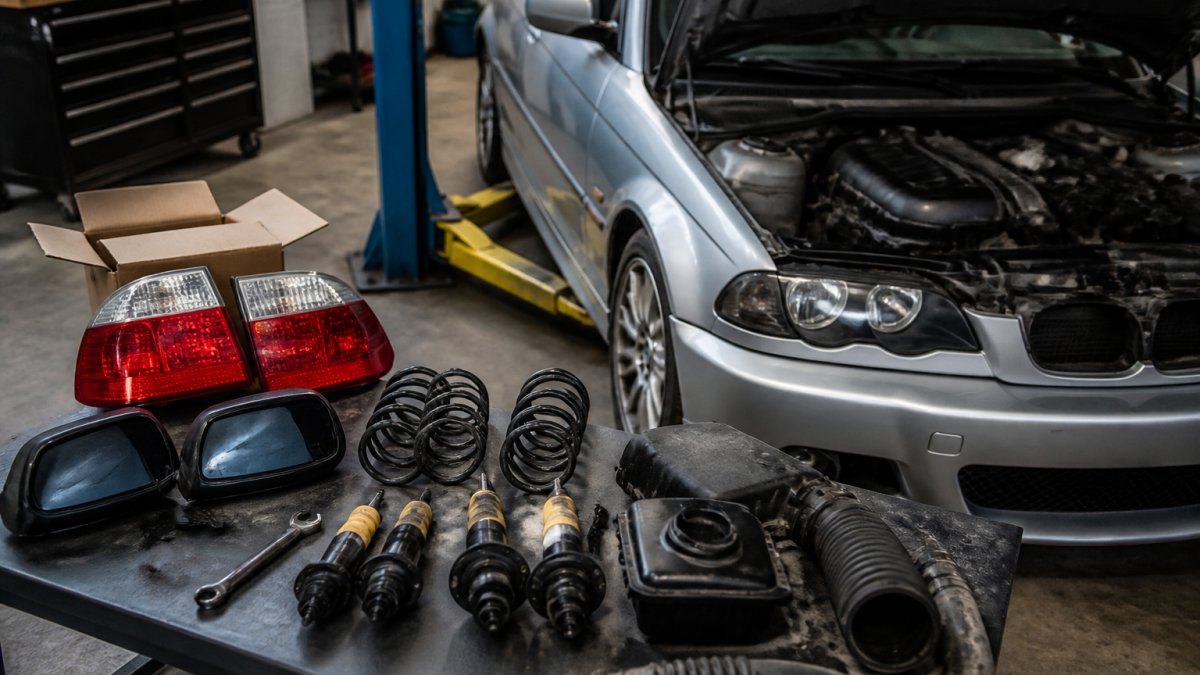
- Reinstall: factory wheels, exhaust, intake, springs, and lights
- Sell separately: quality aftermarket parts with resale demand
- Keep boxed: anything a future buyer might want with the car
Selling aftermarket parts separately often recovers part of your build cost. Just photograph each part and note the brand and condition. Buyers pay more for parts with a clear history.
A Step-by-Step Checklist to Return Your Car to Stock Condition
Returning a car to stock condition is a sequence, not a weekend scramble. Documenting these mechanical transitions provides a clear history of the vehicle, which becomes particularly valuable when selling for trade-in.
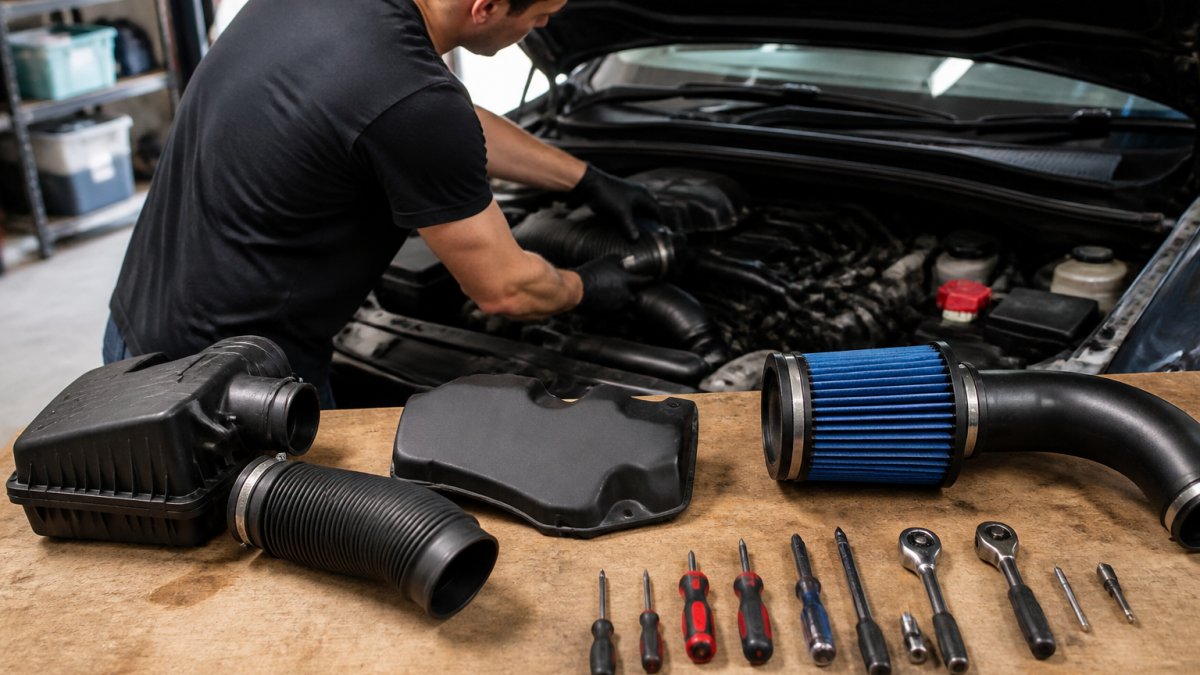
- Inventory and photograph every modification before you touch a bolt. Open the hood, get under the car, and list each aftermarket part with brand, model, and condition. Photograph the installed state, the wiring, and any drilled or trimmed areas. This record becomes your disclosure file and your removal reference.
- Gather the original parts and inspect them. Check factory springs for corrosion, dampers for leaks, wheels for bends, and exhaust components for rust-through. A worn OEM part is not a clean revert, it is a new problem. Replace wear items (gaskets, hangers, fasteners, bushings) rather than reinstalling tired originals.
- Reverse bolt-on mods first: intake, exhaust, lights, wheels. These are the lowest-risk steps and the easiest to verify. Reinstall the factory airbox with a new filter element, refit the stock exhaust with fresh gaskets and hangers, and swap wheels back with the correct lug torque and pattern. Keep the aftermarket parts boxed and labeled for separate sale.
- Swap suspension back to stock springs and dampers. This is where alignment and safety matter most. Reuse factory mounting hardware where it is serviceable, replace worn top mounts and bump stops, and torque suspension fasteners at ride height where the manufacturer specifies it. A car returned to stock springs but left with a track alignment will still drive and wear tires like a modified car.
- Restore the tune or ECU to factory specification. If the car was flashed, have the stock calibration reinstalled by a shop with the correct factory file, and confirm the ECU reports the factory calibration ID. A piggyback tuner should be removed entirely, including its harness, so no spliced wiring remains.
- Address cosmetic changes last. Badges, tint, wraps, and interior trim are low-risk but time-consuming. Remove adhesive residue carefully, and do not repaint a panel to hide a drilled hole unless the repair is done properly, a poor paint match is more noticeable than the hole.
- Test drive and check for warning lights. Drive at low speed, then highway speed, and watch for check-engine, ABS, and traction-control lights. Scan for stored codes and fix the cause before clearing anything.
- Clean and detail the engine bay and interior. A clean bay signals care and makes the revert look intentional rather than abandoned.
Reversing Bolt-On Mods Safely
Bolt-on mods are the easy wins, but torque specs and part compatibility still decide whether the car is truly stock.
Watch out: reinstalling a factory exhaust without new gaskets often causes leaks and a check-engine light that scares buyers at inspection. The same applies to intake reinstallation, a missing vacuum line or cracked intake boot will set a lean code that looks like a serious engine fault.
Handling Irreversible Changes and Compliance
Some changes cannot be undone cleanly. Cut panels, welded cages, and deleted emissions gear fall into this group. Here you shift from reverting to disclosing, and the compliance questions become the deciding factor.
Safety, emissions, and legal compliance decide whether the car can even be sold cleanly. Emissions equipment is regulated at the federal level, and the EPA emissions and tampering rules explain what cannot legally be removed or defeated. For more on modifying vehicles safely, see our guide on how to modify vehicles safely and legally.
Verifying the Car Is Truly Back to Stock
A revert is only finished when the car behaves like a stock example. Before you list, confirm the ECU reports the factory calibration, scan all modules for stored codes, check for exhaust and fluid leaks after a cold start and a highway run, verify even tire wear and proper alignment, and confirm every light and signal works. Keep the alignment sheet, scan report, and receipts, they turn "it's stock now" into evidence a buyer can check.
Documenting Car Modifications for Resale and Buyer Trust
Documenting car modifications for resale turns a story into evidence. Buyers trust receipts, photos, and dates far more than a verbal "it was done right."
Build a simple record for each mod:
- Part brand, model, and purchase date
- Install date and who did the work
- Photos before, during, and after
A modification history with clean records builds buyer confidence at sale. See our car modification documentation guide for organizing parts, labor, and photos. CarJourney's AI-powered logs let you store receipts and build photos in one digital garage, so the record is ready when a buyer asks.
Inspect and Verify Your Car Before You List It
Inspection and verification after restoration catch the problems that kill deals. A buyer who finds a warning light or a leaking gasket walks away. Check the car the way a mechanic would.
Run through this before listing:
- Scan for stored codes and clear only after fixing
- Check fluid levels and look for leaks
- Confirm all lights and signals work
For a systematic pre-listing process, see our pre-sale maintenance workflow.
Build a Shareable Car History Before You Sell
A shareable car history is your strongest sales asset. It answers the buyer's real question: was this car cared for?
CarJourney was built for exactly this. CarJourney uses VIN-based vehicle setup to create a digital garage, then tracks every service milestone and build upgrade with AI-powered logs.
That record also helps you decide what to reverse. When you are ready to build the full record, see our guide on how modification history affects vehicle value.
Frequently Asked Questions
Does modifying a car reduce its resale value?
It depends on the modification and the buyer. Bolt-on parts like aftermarket wheels or an exhaust can narrow your buyer pool because many shoppers want a factory-spec car with predictable maintenance. Heavy engine or suspension work often raises red flags about how the car was driven. Well-documented, reversible mods from quality brands may appeal to enthusiasts, but a stock car generally sells to more people and is easier to price.
How much does it cost to restore a modified car to stock before selling?
Costs vary widely because they depend on which parts you removed, whether you kept the originals, and labor rates in your area. Reinstalling factory parts you still have is usually the cheapest path. Buying replacement OEM parts and paying a shop for labor adds up fast. Price each reversal against the value it adds, and skip restorations that cost more than the resale bump they create.
Can I sell a modified car with the original parts included?
Yes, and it can help. Including the original wheels, exhaust, intake, or suspension components signals that the car can be returned to factory specification and gives the buyer options. List the parts clearly in your ad, note their condition, and store them somewhere dry. Buyers who want stock condition will factor the parts into their offer, and enthusiast buyers may value the spares.
Which modifications should I remove before selling my car?
Start with changes that shrink your buyer pool the most: aggressive suspension setups, loud exhausts, aftermarket lights that fail inspection, and tuner software. These are usually reversible if you kept the original parts. Leave modifications that are hard to undo, like drilled panels or cut fenders, and disclose them instead. Document every removal with photos and receipts so the next owner has a clear modification history.
The hardest part of selling a modified car is not the wrench work. It is proving the car's story to a stranger. CarJourney gives you one digital garage with AI-powered logs, VIN-based setup, and shareable build profiles, so every receipt and upgrade is organized and ready. Get started with CarJourney and turn your documented build into a car buyers trust.
Start free Add carjourney.io as a preferred source on Google →