 carjourney
From the CarJourney journal
Project Car Budget: Realistic Tiers for Beginners
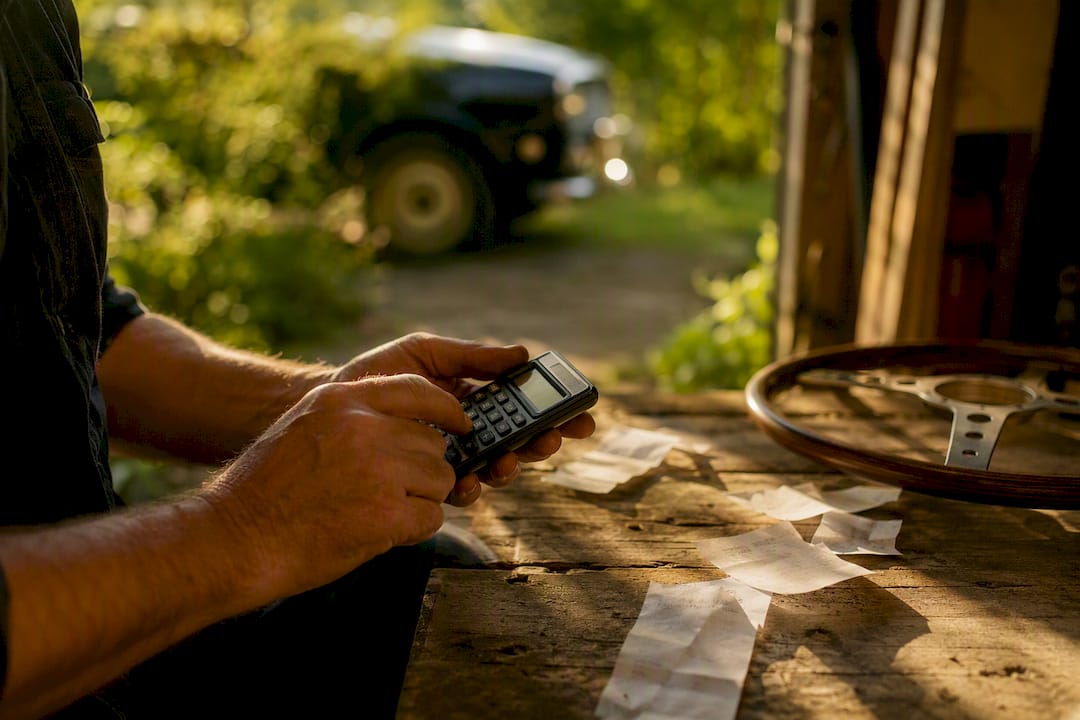
Start with $2,000 to $5,000 if you want a real project car you can actually finish, and treat every dollar past that as a staged decision, not a lump sum. A $500 budget can still get a tired commuter running safely again. A $30,000 budget can fund a full driveline swap. What breaks people isn’t the size of the number, it’s spending it all up front with nothing held back for the rust you didn’t see.
Here’s roughly what each tier buys before you spend a dime on parts:
-
$500 to $1,000: wiring fixes, a basic tune, fluids, and safety inspection items
-
$2,000 to $5,000: brakes, suspension bushings, a proper diagnostic, minor bodywork
-
$10,000 to $15,000: engine refresh, paint prep, or a planned driveline swap
-
$30,000+: full restomod builds with custom driveline and body work
Pro Tip: Set aside your contingency fund before you buy the car, not after.
Key Takeaways
| Point | Details |
|---|---|
| Start with a realistic tier | Match your goals to a budget range, from $500 fixes to $30,000+ restomods, before shopping for a car. |
| Build in contingency | Hold back 20% as a baseline, scaling toward 30% for higher-risk or rust-prone builds. |
| Prioritize safety first | Spend on brakes, tires, and steering before touching paint, trim, or wheels. |
| Fund with cash, not debt | Save in stages and re-evaluate at each milestone instead of financing the build. |
| Track every dollar | Use a system like Carjourney’s build tracker to log receipts, milestones, and remaining budget as you go. |
Table of Contents
- How Much Should Your Project Car Budget Actually Be?
- What Budgeting Rules Actually Prevent a Failed Build?
- What Can You Actually Get Done at Each Budget Tier?
- How Do You Estimate Costs Before You Buy?
- How Should You Fund a Project Car Without Going Into Debt?
- Safety First, Cosmetics Last: What Actually Comes First?
- Where Can You Find Cheap Parts and Tools Without Getting Burned?
- How Do You Track Spending So It Doesn’t Spiral?
- Realistic Expectations: Timelines, Surprises, and Staying Motivated
- How Carjourney Keeps Your Project Car Budget Honest
- Frequently Asked Questions
- Sources
How Much Should Your Project Car Budget Actually Be?
The honest answer depends less on the car and more on what you’re solving for: a fun weekend beater, a resale flip, or a long-term build you’ll drive for a decade. That said, three ranges cover almost every realistic scenario a beginner will face.
A $500 to $2,500 budget suits someone rescuing a running car from mechanical neglect: bad wiring, a dead battery, worn brakes, a rough idle. You’re not rebuilding anything major. A $5,000 to $15,000 budget opens the door to entry-level restorations, where full projects commonly run into the $16,000 range once you factor in parts and any professional labor you outsource. Doing more of the work yourself pulls that number down significantly. Above $30,000, you’re in restomod territory, where builders typically follow a phase-based allocation like 30% drivetrain, 30% body and paint, and 20% suspension and interior, with 20% held back as mandatory contingency.
The mistake almost everyone makes at every tier is the same: they price out the fun parts (the engine, the wheels, the paint) and forget the boring parts (fasteners, gaskets, shop supplies, the tow bill when it doesn’t start after three months in the driveway).
What Budgeting Rules Actually Prevent a Failed Build?
Five rules separate people who finish their project cars from people who sell them half done on Facebook Marketplace. None of them are complicated, but almost nobody follows all five.
- Expect overruns, every time. Even careful builders miss things. Rust hides behind trim. Wiring harnesses look fine until you pull the dash. Budget for the surprise before you find it.
- Stage the build into phases you can pause between. Get it safe and drivable first. Then tackle reliability. Then move to performance or cosmetics only once the earlier stages are paid for in full.
- Size your contingency to the risk level. A clean, low-mileage car from a dry climate might only need a 10 to 15% buffer. A rust-belt project with an unknown history deserves 25% to 30%, according to project budget calculator guidance built around exactly this kind of risk grading.
- Prioritize safety and drivability over anything cosmetic. Paint doesn’t keep you alive on the highway; brakes do.
- Document every cost, immediately, without exception. The build you can’t account for is the build you’ll underprice when you try to sell it.
Financing deserves its own warning. Auto-project loans and high-interest credit cards turn a hobby into a liability, because interest accrues on a car that isn’t generating income while it sits in your garage. A stalled project with a loan payment attached is how enthusiasts end up resenting a car they used to love. Cash-first, stage-by-stage funding costs you time, not money you don’t have.
Pro Tip: Run two contingency scenarios before you commit to a purchase. Pick the number that matches what you actually see when you crawl under the car, not what you hope is true.
Treat the budget less like a ceiling and more like a roadmap that bends as the build reveals itself. Rigid budgets break on contact with real rust. Roadmaps just reroute.
What Can You Actually Get Done at Each Budget Tier?
Numbers without context don’t help you decide anything, so here’s what each tier looks like in practice, based on the kind of allocation splits builders actually use.
| Budget Tier | Typical Allocation | What Gets Done |
|---|---|---|
| Micro (under $1,000) | Safety and function first, minimal contingency | Wiring repairs, basic tune, fluid changes, safety inspection fixes |
| Entry ($1,000 to $5,000) | 30% safety, 30% drivetrain, 20% body, 20% contingency | Brakes, basic suspension, diagnostics, minor bodywork |
| Mid-level ($5,000 to $15,000) | 30% drivetrain, 25% body/interior, 20% mechanical, 25% contingency | Engine refresh, paint prep, interior refresh, driveline planning |
| High-level ($15,000 to $30,000+) | 30% drivetrain, 30% body/paint, 20% suspension/interior, 20% contingency | Full driveline swap, body and paint work, custom fabrication |
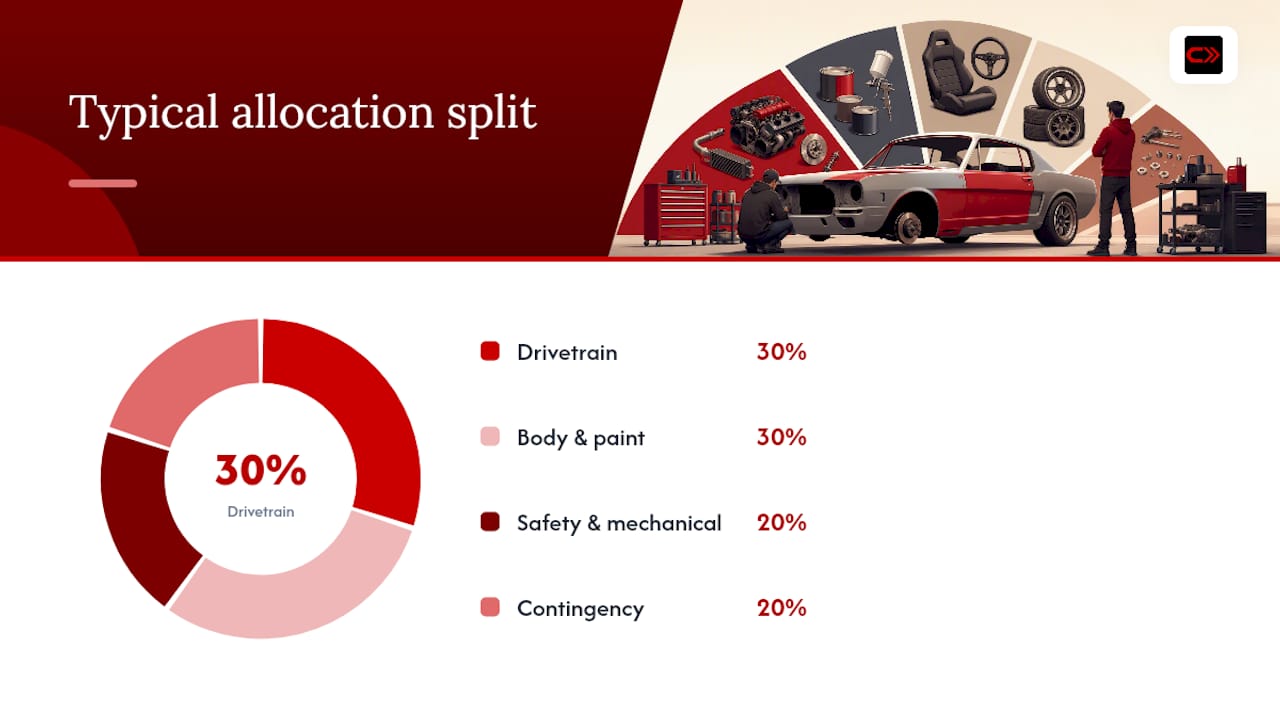
That allocation split (drivetrain and body each taking roughly 30%, with a firm 20% contingency held back) comes straight from how restomod builders structure larger projects, but the ratios scale down cleanly. Even at $500, the same logic applies: spend on what keeps the car safe and running before you spend on anything that just makes it look better.
MotorTrend’s budget-bucket approach makes this concrete at the low end. At $50, that might mean a fuel filter and a new set of spark plugs. At $200, you’re looking at a battery, a coolant flush, and maybe a set of wiper blades and belts. At $500 to $750, brakes and basic suspension bushings enter the picture. None of that is glamorous. All of it keeps a project car from becoming a parts car.
A few concrete examples worth anchoring on:
- $500 project: wiring diagnostics, charging system check, basic tune, safety inspection
- $2,000 project: brake system overhaul, suspension bushings, alignment, minor rust treatment
- $10,000 project: engine refresh or documented parts sourcing for a future swap
- $30,000+ project: full driveline replacement paired with body and paint work
Once you know your ceiling, you can decide how far down the list you actually get to go, and that’s a far better planning tool than picking a car first and hoping the number works out.
How Do You Estimate Costs Before You Buy?
A bottom-up estimate beats a gut feeling every time, and it starts before you hand over a dime for the car. Walk the vehicle with a checklist, not a wish list.
Inspection checklist:
- Frame and floor rust, especially around wheel wells and floor pans
- Suspension play, worn bushings, and any obvious leaks
- Brake condition, including lines and the master cylinder
- Wiring harness integrity, particularly around the engine bay and firewall
- Engine health: compression, oil condition, unusual noises on cold start
- Title status: clean, salvage, or rebuilt, since this affects both value and insurability
Once you’ve walked the car, build an itemized estimate rather than a single guess figure. A simple template covers purchase price, towing and title fees, mechanical parts, electrical repairs, body and paint, interior work, tools you don’t already own, shipping on any parts you can’t source locally, labor if you’re outsourcing any of it, and contingency on top of all of it.
| Estimate Category | What to Include |
|---|---|
| Acquisition | Purchase price, towing, title transfer, sales tax |
| Mechanical | Engine, transmission, brakes, suspension parts |
| Electrical | Wiring, sensors, battery, charging system |
| Body/Interior | Paint, trim, upholstery, glass |
| Tools/Shipping | New tools needed, freight on heavy or rare parts |
| Contingency | 20 to 30% of the subtotal above, scaled to risk |
Mechanical and electrical work tends to move fastest once parts arrive; body and paint almost always takes longer than anyone estimates, because prep work is invisible until you’re doing it.
How Should You Fund a Project Car Without Going Into Debt?
Save the cash first, then spend it in stages tied to actual milestones, not calendar dates. That’s the entire funding strategy that actually works for most builders.
Do:
- Build a dedicated savings pool before you buy the car
- Sell parts, tools, or a second vehicle you don’t need to fund the next stage
- Re-evaluate your remaining budget at every milestone before moving forward
Don’t:
- Finance the build on a high-interest personal loan or credit card
- Spend your entire contingency fund on the first stage because a deal looked good
- Skip the re-evaluation step just because momentum feels good
The flow is simple: dedicated savings feeds milestone spending, and each milestone forces a checkpoint where you look at what’s left and adjust the plan.
Builders who fund in cash-only stages finish projects at a noticeably higher rate than those carrying interest-bearing debt on an unfinished car, largely because a paused cash-funded project costs nothing to sit while a financed one keeps accruing charges regardless of progress.
If cash is tight, phased upgrades and part-time flips (buying a rough parts car, pulling what you need, selling the rest) beat a loan every time.
Safety First, Cosmetics Last: What Actually Comes First?
Money goes to safety before anything else, full stop. Brakes, tires, and steering components come before a single dollar touches paint or upholstery.
Priority order:
- Safety: brakes, tires, steering, seatbelts
- Drivability: fuel system, ignition, cooling
- Reliability: charging system, seals, gaskets
- Cosmetics: paint, interior trim, wheels
A daily driver needs that full stack addressed before it touches the road. A weekend project car can tolerate rough cosmetics longer while you chase reliability. A track car flips the order slightly, since suspension and brakes often outrank basic cosmetics entirely, even ahead of some drivability items.
Picture the same $2,000 spent three ways: on a daily driver it goes to brakes and tires immediately. On a weekend project, it might split between suspension bushings and a cooling system flush. On a track build, it likely goes straight into brake pads, fluid, and a safety harness.
Pro Tip: If you’re ever unsure where the next $200 should go, ask what happens if that system fails at 60 mph. If the answer is dangerous, that’s where the money goes.
Where Can You Find Cheap Parts and Tools Without Getting Burned?
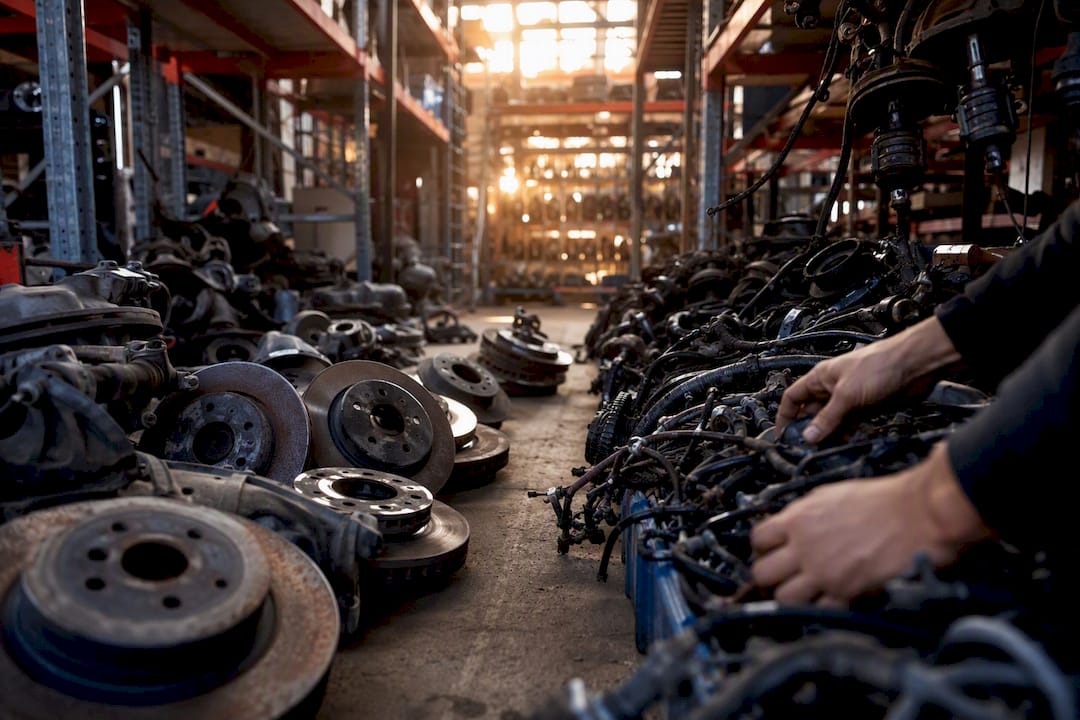
Salvage yards remain the best value for structural and mechanical parts, especially through networks that let you search inventory across multiple yards at once. Online aftermarket retailers fill in what salvage yards can’t, particularly for wear items like brake pads and filters, and local auto recyclers or community classified threads often surface donor cars and real-world cost reports that no retail site will show you.
Tool priorities: a jack and stands rated for the vehicle’s actual weight, a quality torque wrench, and a multimeter and other essential tools. Borrow or rent anything used once. Buy new for anything safety-critical, like brake lines or suspension hardware; buy used for cosmetic trim where a scratch doesn’t matter.
Pro Tip: Consolidate parts orders to cut shipping costs, and check return policies before ordering anything electrical, since those parts are the hardest to return once installed.
How Do You Track Spending So It Doesn’t Spiral?
A four-step workflow keeps a project car budget honest: capture every receipt the moment you get it, categorize it by system (safety, drivetrain, body, tools), attach it to the specific task it paid for, and update your remaining contingency total immediately after.
- Capture every receipt, digitally, the day you get it
- Categorize each cost by system so you can see where money is actually going
- Attach the cost to the specific task or milestone it funded
- Update your remaining contingency total so you always know what’s left
A good build tracker handles the heavy lifting here: line-item cost entries, photo receipt storage, and milestone checkboxes that show progress at a glance instead of buried in a spreadsheet tab you forgot existed. That structure also does double duty for documenting builds for resale, since buyers pay more for a car with a verifiable paper trail than one with a shoebox of faded receipts.
Pro Tip: Photograph every part before and after installation, timestamped, alongside the receipt. That pairing does more to justify your asking price at resale than any verbal description of the work ever will.
A project car with a documented cost history sells faster and closer to asking price than one where the seller just says “trust me, I put a lot into it.”
Realistic Expectations: Timelines, Surprises, and Staying Motivated
Most project cars take months to years, not weekends, and the ones that stall usually stall for the same reason: project creep. You start with a plan to fix the brakes, and three weekends later you’re rebuilding the whole front subframe because you found something ugly behind it. That’s normal. It’s also exactly why enforcing stage gates matters more than any spreadsheet.
Set a hard stop at the end of each stage. Get the car safe, stop, assess, then decide whether the next stage is worth funding right now or worth waiting three more months to save for. Staged wins, even small ones like finally having working turn signals, keep motivation high in a way that an unfinished full-build sitting on jack stands never will.
How Carjourney Keeps Your Project Car Budget Honest
Every rule in this guide (stage the build, track every cost, hold back a contingency) only works if you actually follow through on the tracking part, and that’s where most spreadsheets quietly die around month three. Carjourney’s Project Car Build Tracker is built specifically to stop that from happening: it captures receipts as you buy parts, logs milestones as you hit them, and keeps a running total of what you’ve spent against what you budgeted, all tied to the specific vehicle in your garage.
Beyond the tracker, Carjourney lets you build a full profile for your project car, complete with AI document scanning that pulls details straight off service records and receipts so you’re not typing everything in by hand. That same build profile doubles as your resale story later, showing exactly where the money went and why. If budget creep has killed a project of yours before, start tracking your next build before you spend the first dollar.
Frequently Asked Questions
How much should I budget for a first project car?
Plan on $2,000 to $5,000 if you want a realistic, drivable outcome without major surprises breaking the plan. Beginners doing mostly safety and reliability work can start smaller, closer to $500 to $1,000, as long as the car is already running.
What percentage should I set aside for contingency?
The contingency guidance from project budget calculators backs this range across most build types.
Is it a bad idea to finance a project car?
Generally yes. Interest keeps accruing whether the car is finished or sitting on jack stands, which is why staged, cash-first funding has a much better track record for actually finishing builds.
How long does a typical project car build take?
Most builds run months to years rather than weeks, largely because unexpected repairs (rust, seized bolts, worn wiring) extend timelines well past the original plan. Enforcing stage gates keeps the timeline realistic instead of open-ended.
What should I fix first on a cheap project car?
Safety systems always come first: brakes, tires, and steering. Drivability items like fuel delivery and cooling come next, with cosmetics like paint and interior trim saved for last once the car is safe and reliable to drive.
Sources
- Project car planning and budgeting | Field Notes: The Turo blog
- How To Upgrade a Project Car on any Budget: From $50 to $1,000
- How Much Money Does a Project Car Usually Take?
- Project Car Budget Calculator - Realistic Build Planner
- How to Budget for a Restomod Build: The Ultimate 2026 Financial Roadmap