 carjourney
From the CarJourney journal
What Is Car Detailing? Process, Benefits, and Tips
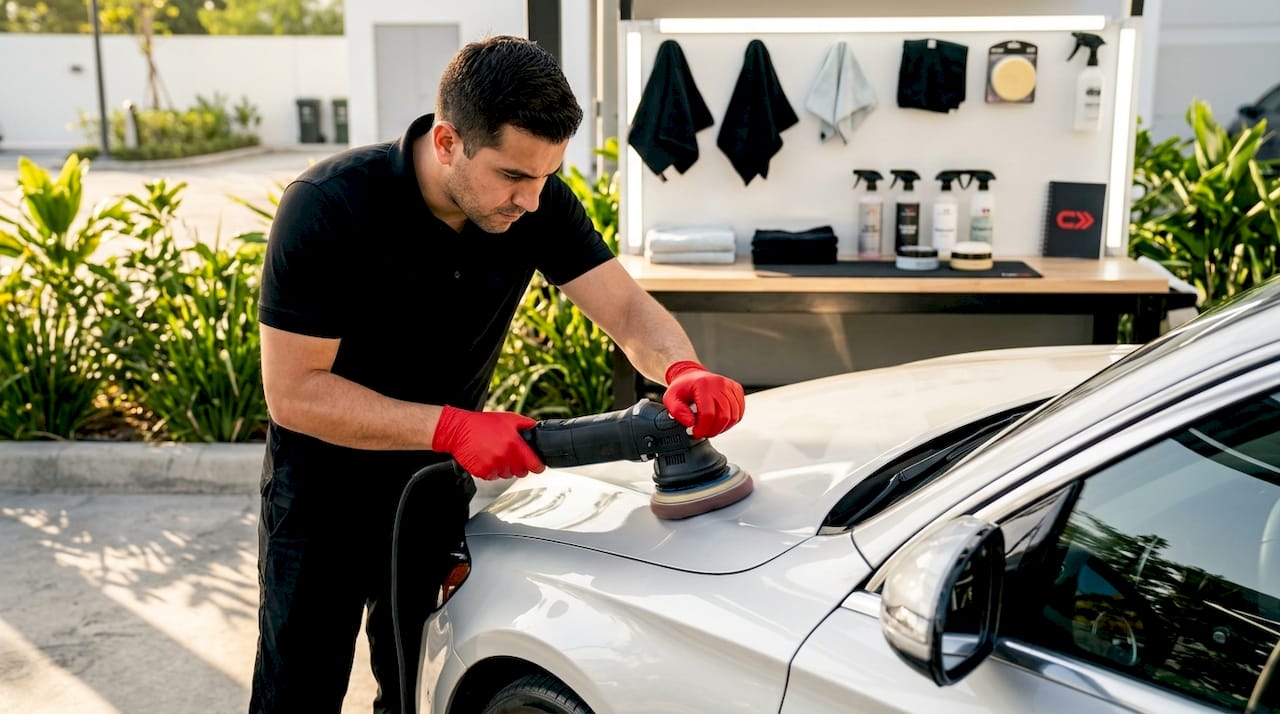
Car detailing is defined as the systematic deep cleaning, restoration, and protection of every surface on a vehicle, inside and out, going far beyond what any standard car wash delivers. Where a basic wash removes loose surface dirt, detailing targets embedded contaminants and surface defects that degrade paint, fabric, and trim over time. The process covers paint decontamination, clay treatment, polishing, protective coating application, interior vacuuming, stain removal, and leather conditioning. Done correctly, it preserves your vehicle’s finish, protects resale value, and produces a result that looks genuinely showroom-fresh.
What is car detailing and how does the process work?
Car detailing is a deep cleaning and restoration process that treats your vehicle as a collection of distinct surfaces, each requiring specific products, tools, and techniques. Paint, glass, rubber, leather, fabric, and plastic all respond differently to cleaning agents, which is why detailing follows a precise sequence rather than a single pass with soap and water.
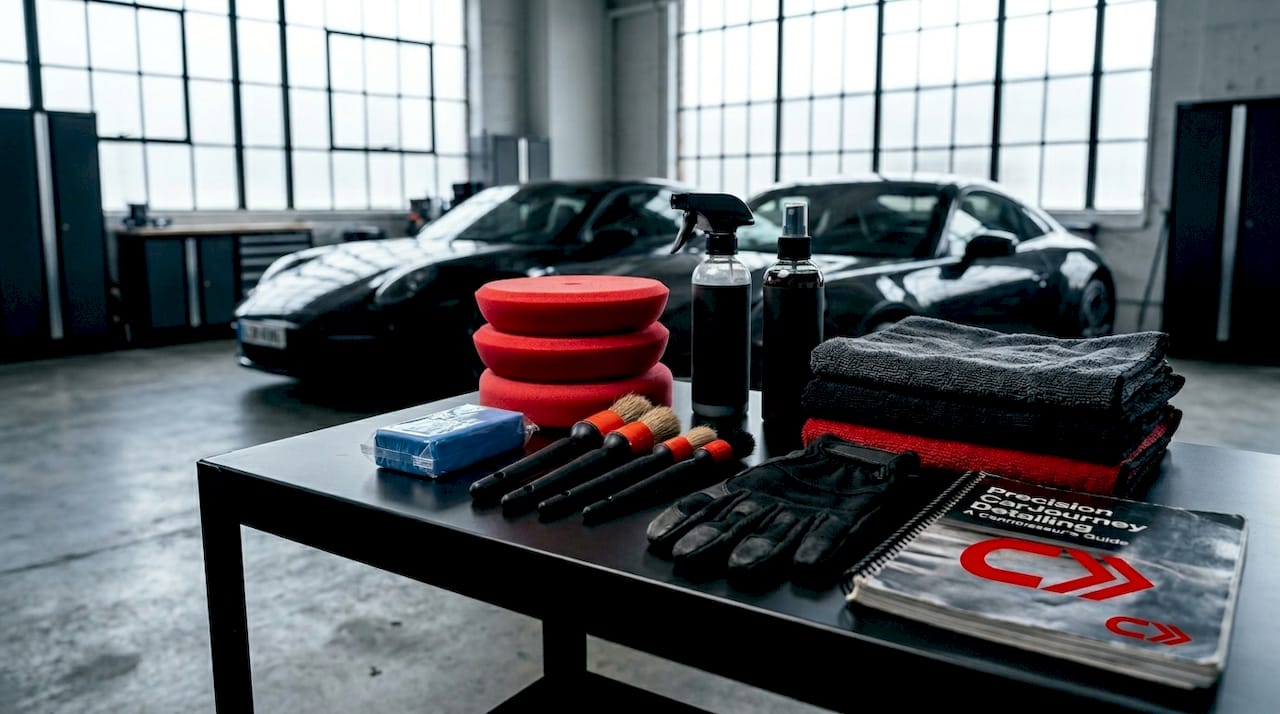
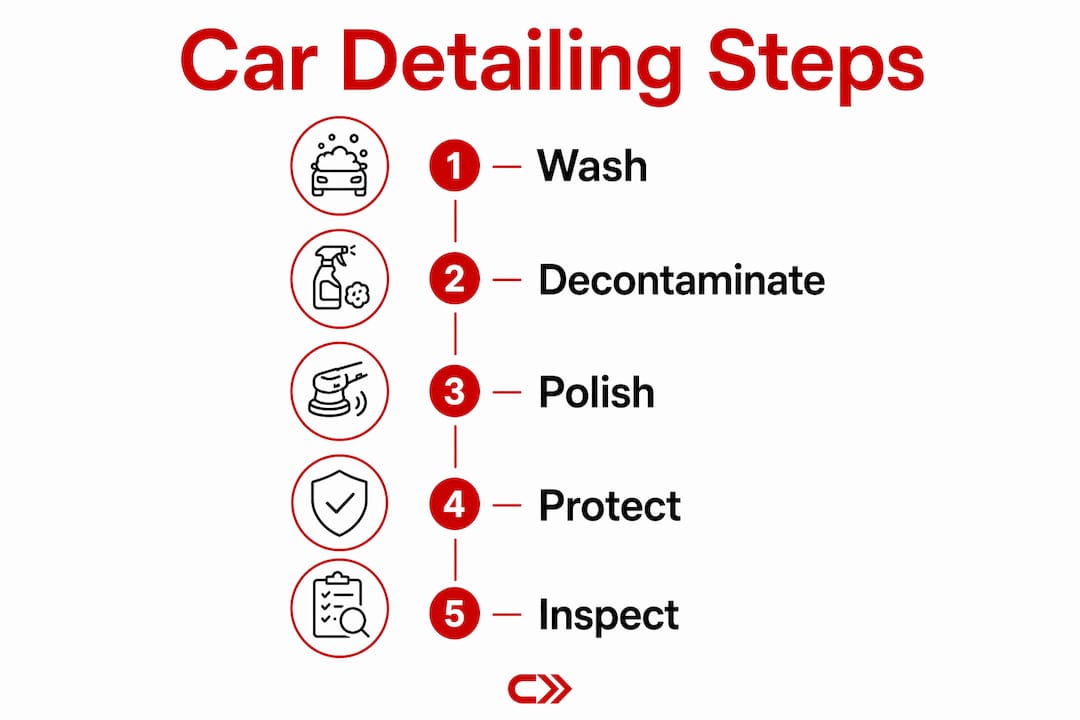
The exterior sequence that most professionals follow runs: rinse and foam wash, hand wash, chemical decontamination, clay bar treatment, drying, paint correction, and finally protection application. The interior mirrors that logic, moving from cabin clearing and floor mat removal through vacuuming, surface cleaning, and finishing with protectants. Proper sequencing prevents recontamination and avoids the single most expensive mistake in detailing: sealing contaminants under a protective coating before the surface is clean.
The numbered steps below reflect the exterior workflow a professional detailer follows on a standard full detail.
- Pre-rinse and foam wash. A pressure rinse loosens heavy debris before any contact with the paint. A thick foam applied with a foam cannon dwells on the surface and lifts grime chemically before the hand wash begins.
- Hand wash with a wash mitt. Two-bucket washing with a grit guard keeps abrasive particles from cycling back onto the paint. Using the wrong tools repeatedly is the leading cause of swirl marks and micro-scratches.
- Chemical decontamination. An iron remover is sprayed across the paint and allowed to dwell for one to three minutes. It reacts with brake dust and metal fallout, turning purple as it dissolves bonded particles that washing cannot reach.
- Clay bar treatment. Once the chemical decontamination rinses off, a clay bar is worked across any panel that still feels rough to the touch. This step removes embedded contaminants and leaves the paint slick, which is required before polishing.
- Drying. Microfiber drying towels or a forced-air blower remove water without dragging particles across the paint.
- Paint correction. A machine polisher removes a controlled, thin layer of clear coat to eliminate swirl marks, light scratches, and oxidation. Paint correction requires skill and a contaminant-free surface to avoid cutting unevenly.
- Protection application. Wax, paint sealant, or ceramic coating is applied to the corrected surface. Each option offers different durability: wax lasts roughly two to three months, a sealant runs three to five months, and ceramic coatings last one to five years.
Pro Tip: Never apply a protective coating before completing decontamination. Skipping that step traps iron particles and road grime under the coating, which accelerates paint degradation rather than preventing it.
How does car detailing differ from a regular car wash?
A car wash removes loose surface dirt. Detailing removes what a car wash leaves behind. That distinction matters because the contaminants a wash misses, bonded iron fallout, tree sap, industrial fallout, and oxidized clear coat, are the ones that cause lasting damage.
A standard tunnel or hand wash takes five to twenty minutes. A full detail takes anywhere from four to twelve hours depending on the vehicle’s condition and the services included. The difference in time reflects the difference in depth. Detailing includes paint correction and protective layers that a wash never touches, which is why detailing is recommended for owners who care about long-term finish quality, not just short-term visual cleanliness.
| Feature | Car wash | Car detailing |
|---|---|---|
| Removes loose surface dirt | Yes | Yes |
| Removes bonded contaminants | No | Yes (clay and chemical decon) |
| Corrects paint defects | No | Yes (machine polishing) |
| Applies protective coating | No | Yes (wax, sealant, or ceramic) |
| Cleans interior surfaces | Rarely | Yes (full deep clean) |
| Time required | 5 to 20 minutes | 4 to 12 hours |
| Frequency | Weekly or biweekly | Every 3 to 12 months |
What are the different types of car detailing services?
Not every detail is the same. Shops and mobile detailers offer tiered packages that target specific needs, and understanding what each covers helps you choose the right service without overpaying or under-protecting your vehicle.
A full detail package typically bundles exterior and interior deep cleaning with paint protection. That combination is the most common starting point for owners who want a thorough reset on their vehicle’s condition.
- Exterior detailing covers washing, iron and clay decontamination, polishing, and protection. It targets the paint, glass, wheels, wheel wells, and exterior trim.
- Interior detailing addresses the full cabin: vacuuming carpets and seats, cleaning hard surfaces, treating leather, removing stains, and neutralizing odors. Following a systematic interior workflow and using products matched to specific materials prevents residue buildup and incomplete cleaning.
- Paint correction is a standalone service focused entirely on removing defects from the clear coat using a machine polisher and cutting compounds. It is the right choice when swirl marks, water spots, or light scratches are visible in direct sunlight.
- Protective detailing applies a durable barrier to the paint after correction. Options range from carnauba wax at the entry level to paint sealants and professional-grade ceramic coatings. Ceramic coatings require curing in a dust-free environment for at least 24 hours, which is why many detailers schedule them as a separate appointment.
- Specialty services include engine bay cleaning, headlight restoration, fabric protection treatment, and glass coating. These are add-ons that address specific problem areas rather than the full vehicle.
For a deeper look at exterior detailing methods and how each step protects your paint, the breakdown by technique is worth reviewing before booking a service.
What are the key benefits of professional car detailing?
Professional detailing delivers results that go beyond appearance. Each benefit connects directly to either the vehicle’s condition, its lifespan, or its market value.
- Showroom-quality appearance. Paint correction and protection restore gloss and clarity that years of washing alone cannot recover. The difference is visible in direct sunlight, where corrected paint reflects cleanly instead of showing a web of fine scratches.
- Protection against environmental damage. Ceramic coatings and sealants create a physical barrier against UV radiation, acid rain, bird droppings, and road salt. Without that barrier, these contaminants work directly on the clear coat.
- Extended paint and interior lifespan. Decontamination is the foundation of durable protection. Coatings adhere properly only to clean, contaminant-free surfaces, which means a well-executed detail extends the life of both the paint and the protective layer applied over it.
- Increased resale value. A vehicle with maintained paint and a clean interior commands a higher price at trade-in or private sale. Buyers notice paint condition immediately, and documented detailing history signals that the owner cared for the vehicle.
- Better driving comfort. A clean, odor-free interior with conditioned leather and protected trim simply feels better to spend time in. That is not a minor point for anyone who commutes daily.
Pro Tip: Schedule a full detail before listing a vehicle for sale. The return on investment from improved resale value almost always exceeds the cost of the service.
How to incorporate detailing tips into your regular maintenance routine
Detailing does not need to be an annual event you hand off entirely to a professional. Building a few habits into your regular car care routine keeps your vehicle in better condition between full details and reduces the cost and time required when you do book a professional service.
For a practical framework on maintaining your vehicle’s condition between professional visits, the approach matters as much as the frequency.
- Wash safely and consistently. Use the two-bucket method with a grit guard every two weeks. Avoid automatic tunnel washes with abrasive brushes, which create the swirl marks that paint correction later has to remove.
- Protect interior surfaces regularly. Wipe down the dashboard, door panels, and center console with a product matched to the material. Plastic protectants prevent UV fading; leather conditioners prevent cracking. A systematic interior cleaning approach keeps surfaces from degrading between deep cleans.
- Follow a detailing frequency that fits your situation. A full professional detail once or twice a year suits most daily drivers. Vehicles parked outdoors, driven in harsh climates, or used for track days benefit from more frequent attention.
- Know when to call a professional. DIY washing and interior wipe-downs are straightforward. Paint correction is not. Attempting machine polishing without experience removes clear coat unevenly and can cause permanent damage. When paint defects are visible, book a professional rather than experimenting.
- Use a checklist. Checklist-driven detailing produces consistent results by conditioning surfaces in the correct order before polishing or applying protection. Without one, missed steps lead to cross-contamination or sealed-in contaminants.
Key takeaways
Car detailing is a structured, multi-step process that cleans, corrects, and protects every surface of a vehicle, producing results that a standard car wash cannot replicate.
| Point | Details |
|---|---|
| Detailing vs. car wash | Detailing removes bonded contaminants and corrects paint defects; a car wash only removes loose surface dirt. |
| Order of steps matters | Decontamination must precede protection; reversing the order seals contaminants under the coating. |
| Protection durability varies | Wax lasts 2 to 3 months, sealants 3 to 5 months, and ceramic coatings 1 to 5 years. |
| Professional vs. DIY | Safe washing and interior care are DIY-friendly; paint correction requires professional skill to avoid damage. |
| Detailing adds resale value | Maintained paint and a clean interior directly increase a vehicle’s market value at trade-in or private sale. |
Why detailing is the most underrated part of car ownership
Most car owners treat detailing as a luxury. I think that framing is backwards. Detailing is maintenance. The clear coat on your paint is a finite resource. Every wash with the wrong mitt, every bird dropping left to sit for a week, every winter without a protective sealant removes a little more of it. Once the clear coat is gone, you are looking at a respray. That is not a cosmetic problem. That is a four-figure repair that a $200 detail every six months would have prevented.
The other misconception I see constantly is that order does not matter. It does, more than almost any other variable. Applying a ceramic coating to paint that still has iron fallout bonded to it is like painting over rust. The coating looks fine for a few months, then adhesion fails and the contamination underneath continues its work. The correct detailing sequence is not a preference. It is the difference between protection that lasts and protection that peels.
What I respect about serious detailers is that they treat every surface as a separate problem. The product that works on leather destroys rubber. The compound that removes swirls from a hard clear coat will burn through a soft one. That level of material-specific thinking is what separates a real detail from an expensive wash. If you are exploring detailing for the first time, start with the interior. The skills transfer, the stakes are lower, and the results are immediately obvious.
— Chally
How CarJourney helps you stay on top of car detailing
CarJourney is built for owners who want to manage their vehicle’s care without losing track of what was done, when, and what comes next. The platform uses AI to scan your service documents, answer questions about your specific vehicle, and recommend maintenance schedules that reflect your actual build and driving conditions, not a generic one-size-fits-all calendar.

When it comes to detailing, CarJourney helps you log every service, track which protection products were applied and when they expire, and get reminders before your coating needs renewal. Whether you are managing a daily driver or a weekend build, CarJourney keeps your records organized and your maintenance on schedule. Stop relying on glove-box receipts and start managing your vehicle the way it deserves.
FAQ
What does car detailing include?
Car detailing includes exterior washing, chemical and clay decontamination, paint correction, and protective coating application, plus interior vacuuming, surface cleaning, stain removal, leather conditioning, and odor treatment. A full detail covers both the exterior and interior in a single service.
How long does a full car detail take?
A full professional detail typically takes four to twelve hours depending on the vehicle’s size, condition, and the services included. Ceramic coating applications require additional curing time of at least 24 hours in a dust-free environment.
How often should you get your car detailed?
Most daily drivers benefit from a full professional detail once or twice a year. Vehicles parked outdoors, driven in harsh weather, or used on track benefit from more frequent detailing to maintain paint protection and interior condition.
Can car detailing remove scratches?
Paint correction during detailing removes light scratches and swirl marks by polishing a thin layer of clear coat. Deep scratches that penetrate through the clear coat to the base coat or primer require touch-up paint or a body shop repair, not detailing.
Is car detailing worth the cost?
Car detailing protects the clear coat, extends the lifespan of interior materials, and increases resale value. For most owners, the cost of regular detailing is lower than the cost of paint correction or respraying neglected paint.