 carjourney
From the CarJourney journal
What is scheduled maintenance? A car owner's guide
What is scheduled maintenance? A car owner’s guide
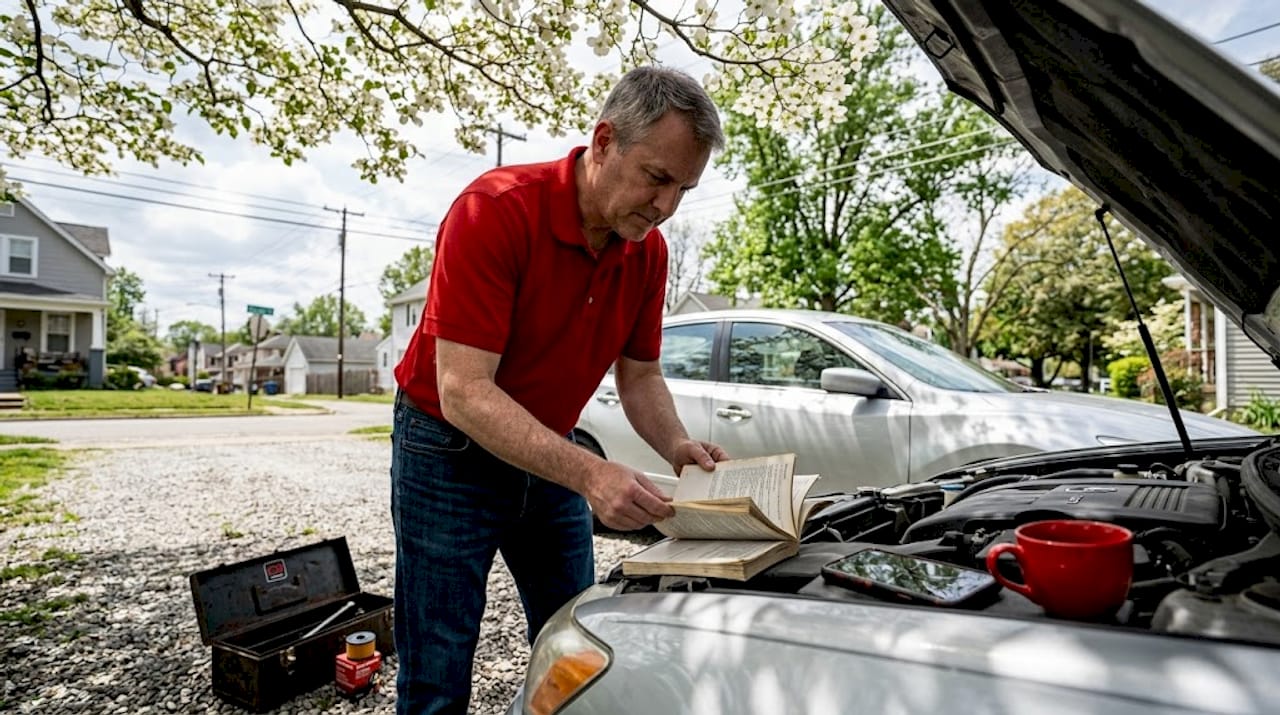
Most car owners know they’re supposed to get the oil changed “every few months,” but beyond that, the rules get fuzzy fast. What is scheduled maintenance, really? And why does skipping or misreading that schedule so often end with an unexpected breakdown and a repair bill that could have bought you a weekend trip? The answer comes down to a simple but commonly misunderstood idea: your car was built with a plan, and following that plan is what keeps it running well for the long term.
Table of Contents
- Understanding scheduled maintenance: what it means and why it matters
- Decoding your vehicle’s maintenance schedule: normal versus severe conditions
- Maintenance alerts and service intervals: timely reminders for vehicle care
- Applying scheduled maintenance: practical tips to optimize your vehicle’s health
- Expert insights: avoiding common pitfalls and maximizing scheduled maintenance benefits
- Why scheduled maintenance isn’t just a checklist: a fresh perspective
- Manage your scheduled maintenance effortlessly with CarJourney
- Frequently asked questions
Key Takeaways
| Point | Details |
|---|---|
| Scheduled maintenance prevents breakdowns | Performing maintenance at set intervals helps avoid costly and unexpected vehicle failures. |
| Driving conditions affect schedules | Many drivers face severe conditions requiring more frequent maintenance than the normal schedule suggests. |
| Respond promptly to alerts | Address maintenance warnings like oil change indicators within the recommended mileage to protect your engine and warranty. |
| Combine schedules with condition checks | Assessing actual component wear prevents over-maintenance and saves money. |
| Aim for planned over reactive work | Maintaining a high ratio of scheduled to emergency repairs improves reliability and lowers total maintenance costs. |
Understanding scheduled maintenance: what it means and why it matters
The scheduled maintenance definition is straightforward. It is proactive, planned service performed at set intervals based on mileage or elapsed time, whichever comes first. Think of it as your car’s built-in rulebook for staying healthy. You change the oil every 5,000 miles, inspect the brakes every 15,000, replace the coolant every 30,000. Each task is mapped to a threshold before failure becomes likely.
The opposite of this is reactive maintenance. You wait until something breaks, then fix it. That approach feels cheaper in the moment, but it almost always costs more in the long run. A blown timing belt that could have been replaced at 90,000 miles can destroy an engine. A well-run preventive maintenance program can reduce emergency breakdowns by 25-40% compared to a purely reactive approach.
Common scheduled maintenance services include:
- Engine oil and filter changes
- Tire rotation and balance
- Brake pad and rotor inspection
- Air and cabin filter replacement
- Transmission fluid and coolant exchanges
- Spark plug replacement
- Battery inspection and terminal cleaning
Pro Tip: If you want to know exactly what your car needs and when, review your car maintenance schedule by mileage rather than relying on memory or dealer suggestions. Your owner’s manual is the primary source, but a mileage-based guide helps fill in the gaps.
The importance of scheduled maintenance becomes obvious once you understand what it prevents. Worn brake fluid absorbs moisture over time and can cause brake fade. Old coolant becomes acidic and corrodes your radiator. A clogged cabin filter strains your HVAC blower motor. None of these failures announce themselves in advance. Scheduled maintenance catches them before they escalate.

Decoding your vehicle’s maintenance schedule: normal versus severe conditions
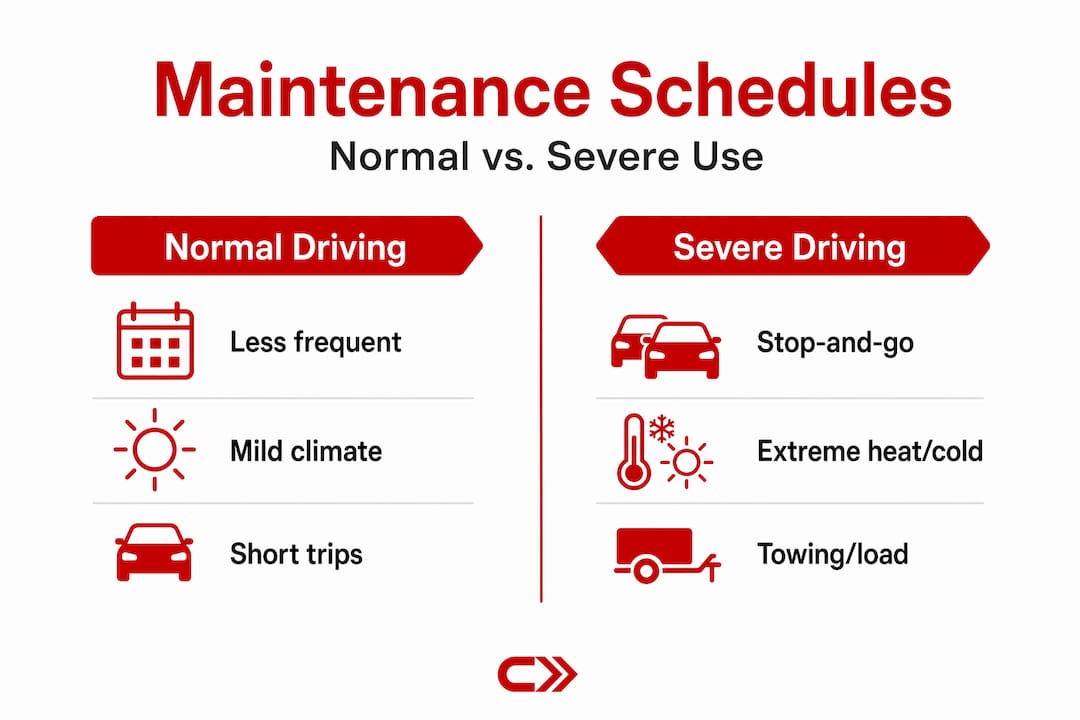
Here is where a lot of car owners get tripped up. Your manufacturer does not provide one maintenance schedule. It provides two: one for normal conditions and one for severe conditions. The problem is that most daily driving involves severe conditions like short trips and stop-and-go traffic, meaning many owners unknowingly follow the wrong schedule.
What counts as severe driving conditions?
- Frequent trips under 5 miles (the engine never fully warms up)
- Driving in extreme heat or cold
- Towing or hauling heavy loads
- Idling in heavy stop-and-go traffic
- Off-road or dusty driving environments
If you commute 20 minutes each way through city traffic, you are almost certainly in the severe category. The normal schedule assumes long highway trips, moderate temperatures, and light loads. That describes a fairly small percentage of real-world drivers.
| Condition type | Example driving | Typical oil change interval | Key risk if ignored |
|---|---|---|---|
| Normal | Highway commuting, moderate climate | Every 7,500-10,000 miles | Gradual wear, manageable |
| Severe | City driving, towing, extreme temps | Every 3,000-5,000 miles | Accelerated engine wear |
Pro Tip: Cross-reference your driving habits against the severe conditions list in your owner’s manual before deciding which schedule to follow. One honest look at your typical week will tell you more than any generic recommendation. You can also review recommended vehicle maintenance intervals tailored to different conditions to help calibrate your plan.
Understanding which schedule applies to you is the foundation of everything else. Getting this wrong means either over-maintaining (wasting money) or under-maintaining (risking real damage). Neither outcome is acceptable when the fix is simply reading two pages of your owner’s manual.
Maintenance alerts and service intervals: timely reminders for vehicle care
Modern vehicles do a lot of the scheduling work for you. Oil life monitoring systems, tire pressure sensors, and brake wear indicators are all designed to give you a heads-up before a problem becomes serious. But these systems only work if you respond to them.
How to handle scheduled maintenance alerts effectively:
- Take the warning seriously the first time it appears. These are not suggestions.
- Schedule service promptly. Manufacturers require servicing within 500 miles of an oil change alert to avoid engine damage or warranty issues.
- Confirm the specific service needed. An oil change alert is not a check engine light. Know the difference.
- Get the indicator reset after service. Dealers do this automatically. DIY mechanics should reset the system manually per the owner’s manual.
- Log the service date and mileage for your records.
Why prompt response matters:
- Ignoring an oil change alert for 1,000+ miles risks increased engine wear from degraded lubricant
- Letting brake pad indicators go unaddressed can damage rotors, turning a $200 job into a $600 one
- Missing a service interval can void warranty coverage on certain components
The car oil change schedule is the most common source of confusion here. Many people still follow the old “every 3,000 miles” rule even when their oil life monitor shows 40% remaining. Trust the system your car was built with. It accounts for actual engine load, temperature, and use, not just miles.
Applying scheduled maintenance: practical tips to optimize your vehicle’s health
Following a maintenance schedule is not about robotically swapping parts on a calendar. The smarter approach pairs scheduled intervals with actual condition-based checks. Scheduled maintenance can lead to over-maintenance if followed blindly. A brake fluid flush is due every two years on paper, but checking its moisture content with an inexpensive test strip tells you whether the flush is actually needed yet.
Practical ways to maintain smarter:
- Inspect brake fluid with a moisture test strip before automatically replacing it
- Check tire tread depth and wear patterns at every oil change, not just on schedule
- Pull your air filter and look at it. A clogged filter is obvious. A clean one can wait.
- Check coolant color and clarity annually. Brown or cloudy coolant signals trouble.
- Set vehicle maintenance reminders for every major interval so nothing slips through the cracks
“The best maintenance program is one that uses scheduled intervals as a starting point, then adjusts based on what you find during each inspection.”
Missed an interval? Don’t panic. If you went 2,000 miles over on an oil change, do it now and move on. Focus your catch-up on the most critical systems first: oil, brakes, cooling, and tires. These are the areas where neglect creates cascading failures. Transmission fluid and spark plugs are important but less time-sensitive if you are just a little behind.
Keep a service log, whether that is a notebook in your glove box or a digital tracker. Knowing exactly what was done and when is the foundation of any real maintenance plan. It also becomes a meaningful asset if you ever sell the vehicle.
Expert insights: avoiding common pitfalls and maximizing scheduled maintenance benefits
The single biggest mistake car owners make is assuming they drive under normal conditions when they don’t. Most drivers need the severe schedule because true daily driving often involves conditions that qualify as severe. Short trips, urban traffic, and temperature extremes are the norm for millions of commuters, not the exception.
Scheduled maintenance benefits get lost when these patterns take hold:
- Reactive repairs crowd out planned maintenance, creating a cycle that is hard to break
- Emergency fixes consume time and money that should go toward routine upkeep
- Deferred maintenance stacks up, and the cost to catch up can be overwhelming
- Warranty claims get denied because service records are incomplete or intervals were missed
“High-performing maintenance programs target 80-85% planned work and just 15-20% reactive repairs, which dramatically reduces emergency downtime and total maintenance costs.”
That 80/85 target applies to fleet operations and commercial vehicles, but the principle holds perfectly for your personal car. When you are always chasing the last problem instead of preventing the next one, your vehicle ages faster and costs more to own.
The solution is consistency. A vehicle maintenance workflow that keeps scheduled tasks visible and actionable is what separates the owner who drives 200,000 trouble-free miles from the one who is stranded at 80,000.
Why scheduled maintenance isn’t just a checklist: a fresh perspective
Here is something most maintenance guides won’t say: rigidly following your factory maintenance schedule without thinking is not the right approach. It is better than doing nothing, but it is not the full picture.
Factory schedules are built for an average driver in average conditions. You are not average. Your commute, your climate, your load habits, and even your fuel quality all affect how your car ages. A Honda Civic used for Uber driving in Phoenix in summer needs more aggressive maintenance than the same car used for weekend errands in Seattle. The schedule in the back of the owner’s manual cannot account for that. You have to.
The real value of what is maintenance scheduling comes from treating it as a living system, not a fixed list. Use the manufacturer intervals as your baseline. Layer condition-based inspections on top. Adjust when you notice wear patterns that do not match expectations. That is how you stop the cycle of expensive reactive repairs and start getting ahead of your car’s actual needs.
Technology finally makes this practical. Tools for smart vehicle care can track your service history, flag upcoming intervals, and even account for your specific driving conditions. That is not a luxury anymore. It is just the smarter way to own a car.
Manage your scheduled maintenance effortlessly with CarJourney
Knowing what scheduled maintenance is and actually staying on top of it are two different problems. Most car owners have the knowledge but not the system.
CarJourney was built by a team of gearheads and engineers in Virginia who got tired of the scattered receipts, vague schedules, and generic advice that ignores your specific car. The CarJourney maintenance tracker uses AI to scan your service documents, learn your vehicle’s actual history, and send you reminders based on real-world conditions, not just generic mileage thresholds. You can personalize your schedule, log every service, and get answers specific to your exact build. Learn more about CarJourney and how we are rethinking what vehicle ownership should feel like.
Frequently asked questions
What exactly is scheduled maintenance for cars?
Scheduled maintenance is regular, planned service performed at set intervals based on mileage or time to prevent vehicle breakdowns and ensure long-term reliability.
How do I know if my driving conditions require the severe or normal maintenance schedule?
If your daily driving includes frequent short trips, heavy traffic, extreme temperatures, towing, or off-road use, follow the severe schedule. Most daily driving fits the severe category, not the normal one.
What should I do when my vehicle’s oil change indicator light comes on?
Have your vehicle serviced as soon as possible. Manufacturers require service within 500 miles of the alert to prevent engine damage and maintain warranty coverage.
Can I do better than just following the factory maintenance schedule?
Yes. Pairing scheduled intervals with condition-based checks like inspecting brake fluid moisture and tire wear helps you avoid unnecessary services and keeps your car healthier longer.
What are the benefits of a high-performing scheduled maintenance program?
High-performing programs achieve 80-85% planned maintenance with minimal emergency repairs, which reduces unexpected downtime and extends vehicle life significantly.