 carjourney
From the CarJourney journal
Why Expert Maintenance Guides Save Your Car and Money

Expert maintenance guides are authoritative, vehicle-specific documents that give car owners and DIY mechanics the exact instructions needed to keep a vehicle running at its best. The difference between a well-maintained car and one that leaves you stranded often comes down to the quality of guidance you follow. Generic advice from forums or outdated printouts cannot replace a precise, up-to-date resource built around your specific make, model, and driving conditions. This article explains why expert maintenance guides matter, how to choose the right type, and how to use them to cut costs and extend your vehicle’s life.
Why expert maintenance guides are the foundation of smart vehicle care
Expert maintenance guides stand apart from generic checklists because they specify the details that actually prevent failures. A quality guide covers torque specifications, lubrication points, fluid capacities, and service intervals down to the exact number. According to precision instructions, these details directly prevent catastrophic failures and keep a vehicle performing at its peak. A forum post or a YouTube comment cannot give you that level of reliability.
The term used across the industry for this category of resource is the service manual or OEM (Original Equipment Manufacturer) manual. Whether you call it an expert maintenance guide or a service manual, the defining characteristic is the same: it reflects the actual engineering of your vehicle, not a generalized estimate.
Three characteristics separate a true expert guide from everything else:
- Accuracy: Every specification matches the vehicle’s actual engineering requirements, not a rounded average.
- Currency: The guide reflects the current condition of the vehicle, including any modifications or recalls.
- Accessibility: The information is findable in seconds, not buried in a 900-page PDF.
Most maintenance programs fail because of outdated guides and poor accessibility. An outdated guide is not just unhelpful. It is actively dangerous because it creates false confidence in procedures that no longer apply.
Pro Tip: Before trusting any maintenance guide, check the publication date and cross-reference it against your vehicle’s current build. If your car has aftermarket modifications, verify that the guide accounts for them before following any torque or fluid spec.
How do expert guides reduce repair costs?
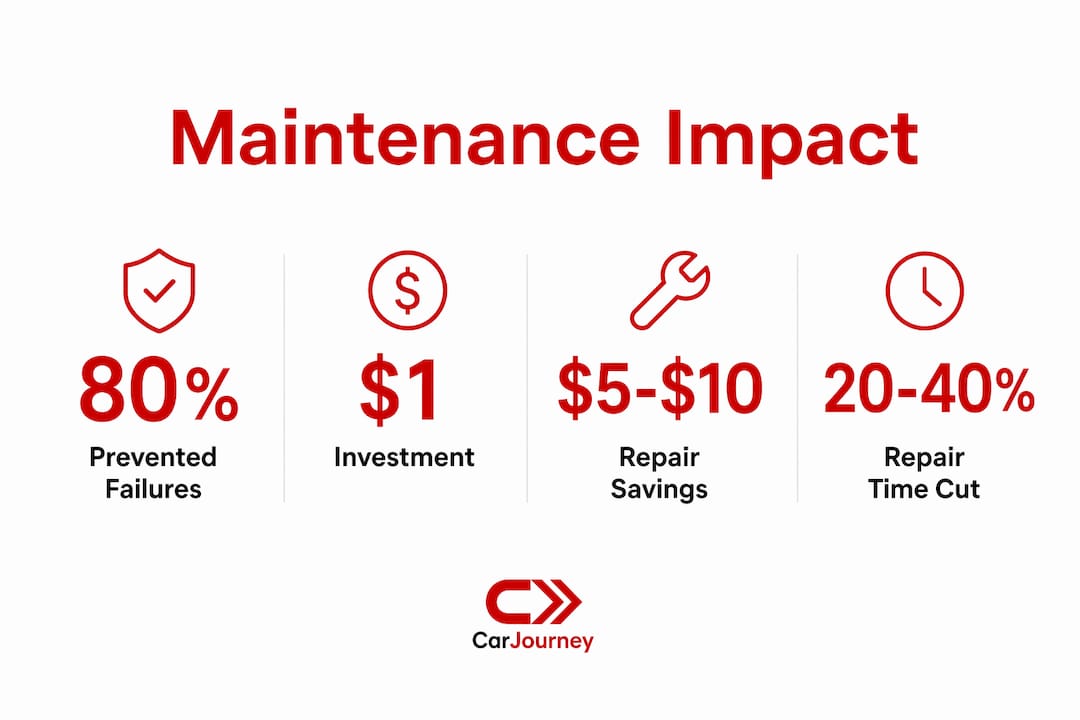
The financial case for following expert maintenance guides is straightforward. Every $1 in preventive maintenance prevents $5 to $10 in emergency repairs. That ratio means skipping a $40 oil change on schedule can realistically cost you $200 to $400 in downstream damage.
Proactive maintenance programs also reduce unplanned downtime by up to 30% compared to reactive approaches. For a daily driver or a work vehicle, unplanned downtime is not just an inconvenience. It is a direct financial loss in towing fees, rental cars, and rushed labor rates.
“Experts see maintenance as a financial strategy, turning unpredictable reactive costs into planned, manageable expenses.” — Why Preventive Maintenance Matters
Neglecting maintenance can halve the effective lifespan of mechanical equipment. For a vehicle, that means dropping from a potential 20-plus years of reliable service to 10-15 years. The average car on American roads is already 12.6 years old, which means consistent, expert-guided maintenance is the primary variable keeping those vehicles functional.
| Maintenance Approach | Typical Cost | Outcome |
|---|---|---|
| Expert-guided preventive care | Low, scheduled | Longer lifespan, fewer surprises |
| Reactive repairs after failure | 2–4x higher per event | Shorter lifespan, higher total spend |
| Generic schedule (no tailoring) | Moderate | Missed intervals, partial protection |
| Expert-guided + environment-adjusted | Lowest long-term | Maximum lifespan and performance |

The table above makes the ROI clear. Following a precise, current guide is not the expensive option. It is the cheapest option when you calculate total cost of ownership over the life of the vehicle.
OEM manuals vs. digital guides vs. expert blogs: which is best?
Not all maintenance resources deliver the same value, and the format you choose affects how useful the guide actually is in practice. Here is how the main types compare.
| Guide Type | Strengths | Weaknesses |
|---|---|---|
| OEM Service Manual | Maximum accuracy, vehicle-specific specs | Expensive, hard to search, not modification-aware |
| Digital Knowledge Base | Searchable, updatable, accessible on mobile | Quality varies, requires active maintenance |
| Expert Blogs and Articles | Readable, real-world context | May lack precision specs, can become outdated |
| Video Tutorials | Visual, step-by-step clarity | Hard to reference mid-task, no spec verification |
OEM manuals from manufacturers like Ford, Toyota, and GM remain the gold standard for accuracy. The problem is usability. A printed manual or a locked PDF is not practical when your hands are covered in grease and you need a torque spec in 10 seconds.
Digital knowledge bases solve the accessibility problem. Maintenance knowledge bases reduce repair times by 20–40% by standardizing procedures and making them searchable. The catch is that a digital guide only stays valuable if someone owns the update process. A neglected digital guide decays just as fast as a printed one.
Expert blogs and video tutorials from channels like ChrisFix or platforms like Haynes Online fill the gap between precision and readability. They work best as a supplement to an OEM manual, not a replacement. For specialized components, resources like an exhaust valve maintenance guide show how expert-level specificity translates into real-world results for complex systems.
The best approach for most DIY mechanics is a layered one: use the OEM manual for specifications, a digital knowledge base or app for scheduling and tracking, and expert blogs for context and technique.
How to use maintenance guides effectively in your routine
Knowing where to find a good guide is only half the work. Using it correctly is what produces results.
-
Break the manual into task-specific chunks. Large PDF manuals are impractical when you need quick information on-site. Breaking guides into small, searchable sections is the single most effective way to make them usable in real time. Create a folder or digital notebook organized by task: oil changes, brake inspections, tire rotations.
-
Build a maintenance calendar from the guide’s intervals. Do not rely on memory. Transfer every service interval from your guide into a calendar or tracking app. Carjourney’s AI-powered platform does this automatically by scanning your service documents and mapping them to your specific vehicle.
-
Adjust intervals for your actual driving environment. Tailoring maintenance intervals to heat, humidity, and duty cycles improves outcomes over rigid OEM schedules. If you tow regularly, drive in extreme heat, or log more than 20,000 miles per year, your intervals need to be shorter than the standard recommendation. A guide on optimizing your maintenance schedule can help you calibrate those adjustments.
-
Log every service against the guide’s checklist. A record of completed work is proof that you followed the guide. It also protects resale value and helps you spot patterns, like a component that keeps failing ahead of schedule.
-
Review the guide after any modification. Aftermarket parts change fluid requirements, torque specs, and service intervals. Treat a modification as a trigger to update your guide references, not just your parts list.
Pro Tip: Never skip a step in a maintenance sequence to save time. Steps in expert guides are ordered for a reason. Skipping brake bleed steps or torque sequences can create failures that cost far more than the 10 minutes you saved.
Key takeaways
Expert maintenance guides are the most cost-effective tool a car owner has, turning unpredictable repair bills into planned, manageable expenses.
| Point | Details |
|---|---|
| Accuracy prevents failures | Expert guides specify torque specs and lubrication points that generic advice omits. |
| Preventive care pays back | Every $1 spent on scheduled maintenance prevents $5–$10 in emergency repair costs. |
| Guide format affects usability | OEM manuals lead on accuracy; digital knowledge bases win on accessibility and speed. |
| Tailor intervals to your conditions | Adjust OEM schedules for heat, towing, and high mileage to get real-world results. |
| Consistent logging protects value | Documented service history supports resale value and reveals recurring issues early. |
The uncomfortable truth about skipping the manual
I have seen the same pattern repeat itself dozens of times. A car owner skips the service manual because it feels like overkill for a simple oil change. Six months later, they are dealing with a stripped drain plug or a seized filter because they used the wrong torque spec or the wrong filter type for their specific engine. The manual was not overkill. It was the only thing that had the right answer.
The bigger mistake I see is treating a maintenance guide as a one-time reference rather than a living document. Vehicles change. Modifications change fluid requirements. Driving habits change service intervals. A guide you pulled up two years ago may no longer reflect your car’s actual needs. The people who get the most out of expert resources are the ones who treat them as a system, not a lookup table.
There is also a confidence problem worth naming. Many DIY mechanics avoid detailed guides because they assume the information will be too technical. The opposite is usually true. A well-written expert guide removes guesswork and gives you a clear, step-by-step path. Following a preventive maintenance checklist built from expert sources is less intimidating than improvising and hoping for the best.
The mindset shift that matters most is this: maintenance is not a cost. It is the cheapest form of insurance your vehicle has.
— Chally
Track every service with Carjourney
Carjourney was built for exactly this situation. You have the expert guide. Now you need a place to put the information to work.
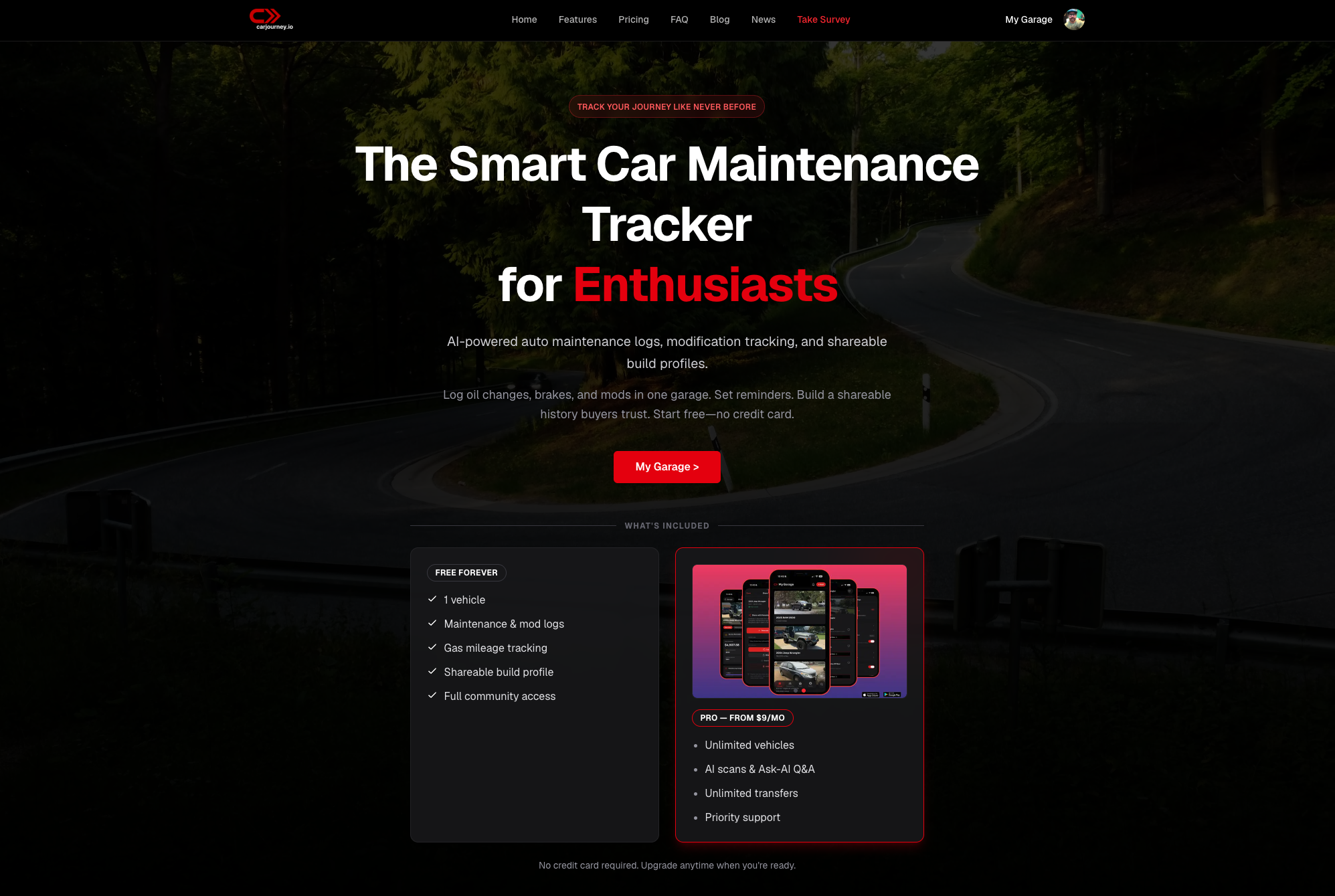
Carjourney’s AI scans your service documents, maps every interval to your specific vehicle, and sends reminders before a service is due. You can log completed work, track costs over time, and access a community of enthusiasts who share real-world data on the same builds. No more scattered receipts or missed intervals. Start managing your vehicle’s maintenance the way the car maintenance tracker was designed to support, with expert guidance built in from day one.
FAQ
What makes a maintenance guide “expert level”?
An expert maintenance guide specifies precise details like torque settings, lubrication points, and fluid capacities for a specific vehicle. Generic checklists lack this precision and cannot prevent the failures that exact specifications are designed to avoid.
How much money can expert maintenance guides actually save?
Every $1 in preventive maintenance prevents $5 to $10 in emergency repair costs. Following an expert guide consistently is one of the highest-return financial decisions a car owner can make.
Should i follow OEM intervals exactly or adjust them?
OEM intervals are a starting point, not a fixed rule. Adjusting intervals based on your driving environment, towing habits, and climate produces better outcomes than strict adherence to a generic schedule.
Are digital maintenance guides better than printed manuals?
Digital guides win on accessibility and searchability, which matters when you need a spec mid-repair. OEM printed manuals still lead on accuracy. The best approach combines both, using digital tools for scheduling and OEM specs for technical verification.
How do i know if my maintenance guide is outdated?
Check the publication date and compare it against any modifications, recalls, or major service events on your vehicle. An outdated guide creates false confidence and can lead to procedures that no longer apply to your current build.