
 carjourney
Car Mod Legality in the U.S.: What Every Owner Must Know
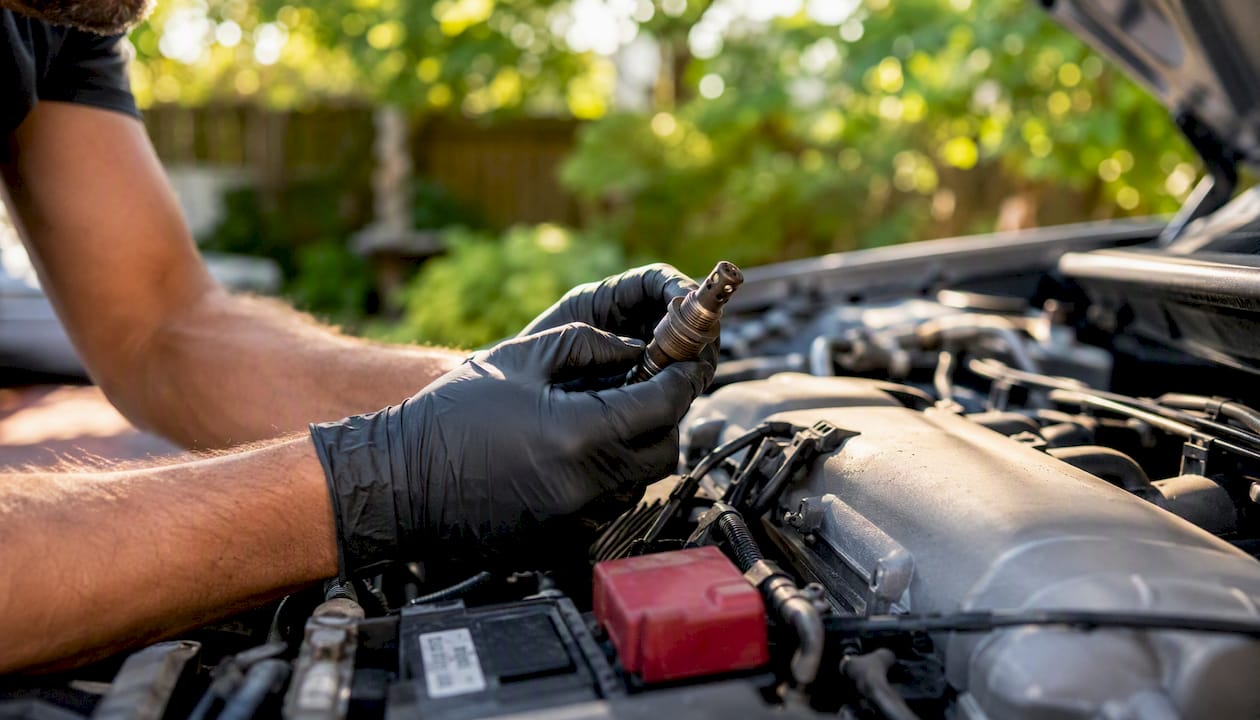
Car modifications are legal in the United States, but what’s allowed depends on a two-tier system: federal rules set by the EPA and NHTSA establish the floor on emissions and safety, while each state’s vehicle code and DMV set their own equipment standards on top of that. The California Air Resources Board (CARB) adds a third layer that affects enthusiasts nationwide, because many states follow California’s stricter emissions rules. A mod that passes every test in your home state can still get you ticketed the moment you cross a state line.
Three things you can do right now:
- Check federal rules first. If a mod touches your catalytic converter, DPF, oxygen sensors, or any other emissions device, it likely violates the Clean Air Act regardless of what state you’re in.
- Look up your home state’s vehicle code. Search “[your state] DMV aftermarket modification” or “[your state] vehicle equipment code” to find tint limits, ride-height rules, and exhaust decibel caps.
- Document everything before you install. Keep receipts, CARB Executive Order (EO) numbers, and photos of the part and the install. A paper trail is your best defense at a traffic stop or inspection.
Key Takeaways
Car mod legality in the U.S. requires satisfying both the federal EPA and NHTSA baseline and any stricter equipment rules your state imposes — and the state you’re driving through, not just the state where you registered the vehicle.
| Point | Details |
|---|---|
| Federal floor is non-negotiable | EPA Clean Air Act and NHTSA FMVSS apply in every state; emissions tampering and safety equipment removal are federal violations. |
| State rules vary significantly | Window tint, exhaust noise, ride height, and lighting rules differ by state — Florida allows 28% front-side VLT; New York requires 70% minimum. |
| CARB EO numbers matter | In California and the roughly 17 states following CARB standards, aftermarket performance parts need a CARB EO number to be street-legal. |
| Cross-state travel carries real risk | The law of the state you’re operating in applies; carry digital copies of receipts and EO numbers before crossing state lines. |
| Carjourney centralizes compliance docs | Store time-stamped receipts, CARB EO numbers, photos, and build notes in one searchable place to reduce legal risk at stops and inspections. |
Table of Contents
- How U.S. vehicle mod law is structured
- What modifications frequently violate laws?
- How states differ and where to find the exact rules
- If you’re ticketed for an illegal mod: what to do
- Pre-mod checklist: what to verify before you buy or install
- How Carjourney helps you document modifications and reduce legal risk
- Keep your build documented and road-legal with Carjourney
- Sources
How U.S. vehicle mod law is structured
The legal architecture behind car modification laws is a two-tier system, and understanding which tier controls which issue saves you from chasing the wrong rulebook.
Federal baseline: EPA and NHTSA
The EPA enforces the Clean Air Act, which prohibits tampering with any emissions control device on a motor vehicle. That covers catalytic converters, diesel particulate filters, EGR systems, and defeat devices. Violations are federal civil offenses, not just traffic infractions, and penalties can be substantial. NHTSA administers the Federal Motor Vehicle Safety Standards (FMVSS), which set minimum requirements for lighting, brakes, restraints, tires, and other safety systems. States cannot override FMVSS. If a modification removes or disables a federally required safety component, it’s illegal everywhere, period.
State scope: equipment rules and inspection programs
States layer their own requirements on top of the federal baseline through vehicle codes, DMV regulations, and periodic inspection programs. This is where window tint percentages, exhaust decibel limits, bumper height rules, and underglow restrictions live. A state can be stricter than federal standards but never more permissive on emissions or safety. The practical implication: you must satisfy both the federal floor and any stricter state rule simultaneously.
Key distinctions at a glance:
- Federal (EPA/NHTSA): Emissions tampering, safety equipment removal, defeat devices — uniform nationwide
- State DMV/vehicle code: Tint VLT limits, ride height, exhaust noise, lighting color, license plate visibility — varies by state
- CARB states: California and states that have adopted California’s emissions standards require CARB EO numbers for many aftermarket performance parts
- Inspection programs: States with mandatory vehicle inspections (e.g., Texas, New York, Virginia) use inspection checklists that explicitly cover aftermarket modifications
What modifications frequently violate laws?
Most legal trouble with aftermarket parts falls into a handful of categories. Here’s what regulators target, why, and what typically happens when you get caught.
Emissions and performance parts
Removing or bypassing a catalytic converter is a federal violation under the Clean Air Act, full stop. The same applies to DPF deletes on diesel vehicles and any tune or device that defeats emissions sensors. In California and the roughly 17 states that follow CARB standards, even a cold-air intake or aftermarket exhaust requires a CARB EO number to be street-legal. Without one, the part is presumed non-compliant regardless of how it performs on a dyno.
Exhaust and noise
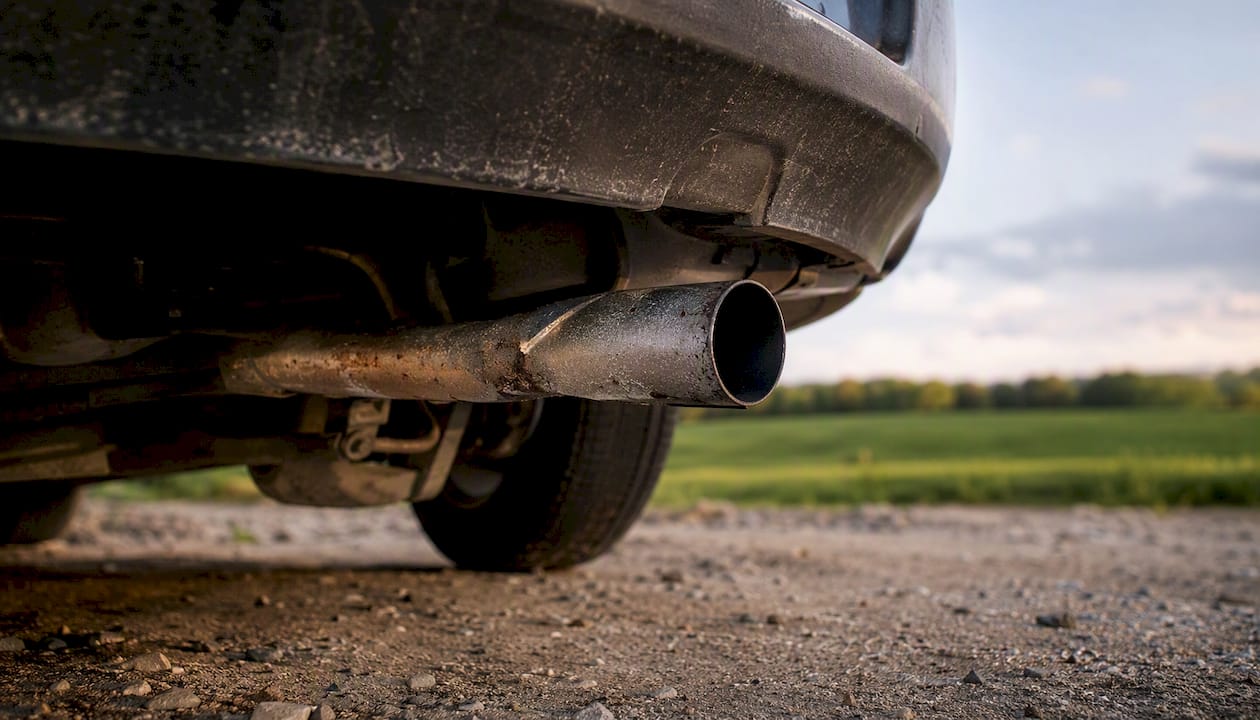
Muffler deletes and open exhaust cutouts are among the most commonly cited modifications. Some states set specific decibel caps — certain jurisdictions reference limits around 95 dB for passenger vehicles — while others simply prohibit exhausts that are “louder than stock.” Enforcement is often officer-discretion at a traffic stop, but repeated citations can escalate to mandatory inspection or impoundment.
Window tint
Every state sets a visible light transmission (VLT) percentage for front side windows, and the limits vary widely. Florida allows relatively dark front-side tint; New York’s front-side tint limits are considerably stricter. Tint that’s legal in one state is a fix-it ticket in another. Understanding how VLT is measured before you choose a film saves you from a reinstall later.

Lighting
Federal FMVSS standards govern the color, placement, and intensity of headlights, taillights, and brake lights. Red or blue lights visible from the front are prohibited in virtually every state because they mimic emergency vehicles. Aftermarket HID or LED conversions that don’t meet the original FMVSS specification for the housing are also illegal, even if they’re brighter. Underglow is regulated at the state level and ranges from fully permitted (with color restrictions) to outright banned.
Suspension and ride height
States set minimum and maximum bumper heights and sometimes frame heights. Lifting a truck beyond the state’s maximum or dropping a car below the minimum clearance creates a citable equipment violation. Texas DPS, for example, explicitly lists height adjustments as an item that affects inspection pass/fail outcomes.
License plate visibility
Any modification that obscures, tilts, or covers a license plate — including certain bumper kits, trailer hitches, or plate frames with tinted covers — is a violation in every state. Plate frame covers that reduce reflectivity are specifically prohibited in several states.
Safety equipment removal
Removing airbags, disabling seatbelt pre-tensioners, or cutting out factory rollover protection is a federal safety violation under FMVSS. Beyond the legal exposure, the liability in a crash is severe.
Law-evading technology
Radar jammers are illegal under federal law. Laser jammers occupy a gray area federally but are banned outright in several states. Neither is a gray area worth testing.
| Modification Category | Why It’s Regulated | Typical Enforcement Outcome |
|---|---|---|
| Catalytic converter removal | Federal Clean Air Act violation | Civil penalty, failed inspection, registration hold |
| Exhaust noise (muffler delete) | Noise ordinances, state vehicle code | Fix-it ticket, fine, mandatory inspection |
| Window tint (VLT violation) | Visibility and officer safety | Fix-it ticket, fine |
| Non-compliant lighting | FMVSS, emergency vehicle impersonation | Fix-it ticket, fine, impound in repeat cases |
| Suspension out of height limits | State equipment code | Fix-it ticket, failed inspection |
| Emissions defeat device | Federal Clean Air Act | Civil penalty, registration denial |
| Safety equipment removal | FMVSS federal violation | Fine, potential criminal charge |
| Radar/laser jammer | Federal/state law | Fine, device confiscation |
How states differ and where to find the exact rules
The two-tier system means state-to-state variation is real and consequential. A few concrete examples illustrate how wide the gap can be.
Window tint: Florida permits relatively dark front-side window tint. New York’s front-side limit is considerably tighter. Drive from Miami to Manhattan with the same tint and you’ve gone from legal to citable without touching the car.
Exhaust noise: Some states reference specific decibel thresholds in their vehicle codes; others use subjective language like “excessive noise.” California has both a decibel limit and a visual inspection requirement for exhaust systems.
CARB vs. non-CARB states: California’s emissions rules, administered by CARB, require aftermarket performance parts to carry a CARB EO number. About 17 other states have adopted California’s standards in whole or in part. If you’re in one of those states, the same EO-number requirement applies. Non-CARB states still enforce the federal Clean Air Act baseline but don’t require EO numbers for parts that don’t tamper with emissions controls.
How to find your state’s actual rules:
- Go to your state DMV’s official website and search “vehicle equipment” or “aftermarket modification.”
- Search your state legislature’s code site (usually “[state].gov/statutes” or similar) for “vehicle equipment” or “motor vehicle modification.”
- Pull your state’s official inspection manual if your state has a mandatory inspection program. Texas DPS publishes a detailed aftermarket modification page; most inspection-state DMVs do the same.
- Search “[your state] vehicle code window tint” or “[your state] exhaust noise limit” to find the specific statute number, then read the primary source rather than a summary.
Traveling across state lines:
Enforcement applies the law of the state where you’re operating the vehicle. A mod legal in your home state is no defense in another state’s court. Practical guidance for cross-state travel recommends carrying digital copies of all compliance documents and, where feasible, temporarily reverting borderline mods before entering a stricter state.
VLT figures sourced from YourMechanic’s state modification guide. Always verify against your state’s current vehicle code before installing.
If you’re ticketed for an illegal mod: what to do
Getting cited for a modification violation is stressful, but most outcomes are manageable if you respond correctly and quickly.
Common outcomes, from least to most serious:
- Fix-it ticket (correction order): The most common result for equipment violations like tint, lighting, or ride height. You have a set window to correct the issue and provide proof of correction to the citing agency or court.
- Fine: Some violations carry a flat fine with no correction option, particularly for noise or lighting infractions.
- Failed inspection: A non-compliant mod causes your vehicle to fail its periodic state inspection, blocking registration renewal until corrected.
- Impoundment: Repeated violations, severe safety violations, or emissions tampering can result in the vehicle being held.
- Criminal charges or federal civil penalties: Intentional emissions tampering (defeat devices, catalytic converter removal for resale) can trigger federal civil penalties under the Clean Air Act. These are rare for individual owners but real.
Step-by-step response checklist:
- Document the citation in full: officer’s name, badge number, violation code cited, date, and location.
- Photograph the modification as it currently exists, before making any changes.
- Gather all receipts, installation invoices, and any CARB EO numbers or compliance certificates for the part.
- If it’s a fix-it ticket, correct the violation within the stated deadline and get written confirmation from a licensed shop.
- Submit proof of correction to the court or agency listed on the citation, keeping copies of everything you submit.
- If the violation is contested or the penalty is significant, request a hearing before the deadline passes.
When to consult an attorney:
If your vehicle is impounded, if you’re facing repeated fines for the same modification, if emissions tampering is alleged, or if there’s any possibility of civil liability (an accident involving a non-compliant modification), talk to a traffic or automotive attorney before responding. Legal responsibility for compliance rests with the registered owner, not the shop that installed the part, so the stakes are yours to manage.
Pre-mod checklist: what to verify before you buy or install
The cheapest compliance problem is the one you prevent before the part ships. Here’s what to confirm before any aftermarket purchase.
Questions to ask the seller or installer:
- Does this part have a CARB EO number? If so, what is it?
- Does this part remove, bypass, or alter any emissions control device?
- Does installation require removing the catalytic converter, DPF, or oxygen sensors?
- What is the measured noise output at the specified RPM (for exhausts)?
- Does this suspension kit bring the vehicle outside my state’s bumper height limits?
- Will this lighting kit meet FMVSS standards for the housing it’s going into?
Documentation to keep after installation:
- Purchase receipt with part number and seller information
- Installation invoice from the shop, including the installer’s name and license
- CARB EO number or equivalent compliance certificate
- Photos of the installed part and, for suspension, a measurement photo showing ride height
- Post-install measurements for anything height- or angle-related (headlight aim after a lift or drop, for example)
- Service logs showing when the modification was installed and by whom
You can find a detailed breakdown of what belongs in your compliance folder in this car modification documentation guide.
Pro Tip: Individually legal parts can combine into an illegal build. A cold-air intake, an ECU tune, and a cat-back exhaust might each pass inspection on their own, but together they can push noise output or emissions readings past the legal threshold. Track every modification and its interaction with the rest of the build, not just each part in isolation. FindLaw’s overview of unlawful vehicle modifications specifically flags this cumulative effect as a common source of unexpected inspection failures.
How Carjourney helps you document modifications and reduce legal risk
Keeping a compliant build isn’t just about knowing the rules. It’s about being able to prove compliance when it counts — at a traffic stop, at an inspection station, or when you’re selling the car.
Carjourney stores the documentation that matters:
- Time-stamped receipts and invoices tied to specific vehicles and modification dates
- CARB EO numbers and compliance certificates attached directly to the relevant mod entry
- Photos of installed parts with date metadata, useful as evidence at a citation or hearing
- Build notes and service logs that create a searchable history of every change made to the vehicle
- AI-powered document scanning that reads uploaded service documents and flags items that may need follow-up documentation
The AI features can also flag potential compliance gaps — for example, noting that a logged exhaust modification lacks an associated noise measurement or that a suspension entry has no ride-height record. That kind of prompt catches documentation holes before an officer does. You can learn more about tracking modifications systematically in Carjourney’s build-tracking guide.
Carjourney is a documentation and tracking tool, not a legal advisor. For binding interpretation of your state’s vehicle code or any specific citation, consult your state DMV, the relevant statute, or a licensed attorney.
What experienced builders wish more owners knew
The single most common mistake I see is owners trusting a shop’s verbal assurance that a part is “street legal.” Shops know their products; they don’t always know your state’s current inspection criteria or whether your specific combination of mods pushes you over a threshold. Legal responsibility sits with the registered owner, not the installer. That’s not the shop’s fault — it’s just how the law is written.
Before any lift or drop, re-aim your headlights. A two-inch suspension change shifts your beam pattern enough to blind oncoming drivers and fail a lighting inspection in states that check aim. It’s a 20-minute adjustment that most owners skip entirely.
For cross-state trips, keep a digital folder — phone or cloud — with your CARB EO numbers, receipts, and a one-page summary of your build. If you’re stopped in an unfamiliar state, handing an officer a clear compliance document changes the tone of the conversation immediately. Ride Legal’s cross-state guidance makes the same point: the law of the state you’re driving in applies, not the law of the state where the mod was installed.
One more thing: don’t rely on a shop’s verbal assurance as your only record. Get the EO number in writing, get the invoice, and photograph the install. If that shop closes next year, your documentation is all you have.
Keep your build documented and road-legal with Carjourney
Most compliance headaches come down to one thing: missing paperwork at the wrong moment. Carjourney gives you a single place to store every receipt, EO number, installation photo, and service log for every vehicle you own — searchable, time-stamped, and accessible from your phone when you need it at a traffic stop or inspection.
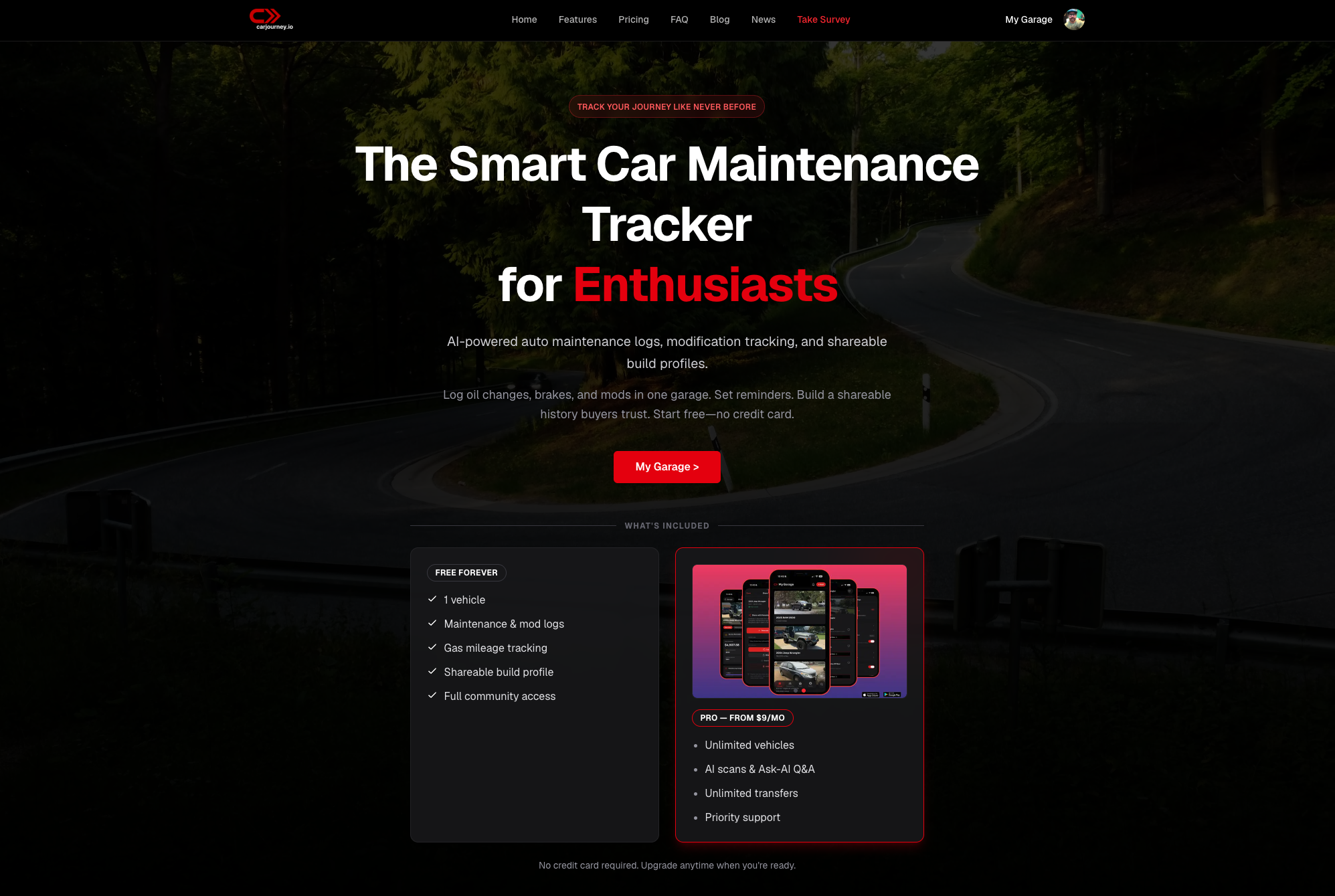
The AI document scanner reads your uploaded invoices and flags entries that look incomplete, so you’re not hunting through a glove box the night before an inspection. For enthusiasts managing multiple builds, the modification tracking features let you log each change, attach compliance certificates, and share a clean build profile with a potential buyer. Free accounts get you started; Pro unlocks unlimited vehicles and the full AI feature set.
Start your build documentation at Carjourney — it takes about five minutes to log your first modification.
Carjourney is a vehicle documentation tool, not a substitute for legal advice. Always verify current rules with your state DMV, the relevant statute, or a licensed attorney.
Sources
Use these primary sources to verify rules for your specific vehicle and state — summaries and forum posts can be outdated or jurisdiction-specific.
- What happens if your car mods are legal in your home state but illegal in the state you travel to? | Ride Legal
- What Car Modifications Are Considered Illegal? Laws & Penalties - LegalClarity
- Federal Motor Vehicle Safety Standards (FMVSS) | NHTSA
- Summary of the Clean Air Act | EPA
- About | California Air Resources Board
This article provides general information only and is not legal advice. Confirm current rules with your state DMV, the relevant statute, or a licensed attorney before modifying your vehicle.